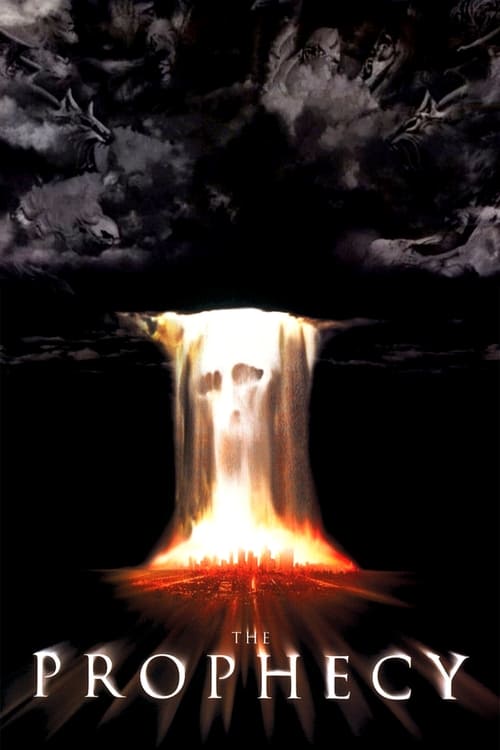
The Prophecy (1995)
Directed by Gregory Widen
No — The Prophecy is not woke, scoring 6 out of 100 on our wokeness meter.
The Prophecy arrives from 1995, a year when a murderous archangel could carry a studio thriller on the strength of Christopher Walken's nostrils alone.
Consciousness Markers
The film casts a Native American girl (Moriah 'Shining Dove' Snyder) in a pivotal role, but this is a plot necessity rather than a deliberate diversity statement. The rest of the cast is overwhelmingly white.
Some theological musings on faith and humanity, but zero preachy social justice lecturing. The sermon is about angels, not intersectionality.
No LGBTQ+ characters, themes, or subtext whatsoever. The angels are too busy with their civil war to explore gender identity.
Virginia Madsen's Katherine is a capable ally, but the film offers no feminist critique or agenda. She exists to help the male protagonist and witness angelic drama.
Native American characters and rituals appear as mystical plot devices, not as a vehicle for racial commentary or social justice. The film has zero interest in systemic racism.
Heavenly warfare does not involve carbon footprints. No climate themes detected.
The only economy here is the soul trade, and it's strictly a theological matter. No critiques of capitalism.
Angels and humans alike are judged by their souls, not their bodies. No body positivity messaging.
No neurodivergent characters or themes. The only atypical mind is a murderous archangel's.
The film is a fantasy, not a historical revision. The Korean War veteran is a plot device, not a reexamination of history.
Why it received this score
The Prophecy arrives from 1995, a year when a murderous archangel could carry a studio thriller on the strength of Christopher Walken's nostrils alone. Gabriel descends on Arizona to harvest a dark soul from a Korean War colonel, a soul that will decide a civil war in Heaven, and the only things standing between him and victory are a lapsed priest, a schoolteacher, and a sick child. It is a grim, loopy piece of religious horror that has aged into a cult curiosity. The theology is heavy. The metaphysics are heavier.
On the matter of representation, the film casts a Native American girl, Moriah Shining Dove Snyder, as Mary, the vessel for the stolen soul. This is a structural requirement of the plot, not a statement of any kind. The reservation, the exorcism ritual, the ancestral ground: all of it serves as mystical set dressing for a story about angels. Nobody pauses to consider the colonial implications of a white heaven using Indigenous land as a battlefield. The cast is otherwise a wall of pale faces. Virginia Madsen's Katherine is competent and largely present to witness male anguish.
The film does offer some sermonizing, but its pulpit concerns faith, free will, and the nature of humanity. Lucifer himself, played with weary elegance by Viggo Mortensen, delivers the closest thing to a thesis, and it is a theological one. There is no economic critique, no climate anxiety, no discourse of any modern stripe. It is a 1995 genre picture about angels behaving badly, and it has the cultural politics to match. A curious vintage, faintly corked, best served to completists.
Analysis generated by our Consciousness Algorithm


Synopsis
The angel Gabriel comes to Earth to collect a soul which will end the stalemated war in Heaven. However, it is hidden inside of a Native American girl and only a former priest and a schoolteacher can stop him.
Questions about The Prophecy
Is The Prophecy woke?
No — The Prophecy is not woke, scoring 6 out of 100 on our wokeness meter. That earns it a verdict of Ultra Based.
Does The Prophecy have any woke elements?
Very few. None of the 10 markers reaches 30, the level where a marker counts as present; the highest is Representation Casting at 15.
How does The Prophecy compare to other 1995 movies?
It ranks #60 of the 108 films from 1995 we've scored; their average is 12. The wokest is Total Eclipse (60).
How is the Woke Score calculated?
An AI-assisted process researches the film and its reception, scores it 0–100 on ten markers, then combines those into one 0–100 Woke Score. It measures a specific set of 2020s cultural themes, not film quality.