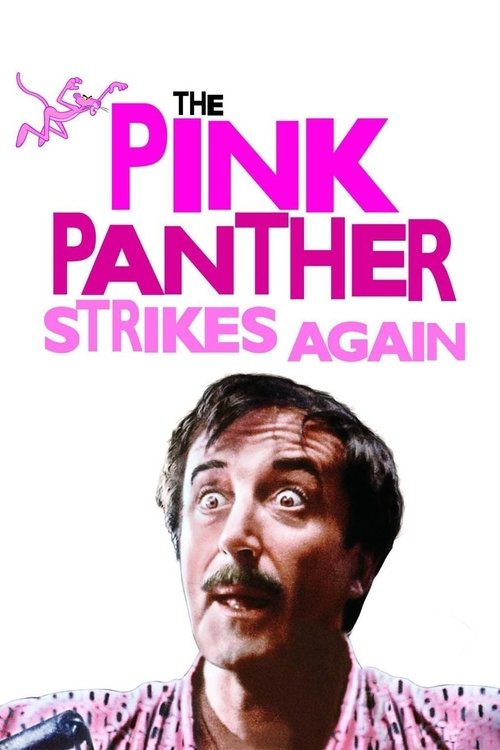
The Pink Panther Strikes Again (1976)
Directed by Blake Edwards
No — The Pink Panther Strikes Again is not woke, scoring 5 out of 100 on our wokeness meter.
The Pink Panther Strikes Again is a relentless exercise in cinematic slapstick, a studio confection that has aged with the grace of a well-used cotton handkerchief.
Consciousness Markers
A cross-dressing butler and a female impersonator (Ainsley Jarvis, voiced by Julie Andrews) appear, but strictly as slapstick gag material rather than any exploration of queer identity.
The cast is overwhelmingly white European, with Burt Kwouk's recurring Cato and an uncredited Omar Sharif as an Egyptian assassin providing the only non-white presence, neither framed as a statement.
Dreyfus's insanity is the film's central running joke, but it is played as a stigmatizing villain trope rather than affirming neurodivergent representation.
Women exist as seductresses and props; Maud Adams was reportedly dismissed for refusing to appear nude, which is the opposite of a feminist production ethos.
No engagement with race, racism, or racial identity whatsoever.
The doomsday weapon is a Bond-parody plot device; environmental themes are entirely absent.
No critique of wealth, class, or capitalism; the film is a commercial studio farce through and through.
No body-diversity themes; physical comedy relies on pratfalls rather than any message about body image.
No historical revisionism; the film is a contemporary-set spoof with no historical claims to reframe.
The film has no didactic agenda; it exists purely to deliver gags and never pauses to instruct the audience.
Why it received this score
The Pink Panther Strikes Again is a relentless exercise in cinematic slapstick, a studio confection that has aged with the grace of a well-used cotton handkerchief. We approach this 1976 comedy with a certain cultural fatigue, as its entire framework exists outside the parameters of any modern progressive sensibilities. It is a film designed purely for the execution of visual gags, offering nothing of value to the contemporary cultural discourse. The narrative functions solely as a convoluted mechanism for escalating farce, a clear indicator that its primary concern was merely generating laughs rather than advancing any form of social consciousness.
The film’s character work demonstrates a profound lack of depth when measured against current progressive standards. Minor figures, such as the cross-dressing butler, are utilized exclusively as comedic punctuation, never as vehicles for exploring queer identity. Likewise, the representation of non-white characters remains strictly cosmetic, functioning as plot background without any critical engagement with racial dynamics. Even the depiction of one character’s fractured mental state is treated as a source of ridicule, reinforcing a stigmatizing trope rather than offering any form of affirming insight. The entire endeavor is a commercial comedy untouched by any genuine commitment to environmental advocacy or economic critique.
This iteration of the series remains an artifact of a different epoch. It possesses no critical agenda, no revisionist historical claims, and no desire to instruct the viewer. It simply exists to deliver the next pratfall. We find ourselves observing a masterpiece of pure, unadulterated comedic inertia. While it is certainly entertaining in its own way, its cultural awareness is essentially zero. It is a charming piece of pulp history, but it will never be judged by the same metrics applied to today's more complex, agenda-driven cinema.
Analysis generated by our Consciousness Algorithm
Part of


Synopsis
Charles Dreyfus, who has finally cracked over inspector Clouseau's antics, escapes from a mental institution and launches an elaborate plan to get rid of Clouseau once and for all.
Questions about The Pink Panther Strikes Again
Is The Pink Panther Strikes Again woke?
No — The Pink Panther Strikes Again is not woke, scoring 5 out of 100 on our wokeness meter. That earns it a verdict of Ultra Based.
Does The Pink Panther Strikes Again have any woke elements?
Very few. None of the 10 markers reaches 30, the level where a marker counts as present; the highest is LGBTQ+ Themes at 12.
How does The Pink Panther Strikes Again compare to other 1976 movies?
It ranks #16 of the 30 films from 1976 we've scored; their average is 13. The wokest is 1900 (77).
Is The Pink Panther Strikes Again the most woke The Pink Panther (Original) movie?
Yes. It scores highest of the 4 The Pink Panther (Original) films we've scored.