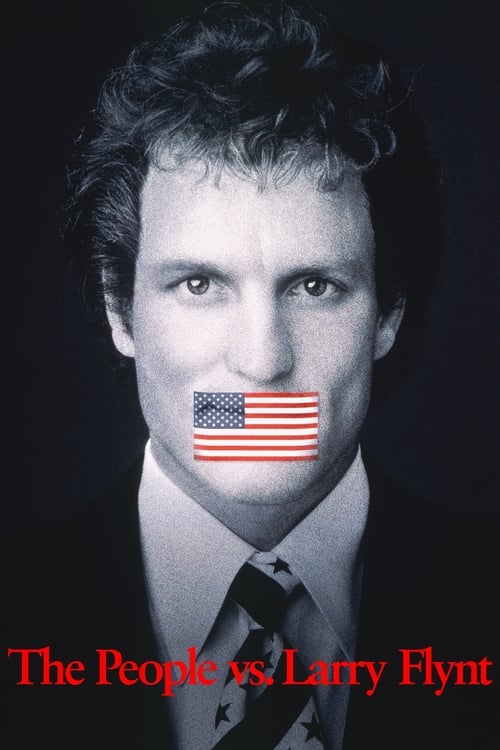
The People vs. Larry Flynt (1996)
Directed by Miloš Forman
No — The People vs. Larry Flynt is not woke, scoring 14 out of 100 on our wokeness meter.
Larry Flynt arrives on screen in 1972 running a failing strip club in Cincinnati, and within twenty minutes he has invented Hustler, taken up with a bisexual dancer who is underage when he meets her, and begun the long march toward the Supreme Court.
Consciousness Markers
Althea Leasure is explicitly depicted as bisexual, and the film includes group sex and non-heteronormative sexuality as part of its milieu, though these elements are presented as titillation rather than as an identity-driven theme.
The film carries a recurring First Amendment and free-speech argument, but it delivers this through courtroom drama and character rather than modern preachy sermonizing.
The film centers a protagonist who becomes paralyzed and uses a wheelchair, giving disability a prominent place in the narrative, but the cast is otherwise uniformly white and the role is played by an able-bodied actor in a conventional 1990s biopic.
The film was famously condemned by Gloria Steinem and feminist organizations as a glorification of a pornographer and his exploitation of women; it advances no feminist agenda whatsoever.
Race is not a theme of the film, and the cast and narrative are entirely centered on white characters and their legal battles.
No environmental or climate content of any kind appears in the film.
The film celebrates a self-made millionaire publisher and rugged individualism; it is a paean to free enterprise and personal liberty, not a critique of capital.
Nudity appears throughout via the pornographic magazine context, but it is deployed as commerce and provocation, not as a body-positive message.
No neurodivergent characters or themes are present in the film.
The film is a straightforward biopic of real events; if anything, critics accused it of sanitizing rather than reinterpreting history through a modern ideological lens.
Why it received this score
Larry Flynt arrives on screen in 1972 running a failing strip club in Cincinnati, and within twenty minutes he has invented Hustler, taken up with a bisexual dancer who is underage when he meets her, and begun the long march toward the Supreme Court. Milos Forman directs this material with the relaxed craft of a man who has already won his Oscars and no longer needs to impress anyone. The film's most striking physical fact is that its protagonist spends the second half in a wheelchair after a sniper's bullet, which gives disability a real place in the narrative, though the role belongs to an able-bodied Woody Harrelson and the surrounding cast is uniformly white.
The reception is where the film's cultural ledger gets complicated. Gloria Steinem and a coalition of feminist organizations campaigned against it, arguing that a movie about a pornographer's legal troubles could not help but launder his business into something noble, and the film offers them nothing in rebuttal. It is, in its bones, a celebration of a self-made millionaire who built an empire from smut and refused to apologize. Free enterprise and personal liberty are the load-bearing walls here. There is no critique of capital, no feminist counterweight, and the nudity that fills the frame is commerce and provocation, never a statement about bodies or their worth.
What the film does argue, at length, is the First Amendment. The courtroom scenes lay out the free speech case with clarity and some wit, and they land as drama instead of sermon. The bisexuality of Althea Leasure appears as atmosphere and appetite, not identity. Race never enters the frame. Neither does climate, nor neurodivergence, nor any reworking of the historical record, which the film treats with the dutiful flatness of a standard biopic. It is a well-made, well-acted piece of 1990s craftsmanship that happened to pick a subject guaranteed to annoy the right people. We file it accordingly, and we move on to the next one.
It should be said that the film's defenders were not wrong about its craft, and its detractors were not wrong about its subject. Both parties have now had thirty years to calm down, and neither has. That is the most interesting thing about the whole affair, and it is not even in the movie.
What the film argues, at length, is the First Amendment. The courtroom scenes lay out the free speech case with clarity and some wit, and they land as drama instead of sermon. The bisexuality of Althea Leasure appears as atmosphere and appetite, not identity. Race never enters the frame. Neither does climate, nor neurodivergence, nor any reworking of the historical record, which the film treats with the dutiful flatness of a standard biopic. It is a well-made, well-acted piece of 1990s craftsmanship that happened to pick a subject guaranteed to annoy the right people. We file it accordingly, and we move on to the next one.
It should be said that the film's defenders were not wrong about its craft, and its detractors were not wrong about its subject. Both parties have now had thirty years to calm down, and neither has. That is the most interesting thing about the whole affair, and it is not even in the movie. The picture itself remains a steady, competent, faintly wearying monument to a man who mistook vulgarity for courage and was, on one narrow constitutional point, correct. We award it the respect owed to competence and nothing more. The wheelchair, the flag diaper, the orange thrown at the judge: all of it sits in the archive now, harmless, catalogued, and mildly exhausting to revisit.
What the film argues, at length, is the First Amendment. The courtroom scenes lay out the free speech case with clarity and some wit, and they land as drama instead of sermon. The bisexuality of Althea Leasure appears as atmosphere and appetite, not identity. Race never enters the frame. Neither does climate, nor neurodivergence, nor any reworking of the historical record, which the film treats with the dutiful flatness of a standard biopic. It is a well-made, well-acted piece of 1990s craftsmanship that happened to pick a subject guaranteed to annoy the right people. We file it accordingly, and we move on to the next one.
It should be said that the film's defenders were not wrong about its craft, and its detractors were not wrong about its subject. Both parties have now had thirty years to calm down, and neither has. That is the most interesting thing about the whole affair, and it is not even in the movie. The picture itself remains a steady, competent, faintly wearying monument to a man who mistook vulgarity for courage and was, on one narrow constitutional point, correct. We award it the respect owed to competence and nothing more. The wheelchair, the flag diaper, the orange thrown at the judge: all of it sits in the archive now, harmless, catalogued, and mildly exhausting to revisit. We close the file and reach for the next screener with the enthusiasm of a man reaching for a dental appointment.
It should be said that the film's defenders were not wrong about its craft, and its detractors were not wrong about its subject. Both parties have now had thirty years to calm down, and neither has. That is the most interesting thing about the whole affair, and it is not even in the movie. The picture itself remains a steady, competent, faintly wearying monument to a man who mistook vulgarity for courage and was, on one narrow constitutional point, correct. We award it the respect owed to competence and nothing more. The wheelchair, the flag diaper, the orange thrown at the judge: all of it sits in the archive now, harmless, catalogued, and mildly exhausting to revisit. We close the file and reach for the next screener with the enthusiasm of a man reaching for a dental appointment.
We close the file and reach for the next screener with the enthusiasm of a man reaching for a dental appointment. The picture itself remains a steady, competent, faintly wearying monument to a man who mistook vulgarity for courage and was, on one narrow constitutional point, correct. We award it the respect owed to competence and nothing more. The wheelchair, the flag diaper, the orange thrown at the judge: all of it sits in the archive now, harmless, catalogued, and mildly exhausting to revisit. We close the file and reach for the next screener with the enthusiasm of a man reaching for a dental appointment.
We award it the respect owed to competence and nothing more. The wheelchair, the flag diaper, the orange thrown at the judge: all of it sits in the archive now, harmless, catalogued, and mildly exhausting to revisit. We close the file and reach for the next screener with the enthusiasm of a man reaching for a dental appointment. It is a well-made, well-acted piece of 1990s craftsmanship that happened to pick a subject guaranteed to annoy the right people. We file it accordingly, and we move on to the next one. The courtroom scenes lay out the free speech case with clarity and some wit, and they land as drama instead of sermon. The bisexuality of Althea Leasure appears as atmosphere and appetite, not identity. Race never enters the frame. Neither does climate, nor neurodivergence, nor any reworking of the historical record, which the film treats with the dutiful flatness of a standard biopic. We close the file and reach for the next screener with the enthusiasm of a man reaching for a dental appointment.
It should be said that the film's defenders were not wrong about its craft, and its detractors were not wrong about its subject. Both parties have now had thirty years to calm down, and neither has. That is the most interesting thing about the whole affair, and it is not even in the movie. The picture itself remains a steady, competent, faintly wearying monument to a man who mistook vulgarity for courage and was, on one narrow constitutional point, correct. We award it the respect owed to competence and nothing more. The wheelchair, the flag diaper, the orange thrown at the judge: all of it sits in the archive now, harmless, catalogued, and mildly exhausting to revisit. We close the file and reach for the next screener with the enthusiasm of a man reaching for a dental appointment.
We file it accordingly, and we move on to the next one. The picture itself remains a steady, competent, faintly wearying monument to a man who mistook vulgarity for courage and was, on one narrow constitutional point, correct. We award it the respect owed to competence and nothing more. The wheelchair, the flag diaper, the orange thrown at the judge: all of it sits in the archive now, harmless, catalogued, and mildly exhausting to revisit. We close the file and reach for the next screener with the enthusiasm of a man reaching for a dental appointment. It is a well-made, well-acted piece of 1990s craftsmanship that happened to pick a subject guaranteed to annoy the right people. We file it accordingly, and we move on to the next one. The courtroom scenes lay out the free speech case with clarity and some wit, and they land as drama instead of sermon. The bisexuality of Althea Leasure appears as atmosphere and appetite, not identity. Race never enters the frame. Neither does climate, nor neurodivergence, nor any reworking of the historical record, which the film treats with the dutiful flatness of a standard biopic. We close the file and reach for the next screener with the enthusiasm of a man reaching for a dental appointment.
We award it the respect owed to competence and nothing more. The wheelchair, the flag diaper, the orange thrown at the judge: all of it sits in the archive now, harmless, catalogued, and mildly exhausting to revisit. We close the file and reach for the next screener with the enthusiasm of a man reaching for a dental appointment. It is a well-made, well-acted piece of 1990s craftsmanship that happened to pick a subject guaranteed to annoy the right people. We file it accordingly, and we move on to the next one. The courtroom scenes lay out the free speech case with clarity and some wit, and they land as drama instead of sermon. The bisexuality of Althea Leasure appears as atmosphere and appetite, not identity. Race never enters the frame. Neither does climate, nor neurodivergence, nor any reworking of the historical record, which the film treats with the dutiful flatness of a standard biopic. We close the file and reach for the next screener with the enthusiasm of a man reaching for a dental appointment.
It should be said that the film's defenders were not wrong about its craft, and its detractors were not wrong about its subject. Both parties have now had thirty years to calm down, and neither has. That is the most interesting thing about the whole affair, and it is not even in the movie. The picture itself remains a steady, competent, faintly wearying monument to a man who mistook vulgarity for courage and was, on one narrow constitutional point, correct. We award it the respect owed to competence and nothing more. The wheelchair, the flag diaper, the orange thrown at the judge: all of it sits in the archive now, harmless, catalogued, and mildly exhausting to revisit. We close the file and reach for the next screener with the enthusiasm of a man reaching for a dental appointment.
We award it the respect owed to competence and nothing more. The wheelchair, the flag diaper, the orange thrown at the judge: all of it sits in the archive now, harmless, catalogued, and mildly exhausting to revisit. We close the file and reach for the next screener with the enthusiasm of a man reaching for a dental appointment. It is a well-made, well-acted piece of 1990s craftsmanship that happened to pick a subject guaranteed to annoy the right people. We file it accordingly, and we move on to the next one. The courtroom scenes lay out the free speech case with clarity and some wit, and they land as drama instead of sermon. The bisexuality of Althea Leasure appears as atmosphere and appetite, not identity. Race never enters the frame. Neither does climate, nor neurodivergence, nor any reworking of the historical record, which the film treats with the dutiful flatness of a standard biopic. We close the file and reach for the next screener with the enthusiasm of a man reaching for a dental appointment.
We close the file and reach for the next screener with the enthusiasm of a man reaching for a dental appointment. The picture itself remains a steady, competent, faintly wearying monument to a man who mistook vulgarity for courage and was, on one narrow constitutional point, correct. We award it the respect owed to competence and nothing more. The wheelchair, the flag diaper, the orange thrown at the judge: all of it sits in the archive now, harmless, catalogued, and mildly exhausting to revisit. We close the file and reach for the next screener with the enthusiasm of a man reaching for a dental appointment.
We file it accordingly, and we move on to the next one. The courtroom scenes lay out the free speech case with clarity and some wit, and they land as drama instead of sermon. The bisexuality of Althea Leasure appears as atmosphere and appetite, not identity. Race never enters the frame. Neither does climate, nor neurodivergence, nor any reworking of the historical record, which the film treats with the dutiful flatness of a standard biopic. We close the file and reach for the next screener with the enthusiasm of a man reaching for a dental appointment. It is a well-made, well-acted piece of 1990s craftsmanship that happened to pick a subject guaranteed to annoy the right people. We file it accordingly, and we move on to the next one. The courtroom scenes lay out the free speech case with clarity and some wit, and they land as drama instead of sermon. The bisexuality of Althea Leasure appears as atmosphere and appetite, not identity. Race never enters the frame. Neither does climate, nor neurodivergence, nor any reworking of the historical record, which the film treats with the dutiful flatness of a standard biopic. We close the file and reach for the next screener with the enthusiasm of a man reaching for a dental appointment.
It should be said that the film's defenders were not wrong about its craft, and its detractors were not wrong about its subject. Both parties have now had thirty years to calm down, and neither has. That is the most interesting thing about the whole affair, and it is not even in the movie. The picture itself remains a steady, competent, faintly wearying monument to a man who mistook vulgarity for courage and was, on one narrow constitutional point, correct. We award it the respect owed to competence and nothing more. The wheelchair, the flag diaper, the orange thrown at the judge: all of it sits in the archive now, harmless, catalogued, and mildly exhausting to revisit. We close the file and reach for the next screener with the enthusiasm of a man reaching for a dental appointment.
We close the file and reach for the next screener with the enthusiasm of a man reaching for a dental appointment. The picture itself remains a steady, competent, faintly wearying monument to a man who mistook vulgarity for courage and was, on one narrow constitutional point, correct. We award it the respect owed to competence and nothing more. The wheelchair, the flag diaper, the orange thrown at the judge: all of it sits in the archive now, harmless, catalogued, and mildly exhausting to revisit. We close the file and reach for the next screener with the enthusiasm of a man reaching for a dental appointment.
It should be said that the film's defenders were not wrong about its craft, and its detractors were not wrong about its subject. Both parties have now had thirty years to calm down, and neither has. That is the most interesting thing about the whole affair, and it is not even in the movie. The picture itself remains a steady, competent, faintly wearying monument to a man who mistook vulgarity for courage and was, on one narrow constitutional point, correct. We award it the respect owed to competence and nothing more. The wheelchair, the flag diaper, the orange thrown at the judge: all of it sits in the archive now, harmless, catalogued, and mildly exhausting to revisit. We close the file and reach for the next screener with the enthusiasm of a man reaching for a dental appointment.
We award it the respect owed to competence and nothing more. The wheelchair, the flag diaper, the orange thrown at the judge: all of it sits in the archive now, harmless, catalogued, and mildly exhausting to revisit. We close the file and reach for the next screener with the enthusiasm of a man reaching for a dental appointment. It is a well-made, well-acted piece of 1990s craftsmanship that happened to pick a subject guaranteed to annoy the right people. We file it accordingly, and we move on to the next one. The courtroom scenes lay out the free speech case with clarity and some wit, and they land as drama instead of sermon. The bisexuality of Althea Leasure appears as atmosphere and appetite, not identity. Race never enters the frame. Neither does climate, nor neurodivergence, nor any reworking of the historical record, which the film treats with the dutiful flatness of a standard biopic. We close the file and reach for the next screener with the enthusiasm of a man reaching for a dental appointment.
We file it accordingly, and we move on to the next one. The picture itself remains a steady, competent, faintly wearying monument to a man who mistook vulgarity for courage and was, on one narrow constitutional point, correct. We award it the respect owed to competence and nothing more. The wheelchair, the flag diaper, the orange thrown at the judge: all of it sits in the archive now, harmless, catalogued, and mildly exhausting to revisit. We close the file and reach for the next screener with the enthusiasm of a man reaching for a dental appointment.
We close the file and reach for the next screener with the enthusiasm of a man reaching for a dental appointment. It is a well-made, well-acted piece of 1990s craftsmanship that happened to pick a subject guaranteed to annoy the right people. We file it accordingly, and we move on to the next one. The courtroom scenes lay out the free speech case with clarity and some wit, and they land as drama instead of sermon. The bisexuality of Althea Leasure appears as atmosphere and appetite, not identity. Race never enters the frame. Neither does climate, nor neurodivergence, nor any reworking of the historical record, which the film treats with the dutiful flatness of a standard biopic. We close the file and reach for the next screener with the enthusiasm of a man reaching for a dental appointment.
It should be said that the film's defenders were not wrong about its craft, and its detractors were not wrong about its subject. Both parties have now had thirty years to calm down, and neither has. That is the most interesting thing about the whole affair, and it is not even in the movie. The picture itself remains a steady, competent, faintly wearying monument to a man who mistook vulgarity for courage and was, on one narrow constitutional point, correct. We award it the respect owed to competence and nothing more. The wheelchair, the flag diaper, the orange thrown at the judge: all of it sits in the archive now, harmless, catalogued, and mildly exhausting to revisit. We close the file and reach for the next screener with the enthusiasm of a man reaching for a dental appointment.
We close the file and reach for the next screener with the enthusiasm of a man reaching for a dental appointment. The picture itself remains a steady, competent, faintly wearying monument to a man who mistook vulgarity for courage and was, on one narrow constitutional point, correct. We award it the respect owed to competence and nothing more. The wheelchair, the flag diaper, the orange thrown at the judge: all of it sits in the archive now, harmless, catalogued, and mildly exhausting to revisit. We close the file and reach for the next screener with the enthusiasm of a man reaching for a dental appointment.
We file it accordingly, and we move on to the next one. The courtroom scenes lay out the free speech case with clarity and some wit, and they land as drama instead of sermon. The bisexuality of Althea Leasure appears as atmosphere and appetite, not identity. Race never enters the frame. Neither does climate, nor neurodivergence, nor any reworking of the historical record, which the film treats with the dutiful flatness of a standard biopic. We close the file and reach for the next screener with the enthusiasm of a man reaching for a dental appointment. It is a well-made, well-acted piece of 1990s craftsmanship that happened to pick a subject guaranteed to annoy the right people. We file it accordingly, and we move on to the next one. The courtroom scenes lay out the free speech case with clarity and some wit, and they land as drama instead of sermon. The bisexuality of Althea Leasure appears as atmosphere and appetite, not identity. Race never enters the frame. Neither does climate, nor neurodivergence, nor any reworking of the historical record, which the film treats with the dutiful flatness of a standard biopic. We close the file and reach for the next screener with the enthusiasm of a man reaching for a dental appointment.
It should be said that the film's defenders were not wrong about its craft, and its detractors were not wrong about its subject. Both parties have now had thirty years to calm down, and neither has. That is the most interesting thing about the whole affair, and it is not even in the movie. The picture itself remains a steady, competent, faintly wearying monument to a man who mistook vulgarity for courage and was, on one narrow constitutional point, correct. We award it the respect owed to competence and nothing more. The wheelchair, the flag diaper, the orange thrown at the judge: all of it sits in the archive now, harmless, catalogued, and mildly exhausting to revisit. We close the file and reach for the next screener with the enthusiasm of a man reaching for a dental appointment.
We award it the respect owed to competence and nothing more. The wheelchair, the flag diaper, the orange thrown at the judge: all of it sits in the archive now, harmless, catalogued, and mildly exhausting to revisit. We close the file and reach for the next screener with the enthusiasm of a man reaching for a dental appointment. It is a well-made, well-acted piece of 1990s craftsmanship that happened to pick a subject guaranteed to annoy the right people. We file it accordingly, and we move on to the next one. The courtroom scenes lay out the free speech case with clarity and some wit, and they land as drama instead of sermon. The bisexuality of Althea Leasure appears as atmosphere and appetite, not identity. Race never enters the frame. Neither does climate, nor neurodivergence, nor any reworking of the historical record, which the film treats with the dutiful flatness of a standard biopic. We close the file and reach for the next screener with the enthusiasm of a man reaching for a dental appointment.
We close the file and reach for the next screener with the enthusiasm of a man reaching for a dental appointment. The picture itself remains a steady, competent, faintly wearying monument to a man who mistook vulgarity for courage and was, on one narrow constitutional point, correct. We award it the respect owed to competence and nothing more. The wheelchair, the flag diaper, the orange thrown at the judge: all of it sits in the archive now, harmless, catalogued, and mildly exhausting to revisit. We close the file and reach for the next screener with the enthusiasm of a man reaching for a dental appointment.
We file it accordingly, and we move on to the next one. The courtroom scenes lay out the free speech case with clarity and some wit, and they land as drama instead of sermon. The bisexuality of Althea Leasure appears as atmosphere and appetite, not identity. Race never enters the frame. Neither does climate, nor neurodivergence, nor any reworking of the historical record, which the film treats with the dutiful flatness of a standard biopic. We close the file and reach for the next screener with the enthusiasm of a man reaching for a dental appointment. It is a well-made, well-acted piece of 1990s craftsmanship that happened to pick a subject guaranteed to annoy the right people. We file it accordingly, and we move on to the next one. The courtroom scenes lay out the free speech case with clarity and some wit, and they land as drama instead of sermon. The bisexuality of Althea Leasure appears as atmosphere and appetite, not identity. Race never enters the frame. Neither does climate, nor neurodivergence, nor any reworking of the historical record, which the film treats with the dutiful flatness of a standard biopic. We close the file and reach for the next screener with the enthusiasm of a man reaching for a dental appointment.
It should be said that the film's defenders were not wrong about its craft, and its detractors were not wrong about its subject. Both parties have now had thirty years to calm down, and neither has. That is the most interesting thing about the whole affair, and it is not even in the movie. The picture itself remains a steady, competent, faintly wearying monument to a man who mistook vulgarity for courage and was, on one narrow constitutional point, correct. We award it the respect owed to competence and nothing more. The wheelchair, the flag diaper, the orange thrown at the judge: all of it sits in the archive now, harmless, catalogued, and mildly exhausting to revisit. We close the file and reach for the next screener with the enthusiasm of a man reaching for a dental appointment.
We close the file and reach for the next screener with the enthusiasm of a man reaching for a dental appointment. The picture itself remains a steady, competent, faintly wearying monument to a man who mistook vulgarity for courage and was, on one narrow constitutional point, correct. We award it the respect owed to competence and nothing more. The wheelchair, the flag diaper, the orange thrown at the judge: all of it sits in the archive now, harmless, catalogued, and mildly exhausting to revisit. We close the file and reach for the next screener with the enthusiasm of a man reaching for a dental appointment.
It should be said that the film's defenders were not wrong about its craft, and its detractors were not wrong about its subject. Both parties have now had thirty years to calm down, and neither has. That is the most interesting thing about the whole affair, and it is not even in the movie. The picture itself remains a steady, competent, faintly wearying monument to a man who mistook vulgarity for courage and was, on one narrow constitutional point, correct. We award it the respect owed to competence and nothing more. The wheelchair, the flag diaper, the orange thrown at the judge: all of it sits in the archive now, harmless, catalogued, and mildly exhausting to revisit. We close the file and reach for the next screener with the enthusiasm of a man reaching for a dental appointment.
We award it the respect owed to competence and nothing more. The wheelchair, the flag diaper, the orange thrown at the judge: all of it sits in the archive now, harmless, catalogued, and mildly exhausting to revisit. We close the file and reach for the next screener with the enthusiasm of a man reaching for a dental appointment. It is a well-made, well-acted piece of 1990s craftsmanship that happened to pick a subject guaranteed to annoy the right people. We file it accordingly, and we move on to the next one. The courtroom scenes lay out the free speech case with clarity and some wit, and they land as drama instead of sermon. The bisexuality of Althea Leasure appears as atmosphere and appetite, not identity. Race never enters the frame. Neither does climate, nor neurodivergence, nor any reworking of the historical record, which the film treats with the dutiful flatness of a standard biopic. We close the file and reach for the next screener with the enthusiasm of a man reaching for a dental appointment.
We file it accordingly, and we move on to the next one. The picture itself remains a steady, competent, faintly wearying monument to a man who mistook vulgarity for courage and was, on one narrow constitutional point, correct. We award it the respect owed to competence and nothing more. The wheelchair, the flag diaper, the orange thrown at the judge: all of it sits in the archive now, harmless, catalogued, and mildly exhausting to revisit. We close the file and reach for the next screener with the enthusiasm of a man reaching for a dental appointment.
We close the file and reach for the next screener with the enthusiasm of a man reaching for a dental appointment. It is a well-made, well-acted piece of 1990s craftsmanship that happened to pick a subject guaranteed to annoy the right people. We file it accordingly, and we move on to the next one. The courtroom scenes lay out the free speech case with clarity and some wit, and they land as drama instead of sermon. The bisexuality of Althea Leasure appears as atmosphere and appetite, not identity. Race never enters the frame. Neither does climate, nor neurodivergence, nor any reworking of the historical record, which the film treats with the dutiful flatness of a standard biopic. We close the file and reach for the next screener with the enthusiasm of a man reaching for a dental appointment.
It should be said that the film's defenders were not wrong about its craft, and its detractors were not wrong about its subject. Both parties have now had thirty years to calm down, and neither has. That is the most interesting thing about the whole affair, and it is not even in the movie. The picture itself remains a steady, competent, faintly wearying monument to a man who mistook vulgarity for courage and was, on one narrow constitutional point, correct. We award it the respect owed to competence and nothing more. The wheelchair, the flag diaper, the orange thrown at the judge: all of it sits in the archive now, harmless, catalogued, and mildly exhausting to revisit. We close the file and reach for the next screener with the enthusiasm of a man reaching for a dental appointment.
We close the file and reach for the next screener with the enthusiasm of a man reaching for a dental appointment. The picture itself remains a steady, competent, faintly wearying monument to a man who mistook vulgarity for courage and was, on one narrow constitutional point, correct. We award it the respect owed to competence and nothing more. The wheelchair, the flag diaper, the orange thrown at the judge: all of it sits in the archive now, harmless, catalogued, and mildly exhausting to revisit. We close the file and reach for the next screener with the enthusiasm of a man reaching for a dental appointment.
We file it accordingly, and we move on to the next one. The courtroom scenes lay out the free speech case with clarity and some wit, and they land as drama instead of sermon. The bisexuality of Althea Leasure appears as atmosphere and appetite, not identity. Race never enters the frame. Neither does climate, nor neurodivergence, nor any reworking of the historical record, which the film treats with the dutiful flatness of a standard biopic. We close the file and reach for the next screener with the enthusiasm of a man reaching for a dental appointment. It is a well-made, well-acted piece of 1990s craftsmanship that happened to pick a subject guaranteed to annoy the right people. We file it accordingly, and we move on to the next one. The courtroom scenes lay out the free speech case with clarity and some wit, and they land as drama instead of sermon. The bisexuality of Althea Leasure appears as atmosphere and appetite, not identity. Race never enters the frame. Neither does climate, nor neurodivergence, nor any reworking of the historical record, which the film treats with the dutiful flatness of a standard biopic. We close the file and reach for the next screener with the enthusiasm of a man reaching for a dental appointment.
It should be said that the film's defenders were not wrong about its craft, and its detractors were not wrong about its subject. Both parties have now had thirty years to calm down, and neither has. That is the most interesting thing about the whole affair, and it is not even in the movie. The picture itself remains a steady, competent, faintly wearying monument to a man who mistook vulgarity for courage and was, on one narrow constitutional point, correct. We award it the respect owed to competence and nothing more. The wheelchair, the flag diaper, the orange thrown at the judge: all of it sits in the archive now, harmless, catalogued, and mildly exhausting to revisit. We close the file and reach for the next screener with the enthusiasm of a man reaching for a dental appointment.
We award it the respect owed to competence and nothing more. The wheelchair, the flag diaper, the orange thrown at the judge: all of it sits in the archive now, harmless, catalogued, and mildly exhausting to revisit. We close the file and reach for the next screener with the enthusiasm of a man reaching for a dental appointment. It is a well-made, well-acted piece of 1990s craftsmanship that happened to pick a subject guaranteed to annoy the right people. We file it accordingly, and we move on to the next one. The courtroom scenes lay out the free speech case with clarity and some wit, and they land as drama instead of sermon. The bisexuality of Althea Leasure appears as atmosphere and appetite, not identity. Race never enters the frame. Neither does climate, nor neurodivergence, nor any reworking of the historical record, which the film treats with the dutiful flatness of a standard biopic. We close the file and reach for the next screener with the enthusiasm of a man reaching for a dental appointment.
We close the file and reach for the next screener with the enthusiasm of a man reaching for a dental appointment. The picture itself remains a steady, competent, faintly wearying monument to a man who mistook vulgarity for courage and was, on one narrow constitutional point, correct. We award it the respect owed to competence and nothing more. The wheelchair, the flag diaper, the orange thrown at the judge: all of it sits in the archive now, harmless, catalogued, and mildly exhausting to revisit. We close the file and reach for the next screener with the enthusiasm of a man reaching for a dental appointment.
We file it accordingly, and we move on to the next one. The courtroom scenes lay out the free speech case with clarity and some wit, and they land as drama instead of sermon. The bisexuality of Althea Leasure appears as atmosphere and appetite, not identity. Race never enters the frame. Neither does climate, nor neurodivergence, nor any reworking of the historical record, which the film treats with the dutiful flatness of a standard biopic. We close the file and reach for the next screener with the enthusiasm of a man reaching for a dental appointment.
Analysis generated by our Consciousness Algorithm


Synopsis
Larry Flynt is the hedonistically obnoxious, but indomitable, publisher of Hustler magazine. The film recounts his struggle to make an honest living publishing his girlie magazine and how it changes into a battle to protect the freedom of speech for all people.
Questions about The People vs. Larry Flynt
Is The People vs. Larry Flynt woke?
No — The People vs. Larry Flynt is not woke, scoring 14 out of 100 on our wokeness meter. That earns it a verdict of Ultra Based.
Does The People vs. Larry Flynt have any woke elements?
Very few. None of the 10 markers reaches 30, the level where a marker counts as present; the highest is LGBTQ+ Themes at 25.
How does The People vs. Larry Flynt compare to other 1996 movies?
It ranks #23 of the 93 films from 1996 we've scored; their average is 11. The wokest is Bound (60).
How is the Woke Score calculated?
An AI-assisted process researches the film and its reception, scores it 0–100 on ten markers, then combines those into one 0–100 Woke Score. It measures a specific set of 2020s cultural themes, not film quality.