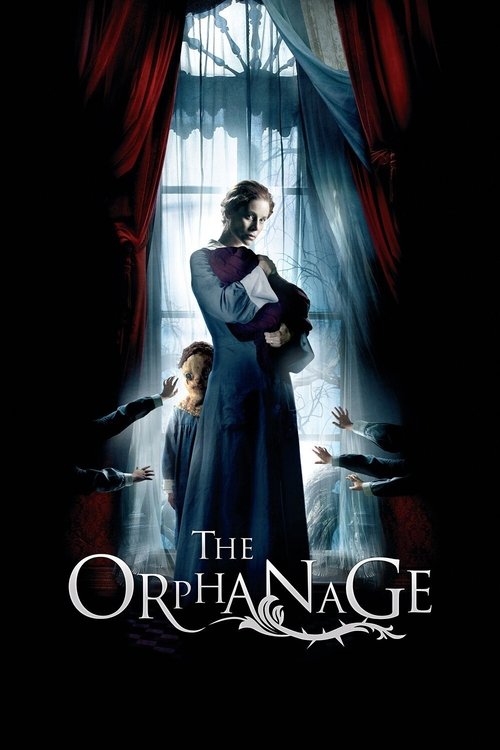
The Orphanage (2007)
Directed by J. A. Bayona
No — The Orphanage is not woke, scoring 0 out of 100 on our wokeness meter.
The Orphanage arrives from 2007, a time before every ghost story was required to carry a message in its teeth.
Consciousness Markers
The cast is a natural Spanish-language ensemble, with no modern representation-casting agenda or race-conscious casting commentary.
There are no LGBTQ+ themes, characters, or subtext in the film.
The film centers on a mother's grief and maternal devotion, but it does not advance or engage with a feminist agenda.
Race and racial identity are not thematic concerns in the film.
There is no climate-change or environmentalist messaging.
The film contains no critique of capitalism, wealth inequality, or class-based economic structures.
Tomás's facial deformity is treated as a source of tragedy and horror, not as a body-positivity theme.
Neurodivergence is not a subject or character trait explored in the film.
The film is a fictional ghost story and does not revise or reinterpret historical events.
The film aims to unsettle and move the audience emotionally rather than deliver progressive social lectures.
Why it received this score
The Orphanage arrives from 2007, a time before every ghost story was required to carry a message in its teeth. J. A. Bayona's debut concerns Laura, who returns to the seaside orphanage of her childhood with the intention of reopening it as a home for disabled children. Her adopted son Simón acquires an invisible friend. Then he vanishes. There follows a patient, mournful haunted-house picture, produced by Guillermo del Toro, that prefers dread to doctrine. The cast is a Spanish-language ensemble behaving as Spanish-language ensembles do. Nobody is present to satisfy a demographic ledger, and nobody remarks upon it.
The film's true subject is grief, and it does have a disabled child at the center of its backstory. Tomás, hidden away by his mother because of a facial deformity, drowns in a sea cave after the other orphans mock his mask. The film treats this as a source of horror and sorrow, which is what a Gothic story from 2007 would do. There is no invitation to celebrate his difference, no lesson about acceptance, just a dead boy and a guilty institution. Laura's maternal devotion drives the entire second half, but it is a mother's madness, not a thesis on gender. She slaps her son, loses him through her own careless hands, and chooses to die in order to rejoin him. That is tragedy, not advocacy.
Class and capital go unexamined. The orphanage is a charitable project, and the film never asks who funds it or why the money ran out. Race does not appear as a subject or as a talking point. The environment serves as weather and cliffside gloom, never as a warning. No diagnosis of neurodivergence, no reclamation of history, no sermon delivered to a captive audience. The remainder is craftsmanship: long corridors, a séance presided over by Geraldine Chaplin, a twist that lands because it is earned. The tally comes back empty, and for once that reads as a compliment. A modern classic of the genre, and a relic of a less scrutinized era.
Analysis generated by our Consciousness Algorithm


Synopsis
A woman brings her family back to her childhood home, which used to be an orphanage, intent on reopening it. Before long, her son starts to communicate with a new invisible friend.
Questions about The Orphanage
Is The Orphanage woke?
No — The Orphanage is not woke, scoring 0 out of 100 on our wokeness meter. That earns it a verdict of Ultra Based.
Does The Orphanage have any woke elements?
No. All 10 markers score zero.
How does The Orphanage compare to other 2007 movies?
It ranks #174 of the 201 films from 2007 we've scored; their average is 12. The wokest is Like Stars on Earth (92).
How is the Woke Score calculated?
An AI-assisted process researches the film and its reception, scores it 0–100 on ten markers, then combines those into one 0–100 Woke Score. It measures a specific set of 2020s cultural themes, not film quality.