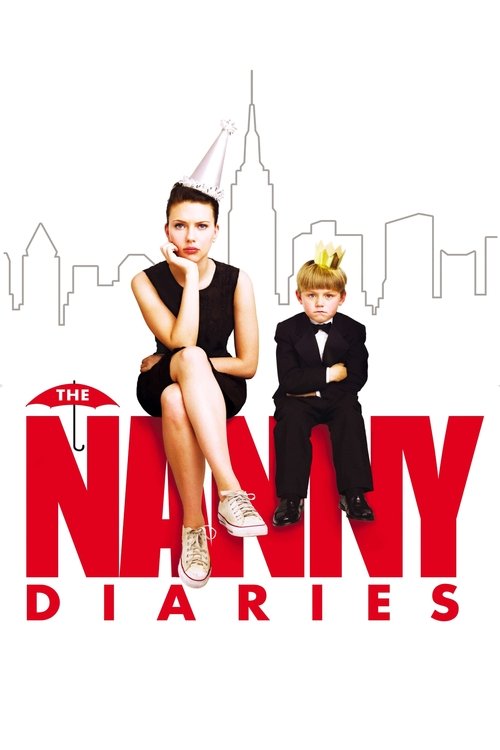
The Nanny Diaries (2007)
Directed by Shari Springer Berman
No — The Nanny Diaries is not especially woke, scoring 27 out of 100 on our wokeness meter.
"The Nanny Diaries" arrives from 2007, a year in which a young woman could still graduate from Montclair State, wander into a park, and accidentally accept a job as domestic labor for a family that never bothers to learn her name.
Consciousness Markers
The core of the film is a satire of obscenely wealthy Upper East Side families who treat their nannies as disposable labor, culminating in Annie's taped indictment of the Xs. Genuine eat-the-rich energy, though played for comedy rather than polemic.
A woman director (Shari Springer Berman) and a story about a young woman finding herself while being exploited as domestic labor, with Mrs. X's arc of leaving her husband. Modest, pre-2015 feminist framing rather than an agenda.
Annie's secretly recorded monologue, played to the Upper East Side mothers, functions as a climactic lecture on the moral failings of the wealthy. It lands as a single set-piece rather than sustained preaching.
Alicia Keys appears as Annie's friend Lynette, providing a Black presence in an otherwise white ensemble, but the role is incidental and carries no commentary on representation.
The film is a class satire, not a racial one; Lynette's Blackness is never a subject of the narrative. No racial consciousness on display.
No LGBTQ+ characters or themes. A running gag has Annie pretend Lynette and her roommate Calvin are a straight couple, which is the opposite of queer content.
No environmental or climate themes whatsoever.
No body positivity themes or messaging.
No neurodivergence themes; Grayer's behavioral issues are attributed to parental neglect, not neurology.
No historical revisionism; the film is a contemporary-set comedy of manners.
Why it received this score
"The Nanny Diaries" arrives from 2007, a year in which a young woman could still graduate from Montclair State, wander into a park, and accidentally accept a job as domestic labor for a family that never bothers to learn her name. The premise is essentially anthropological, and the film knows it, framing Annie Braddock's descent into the X household as fieldwork. Scarlett Johansson plays the observer. Laura Linney plays Mrs. X, a woman whose cruelty is revealed to be the residue of a marriage to a serial adulterer. The arrangement is a class satire first and foremost, and it has real teeth where it counts: the wealthy treat the help as furniture, the help finally speaks, and the speech is caught on tape.
That tape is the film's one genuine act of sermonizing, a secretly recorded monologue played aloud to a room of Upper East Side mothers. It lands hard, and then the film returns to its gentler business of romance and self-discovery. The progressive content here is modest and of its era: a woman director, a heroine who finds herself through exploited labor, and a wife who leaves her husband by the final reel. Alicia Keys appears as Lynette, a friend with no narrative function beyond friendship, and her presence registers as casting, not commentary. The apartment ruse in which Annie passes Lynette and her roommate off as a couple is a gag about respectability, nothing more.
We have, then, a comedy of manners with a conscience it exercises sparingly. The rich are indicted, lightly. The nanny is vindicated, briefly. Mrs. X is redeemed, which is generous of everyone involved. It is a film that wants credit for noticing that money corrodes people, and it earns some of that credit without ever quite knowing what to do with it.
Analysis generated by our Consciousness Algorithm


Synopsis
A college graduate goes to work as a nanny for a rich New York family. Ensconced in their home, she has to juggle their dysfunction, a new romance, and the spoiled brat in her charge.
Questions about The Nanny Diaries
Is The Nanny Diaries woke?
No — The Nanny Diaries is not especially woke, scoring 27 out of 100 on our wokeness meter. That earns it a verdict of Based.
Does The Nanny Diaries have any woke elements?
2 of the 10 markers register at 30 or above, led by Eat the Rich (50) and Feminist Agenda (30). On Eat the Rich: The core of the film is a satire of obscenely wealthy Upper East Side families who treat their nannies as disposable labor, culminating in Annie's taped indictment of the Xs.
How does The Nanny Diaries compare to other 2007 movies?
It ranks #20 of the 201 films from 2007 we've scored; their average is 12. The wokest is Like Stars on Earth (92).
How is the Woke Score calculated?
An AI-assisted process researches the film and its reception, scores it 0–100 on ten markers, then combines those into one 0–100 Woke Score. It measures a specific set of 2020s cultural themes, not film quality.