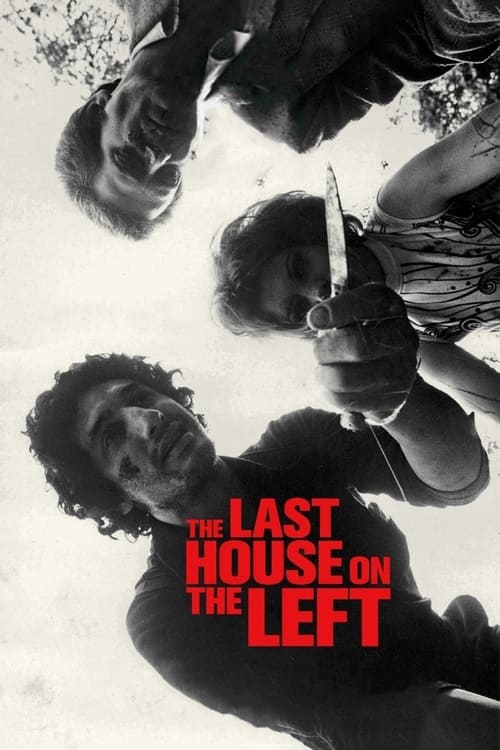
The Last House on the Left (1972)
Directed by Wes Craven
No — The Last House on the Left is not woke, scoring 0 out of 100 on our wokeness meter.
Wes Craven's debut arrives with a reputation that precedes it: a ninety-thousand-dollar production shot in seven days, banned in the United Kingdom under the video nasty panic, and later canonized as a landmark of American horror.
Consciousness Markers
The cast is predominantly white with one Black actress in a minor, unremarked role; no deliberate inclusive casting agenda.
No LGBTQ+ characters or themes; the forced sexual acts between female victims are depicted as violence, not representation.
A rape-revenge exploitation film that uses sexual violence as spectacle; the mother's revenge is visceral but not framed as a feminist agenda.
No engagement with racial issues or consciousness; the story is racially unmarked.
No environmental or climate themes whatsoever.
Villains are sadistic criminals, not capitalists; no critique of wealth or class.
No body positivity themes; the film's treatment of bodies is exploitative and violent.
No neurodivergent characters or themes; Junior's heroin addiction is not framed as neurodivergence.
A contemporary horror film with no historical revisionism.
No preachy didactic messaging; the film's moral about violence is implicit and not delivered as a lecture.
Why it received this score
Wes Craven's debut arrives with a reputation that precedes it: a ninety-thousand-dollar production shot in seven days, banned in the United Kingdom under the video nasty panic, and later canonized as a landmark of American horror. The plot is a blunt instrument. Two teenage girls are abducted, degraded, and killed by fugitives, and the killers then take shelter in the home of one victim's parents, who exact a revenge of comparable savagery. Craven reportedly wanted to show death without the glamour that Westerns had lent the vigilante hero. That is a moral position, but it is an implicit one, and it never announces itself.
The cast is composed of unknowns and soap opera veterans, all white, with no inclusive casting agenda to speak of. The film's treatment of its female characters is exploitation in the truest sense: the camera lingers on their suffering, and the mother's retaliation, which involves a sexual act and a bite, is staged for shock. Calling this a feminist statement would require a generosity the material does not earn. There is no racial consciousness here, no environmental theme, no critique of wealth, no interest in neurodivergence, and no revisionist reading of history. The villains are sadists, not capitalists.
What remains is a nasty, efficient piece of filmmaking that trusts its audience to draw its own conclusions. Nothing is explained. Nobody turns to the camera to instruct us. The reevaluation it has received over the decades concerns its craft and its performances, not its politics. Our instruments register nothing. The ledger stays blank.
Analysis generated by our Consciousness Algorithm


Synopsis
On the eve of her 17th birthday, Mari and friend Phyllis set off from her family home to attend a rock concert in the city. Attempting to score some drugs on the way, the pair run afoul of a group of vicious crooks, headed up by the sadistic Krug.
Questions about The Last House on the Left
Is The Last House on the Left woke?
No — The Last House on the Left is not woke, scoring 0 out of 100 on our wokeness meter. That earns it a verdict of Ultra Based.
Does The Last House on the Left have any woke elements?
No. All 10 markers score zero.
How does The Last House on the Left compare to other 1972 movies?
It ranks #19 of the 24 films from 1972 we've scored; their average is 14. The wokest is Silent Running (69).
How is the Woke Score calculated?
An AI-assisted process researches the film and its reception, scores it 0–100 on ten markers, then combines those into one 0–100 Woke Score. It measures a specific set of 2020s cultural themes, not film quality.