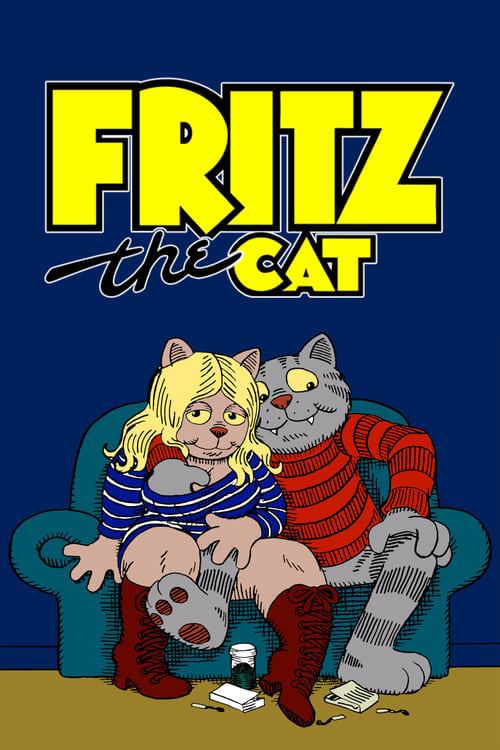
Fritz the Cat (1972)
Directed by Ralph Bakshi
No · Ultra Based
How we score movies →Consciousness Markers
The film satirizes radical politics and revolution with anarchic energy, though it mocks idealistic radicalism more than it critiques systemic capitalism.
The film engages with race through urban scenes and African American characters, but these appear to be satirical caricatures rather than demonstrations of genuine cultural awareness.
While satire carries implicit critique, the film remains primarily anarchic and absurdist rather than preachy or preachy in tone.
The film includes African American actress Rosetta LeNoire, but portrayal appears in problematic satirical contexts rather than demonstrating respectful representation.
Fritz is a womanizer whose conquests drive the narrative. Women exist primarily as objects of pursuit rather than as agents of their own stories.
An X-rated hedonistic romp centered on sexual conquest does not engage in body-positive or inclusive messaging.
The film satirizes 1960s counterculture without engaging in historical revisionism or reframing of past events.
No meaningful LGBTQ+ themes or representation present in the film.
No environmental themes or climate-related messaging present whatsoever.
No representation of or themes related to neurodivergence present in the film.


Synopsis
In late 1960s New York City, fed up with monotonous college life and police repression, free-spirited Fritz, an impenitent seducer and unrestrained party-animal, decides to explore the world. And just like that, as he flees NYC, heading to San Francisco, Fritz embarks on an endless adventure of illumination. Immersed in a world surrounded by drugs and sex, Fritz participates in mad orgies, brings about a revolution, incites mass urban riots, and crosses paths with drug-addled Nazi bikers.
Why it received this score
Ralph Bakshi's Fritz the Cat arrives as a monument to transgression, the first animated feature to earn an X rating, and it wears this distinction with the pride of a cat that has knocked every breakable object from a shelf. The film is undeniably a product of its era, a satirical dissection of 1960s counterculture that treats all ideologies with equal indifference. Fritz's odyssey from New York to San Francisco unfolds as a picaresque romp through drugs, promiscuity, and radical politics, with each scene seeming to exist primarily to violate the sensibilities of the conventional viewer.
What distinguishes Fritz the Cat from contemporary progressive cinema is its lack of consciousness about the implications of its own satire. The film mocks hippies, revolutionaries, and the sexual liberation movement with the same anarchic abandon it applies to establishment figures. There is no attempt to center marginalized voices or to treat any subject with particular gravity. When the film ventures into Harlem or portrays scenes of urban unrest, these moments function as satirical props rather than expressions of solidarity or cultural awareness. The women in Fritz's orbit exist primarily as conquests, their characterization thin enough to see through.
For those seeking contemporary progressive sensibilities, this film offers almost nothing. It is transgressive, certainly, but transgression and social consciousness are not synonymous. Fritz the Cat is a relic of an older tradition of satire, one that assumed the audience possessed sufficient cultural literacy to parse the targets without needing explicit moral guidance. Whether this approach constitutes actual satire or merely shock for shock's sake remains debatable, but either way, it leaves little residue of the specific cultural markers that define modern progressive filmmaking.
Analysis generated by our Consciousness Algorithm
Critic Reviews
“Excellent animation and montage shore up a plot which has a few howls, several chuckles and many smiles.”
“A low, bawdy cartoon feature that hasn't forgotten that there still can be something uniquely funny in animated films that exaggerate human actions and emotions (in this case, love, rage, compassion and, especially, lust) to the extraordinary extents available only in cartoons.”
“Despite some ingenious effects, a generally trivial exercise that never matches the punch of the original.”
“Contemporary viewers are more likely to find Fritz the Cat a mildly amusing period piece, as dated as a Nehru jacket. ”