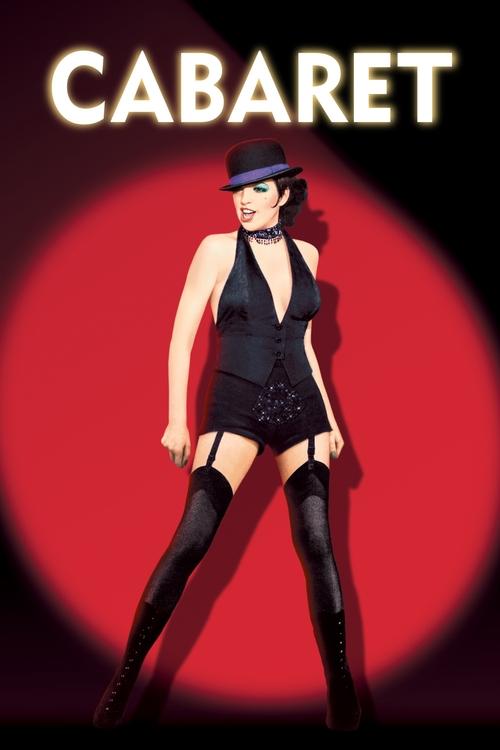
Cabaret (1972)
Directed by Bob Fosse
Partly · Woke-Adjacent
How we score movies →Consciousness Markers
The film centers characters with ambiguous and non-normative sexual orientations, particularly Sally Bowles and the Emcee. Post-Stonewall camp aesthetics and gender ambiguity are central to Fosse's vision, making this one of the earliest mainstream films to foreground queer identity without pathologizing it.
Sally Bowles is a sexually autonomous female protagonist whose desires drive the plot, which was genuinely radical for 1972. However, the film's emphasis on spectacle and the male directorial gaze means her agency is filtered through a somewhat objectifying lens by contemporary standards.
The cast is predominantly white and European, reflecting 1972 Hollywood and the historical setting. While Liza Minnelli's leading role as a complex female character was progressive for its time, the film lacks deliberate racial or ethnic diversity by contemporary standards.
While the film carries political weight regarding fascism's rise and sexual liberation, it maintains a primarily aesthetic rather than preachy approach. Fosse privileges spectacle and irony over direct moral instruction, though the film's historical setting does carry implicit warnings.
While the film depicts decadence and excess in Weimar Berlin, it does not articulate a coherent anti-capitalist critique. The nightclub setting allows for some commentary on commodification of bodies and sexuality, but this remains implicit rather than explicit.
The film employs historical irony and some revisionist distance from its 1930s setting, but it does not fundamentally rewrite history or challenge historical narratives. The approach is more evasive than revisionist.
The film engages with the historical rise of fascism but does not foreground racial consciousness or grapple meaningfully with antisemitism despite the Jewish characters and historical context. This remains largely background material rather than central moral engagement.
The film's aesthetic emphasizes stylized bodies within the cabaret spectacle, but this is more about performance and display than body positivity in the contemporary sense. There is no deliberate celebration of diverse body types or challenge to beauty standards.
Climate themes are entirely absent from the film. The setting and narrative offer no opportunity for environmental consciousness, and the film makes no gestures toward ecological awareness.
Neurodivergence is not addressed in the film. No characters are depicted with autism, ADHD, or other neurological differences, and the film makes no gestures toward disability or neurodivergent representation.


Synopsis
Inside the Kit Kat Club of 1931 Berlin, starry-eyed singer Sally Bowles and an impish emcee sound the clarion call to decadent fun, while outside a certain political party grows into a brutal force.
Why it received this score
Cabaret arrives as one of the earliest post-Stonewall Hollywood musicals to foreground sexual ambiguity and gender nonconformity without apology or neurotic equivocation. Bob Fosse's direction indulges in camp spectacle, sexual liberation, and the queer iconography that would become central to artistic resistance throughout the decade. Liza Minnelli's Sally Bowles is not merely a female character but a sexually autonomous figure whose desires drive the narrative, while Joel Grey's Emcee exists in a space of deliberate gender ambiguity that the film treats as natural rather than pathological. The film's engagement with decadence and sexual transgression in pre-Nazi Berlin functions as both historical document and implicit commentary on fascism's relationship to sexual repression.
However, the progressive sensibilities on display here operate within the constraints of 1972 cinema and should not be mistaken for contemporary social consciousness. The film's treatment of its female characters, while radical for its era, still filters female sexuality through a male directorial gaze that emphasizes spectacle and masochistic aesthetics rather than genuine agency. The representation of the Jewish characters and the approaching Holocaust exists as historical backdrop rather than central moral reckoning, and the film's ironic distance from its own political moment can read as evasion rather than engagement. The racial composition of the cast reflects the production's era and European setting but lacks the deliberate consciousness about representation that would later become a marker of progressive filmmaking.
The film's enduring cultural significance lies in its refusal of mid-century Hollywood propriety regarding sexuality and gender presentation. Yet we must acknowledge that pioneering work in one era does not necessarily translate to high marks on contemporary progressive metrics. Cabaret deserves credit for its historical boldness while recognizing that it does not meet the comprehensive social consciousness standards that would develop in subsequent decades. It remains a film that dared to center queer identity and female sexual autonomy at a moment when such gestures carried genuine cultural weight.
Analysis generated by our Consciousness Algorithm
Critic Reviews
“Minnelli and Grey sparkle, and the Fosse flash is everywhere in evidence.”
“Chilling Fosse vision of Weimar Berlin, stylishly directed and choreographed, featuring a show-stopping musical performance by Minnelli, Grey's unforgettable emcee and thoughtful acting from Michael York.”
“It is literate, bawdy, sophisticated, sensual, cynical, heart-warming, and disturbingly thought-provoking.”
“By the time Scenarist Allen and Director Fosse have wrung them out, what's left - with one exception - is mostly slack and sour.”