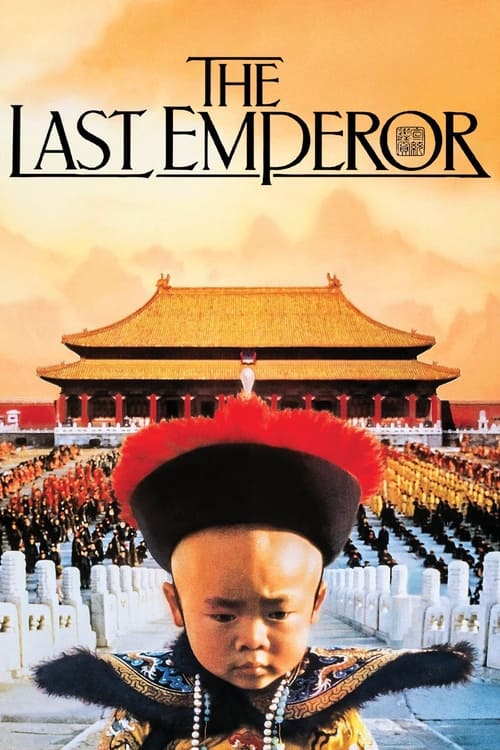
The Last Emperor (1987)
Directed by Bernardo Bertolucci
No — The Last Emperor is not woke, scoring 0 out of 100 on our wokeness meter.
Bernardo Bertolucci's The Last Emperor arrives with the confidence of a film that knows it will collect nine Academy Awards and feels no need to hurry.
Consciousness Markers
The film features a predominantly Chinese cast, but this is historically appropriate to the story of Puyi and not a modern inclusive casting choice; no deliberate race-swapping or diversity initiative is present.
No LGBTQ+ characters, relationships, or themes appear in the film.
Women are present as empresses and consorts, but the narrative focuses on Puyi's life; no feminist agenda or gender-justice commentary is advanced.
The film depicts Chinese history under Japanese occupation and Western influence, but it does not engage with modern racial consciousness or racial justice themes.
No environmental or climate-change themes are present.
The film portrays imperial decadence and communist re-education, but it is a historical drama rather than a modern anti-capitalist or eat-the-rich polemic.
No body-positivity themes or body-diversity messaging appears.
No neurodivergent characters or themes are present.
The film is a biographical drama based on Puyi's autobiography and includes some historical inaccuracies, but it does not reinterpret history through a modern progressive lens.
The film depicts political re-education and propaganda, but it does not preach modern social-justice lessons to the audience.
Why it received this score
Bernardo Bertolucci's The Last Emperor arrives with the confidence of a film that knows it will collect nine Academy Awards and feels no need to hurry. It follows Puyi from a frightened toddler summoned to the Forbidden City through abdication, exile, puppet emperorship, and finally a garden in Mao's China. The production secured the actual palace, nineteen thousand extras, and the cooperation of a government that had notes on the script. It declines to supply a moral. The film observes. It does not instruct.
The political material is present, and heavy. Puyi is held as a war criminal, interrogated, made to watch footage of Japanese atrocities, and slowly bent into agreement. The Cultural Revolution parades through the final act with dunce caps and sandwich boards. A viewer braced for a lesson about power, complicity, or empire will wait a long time. Bertolucci keeps the camera at a respectful distance and lets the century do the shouting. The film's inaccuracies, and there are several, flatter its protagonist as a man, not as a vessel for anything current.
On the matter of modern social consciousness, the ledger is empty. The cast is Chinese because the story is Chinese, a question of geography and history, not of casting initiative. Women appear as empresses and consorts and are granted interiority without being conscripted into an argument. There is no environmental sermon, no economic polemic, no body-diversity messaging, no neurodivergent arc, no reclaimed history in the contemporary sense. Even the re-education scenes, which could so easily become a lecture, remain a portrait of a specific bureaucratic cruelty. It is a large, patient, beautiful film about a man who lost everything twice.
Analysis generated by our Consciousness Algorithm


Synopsis
A dramatic history of Pu Yi, the last of the Emperors of China, from his lofty birth and brief reign in the Forbidden City, the object of worship by half a billion people; through his abdication, his decline and dissolute lifestyle; his exploitation by the invading Japanese, and finally to his obscure existence as just another peasant worker in the People's Republic.
Questions about The Last Emperor
Is The Last Emperor woke?
No — The Last Emperor is not woke, scoring 0 out of 100 on our wokeness meter. That earns it a verdict of Ultra Based.
Does The Last Emperor have any woke elements?
No. All 10 markers score zero.
How does The Last Emperor compare to other 1987 movies?
It ranks #50 of the 59 films from 1987 we've scored; their average is 8. The wokest is Maurice (68).
How is the Woke Score calculated?
An AI-assisted process researches the film and its reception, scores it 0–100 on ten markers, then combines those into one 0–100 Woke Score. It measures a specific set of 2020s cultural themes, not film quality.