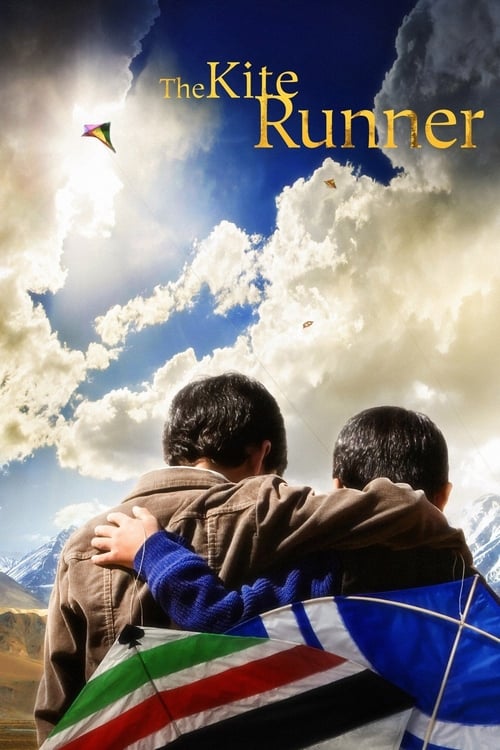
The Kite Runner (2007)
Directed by Marc Forster
No — The Kite Runner is not especially woke, scoring 26 out of 100 on our wokeness meter.
The Kite Runner arrives with a ledger already written in blood and kite string, and it asks us to audit it.
Consciousness Markers
The cast is almost entirely Afghan, Iranian, and Middle Eastern performers, with native Dari speakers cast as the child leads and several adult actors learning Dari for authenticity. This is organic, story-driven representation rather than checkbox casting, but it is substantial.
The Pashtun/Hazara ethnic hierarchy is central: Hassan's Hazara status drives his subjugation, and the film explicitly frames the discrimination and its violent consequences. It is a genuine thematic pillar rather than a modern social-justice overlay.
The film carries a moralizing current about guilt, cowardice, and atonement, and gestures at the Taliban's brutality, but it remains a sentimental drama rather than a sermon.
Soraya's backstory gestures at the sexual double standard that shames women while forgiving men, and the Taliban's treatment of women is noted in passing, but the film is squarely a male-centered story of guilt and redemption.
No LGBTQ+ themes or characters appear; the film's notorious assault scene is about violence and ethnic humiliation, not sexuality.
No environmental or climate themes whatsoever.
No critique of capitalism or wealth; the protagonist's family is affluent and the film treats class as backdrop, not target.
No body-positivity themes present.
No neurodivergence themes or characters.
The film uses real historical events (Soviet invasion, Taliban rule) as a backdrop for a fictional story but does not revise or reinterpret the historical record.
Why it received this score
The Kite Runner arrives with a ledger already written in blood and kite string, and it asks us to audit it. Marc Forster's adaptation of Khaled Hosseini's novel moves from Kabul in 1978 to Fremont, California, to a Taliban-held city where a man in a false beard goes looking for a boy. The Pashtun and Hazara divide is not decoration here. It is the mechanism. Hassan is a Hazara, and that fact is what permits Assef and his gang to do what they do in the alley while Amir watches from a doorway. The film states the hierarchy plainly and lets it drive the violence, which is a genuine thematic pillar and not a modern overlay applied after the fact.
The cast is nearly all Afghan, Iranian, and Middle Eastern performers, with native Dari speakers as the children and several adults who learned the language for the sake of the sound of it. This is representation that follows the story instead of preceding it, the rarer and more durable variety. The moralizing current runs underneath everything: cowardice, guilt, atonement, the debt a man owes to a friend he failed at the age of ten. It is a sentimental drama with a sermon tucked in its pocket, though it never climbs the pulpit for long.
Elsewhere the film is quiet. Soraya's confession about the double standard that shamed her while forgiving the man involved gets one scene and then evaporates. This remains a male story about male guilt, told with a straight face and a soft score. There is no environmental agenda, no economic critique, no interest in bodies or brains or the historical record beyond using real events as wallpaper. A modest, well-meaning picture, then. A conscience, and a narrow one. The kites fly, the boy runs, and the ledger closes at a respectable figure.
{"thematic_tags": ["book_adaptation"]}】
Analysis generated by our Consciousness Algorithm


Synopsis
After spending years in California, Amir returns to his homeland in Afghanistan to help his old friend Hassan, whose son is in trouble.
Questions about The Kite Runner
Is The Kite Runner woke?
No — The Kite Runner is not especially woke, scoring 26 out of 100 on our wokeness meter. That earns it a verdict of Based.
Does The Kite Runner have any woke elements?
2 of the 10 markers register at 30 or above, led by Racial Consciousness (55) and Representation Casting (55). On Racial Consciousness: The Pashtun/Hazara ethnic hierarchy is central: Hassan's Hazara status drives his subjugation, and the film explicitly frames the discrimination and its violent consequences.
How does The Kite Runner compare to other 2007 movies?
It ranks #22 of the 201 films from 2007 we've scored; their average is 12. The wokest is Like Stars on Earth (92).
How is the Woke Score calculated?
An AI-assisted process researches the film and its reception, scores it 0–100 on ten markers, then combines those into one 0–100 Woke Score. It measures a specific set of 2020s cultural themes, not film quality.