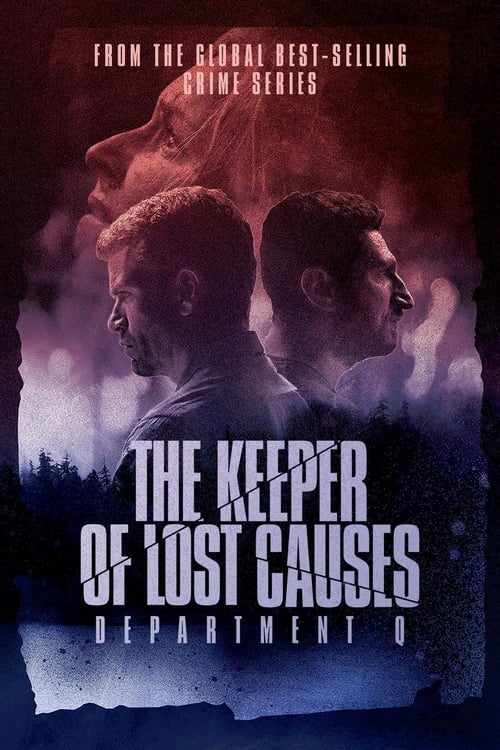
The Keeper of Lost Causes (2013)
Directed by Mikkel Nørgaard
No — The Keeper of Lost Causes is not woke, scoring 7 out of 100 on our wokeness meter.
The Keeper of Lost Causes arrives from Denmark with the sober equipment of a Nordic noir procedural: rain, institutional corridors, a cold case unit staffed by two men and a filing system.
Consciousness Markers
Fares Fares plays Assad, a Middle Eastern–background assistant, and Divya Das appears in the cast, but this diversity is faithful to the source novel and presented without commentary or messaging.
The victim is a female politician, but she functions as a kidnapping victim and plot engine rather than a vehicle for any feminist argument.
No LGBTQ+ characters, relationships, or themes appear anywhere in this Nordic noir procedural.
Assad's immigrant background exists as character texture; the film makes no racial commentary or consciousness-raising gestures.
No environmental themes or climate messaging of any kind.
No critique of capitalism, wealth, or class structures; the antagonist's motive is personal revenge.
No body positivity themes present.
The brother Uffe is mentally disabled, but this is a plot circumstance rather than any neurodivergence-affirming statement.
A straightforward adaptation of a contemporary crime novel with no historical revisionism.
A grim, plot-driven thriller that never pauses to lecture the audience on social issues.
Why it received this score
The Keeper of Lost Causes arrives from Denmark with the sober equipment of a Nordic noir procedural: rain, institutional corridors, a cold case unit staffed by two men and a filing system. Mikkel Nørgaard directs the adaptation of Jussi Adler-Olsen's novel with efficiency and no interest in sermonizing. Carl Mørck is demoted to Department Q after a raid goes wrong. His assistant Assad, played by Fares Fares, brings a Middle Eastern background that is faithful to the source and presented as texture. Divya Das appears in the cast. The film does not pause to comment on this casting, and the narrative does not organize itself around representation. That restraint is not a moral achievement. It is simply the film's temperament.
Merete Lynggaard is a female politician, and her ordeal drives the plot. She is a kidnapping victim in a pressure chamber, a device for suspense and revenge. The film never converts her suffering into a feminist thesis. Her brother Uffe is mentally disabled, and that condition serves as a plot circumstance, not as an affirming statement about neurodivergence. The antagonist Lasse acts from personal revenge tied to a childhood car crash. No anti-capitalist critique follows from his motive. No climate concerns intrude. No racial consciousness arises from Assad's immigrant background. No LGBTQ characters or themes appear. The film has no historical revisionist project. It is a contemporary crime story with a grim clock ticking.
The final act rescues Lynggaard from the pressure chamber, arrests Lasse, and restores the detectives. The film closes with professional vindication, not social argument. Its cultural awareness is minimal and incidental. The casting reflects the novel's ensemble, and the female victim reflects the genre's habit of turning women into engines of male investigation. Neither gesture is framed as a lesson. We are left with a competent thriller that never lectures, never preaches, and never asks the audience to applaud its politics. In the taxonomy of social consciousness, this is a dry vintage. It pairs well with a cold case file and a quiet evening.
Analysis generated by our Consciousness Algorithm
Part of


Synopsis
Denmark, 2013. Police officers Carl Mørck and Hafez el-Assad, sole members of Department Q, which is focused on closing cold cases, investigate the disappearance of politician Merete Lynggaard, vanished when she and her brother were traveling aboard a ferry five years ago.
Questions about The Keeper of Lost Causes
Is The Keeper of Lost Causes woke?
No — The Keeper of Lost Causes is not woke, scoring 7 out of 100 on our wokeness meter. That earns it a verdict of Ultra Based.
Does The Keeper of Lost Causes have any woke elements?
Very few. None of the 10 markers reaches 30, the level where a marker counts as present; the highest is Representation Casting at 22.
How does The Keeper of Lost Causes compare to other 2013 movies?
It ranks #173 of the 274 films from 2013 we've scored; their average is 14. The wokest is Belle (76).
Is The Keeper of Lost Causes the most woke Department Q movie?
No. It ranks #4 of the 4 Department Q films we've scored; the wokest is The Purity of Vengeance (33).