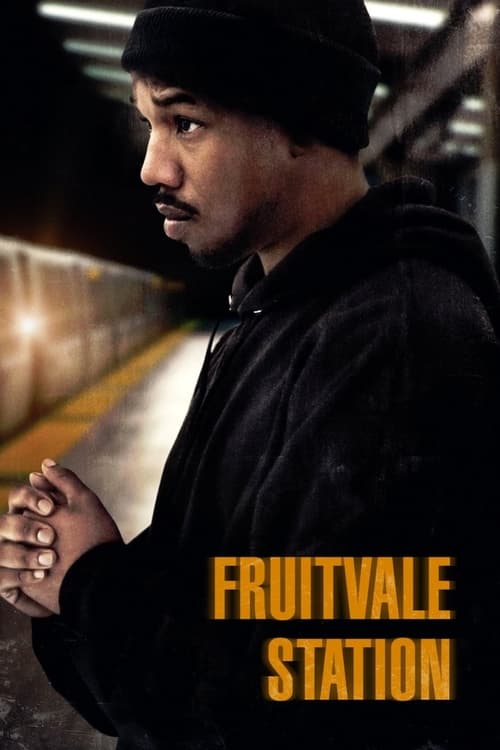
Fruitvale Station (2013)
Directed by Ryan Coogler
Yes — Fruitvale Station is woke, scoring 60 out of 100 on our wokeness meter.
Ryan Coogler's debut opens with the actual cellphone footage from the Fruitvale platform, a decision that announces the film's method: no embellishment, no editorializing, just a documented fact placed at the front so that the hour and a half which follows can do its slow work.
Consciousness Markers
The film is explicitly about racism, police brutality, and the value of a Black life, making racial consciousness its central theme.
Predominantly Black cast and Black director telling a Black American story with authenticity; casting is central to the film's identity, though not framed as a modern diversity checkbox.
The film carries a clear social message about police violence, but it is restrained and character-driven rather than preachy.
Strong female characters (mother, girlfriend) appear, but the narrative centers on the male protagonist and does not advance a feminist agenda.
Depicts economic precarity and a young man's struggle for work, but does not offer an anti-capitalist critique.
No LGBTQ+ themes or characters are present.
No climate or environmental themes are present.
No body positivity themes are present.
No neurodivergence themes are present.
Based on true events, but it does not reinterpret history through a modern revisionist lens.
Why it received this score
Ryan Coogler's debut opens with the actual cellphone footage from the Fruitvale platform, a decision that announces the film's method: no embellishment, no editorializing, just a documented fact placed at the front so that the hour and a half which follows can do its slow work. The cast is almost entirely Black, the director is Black, and the story is told from inside a community instead of observed from a comfortable distance. That authenticity is the film's spine, and it never feels like a hiring memo. Michael B. Jordan plays Oscar Grant with a warmth that makes the ending nearly unbearable.
The film's organizing concern is race, and it never pretends otherwise. Police violence, the cheapness assigned to a young Black man's body, the way a routine New Year's ride home curdles into a killing: these are the materials. Coogler withholds the sermon. There is no lecture, no montage of statistics, no character drafted in to explain the thesis. The message lands because we have spent the day watching Oscar buy groceries, argue with his girlfriend, call his mother, and dump a bag of weed into the bay. The auxiliary causes that crowd the modern release calendar are nowhere present. No queer thread, no environmental reckoning, no meditation on body image or neurodivergence. The women in his life are drawn with real dimension, though the camera belongs to him. His money troubles stay money troubles, never an indictment of capital.
The closing text arrives with the flatness of a court record: the officer served eleven months. The restraint is the point. A lesser production would have shouted. This film whispers, and lets the whisper carry. It is a serious, sorrowful piece of work, and it earns its anger honestly, which is rarer than it ought to be.
Analysis generated by our Consciousness Algorithm


Synopsis
Oakland, California. Young Afro-American Oscar Grant crosses paths with family members, friends, enemies and strangers before facing his fate on the platform at Fruitvale Station, in the early morning hours of New Year's Day 2009.
Questions about Fruitvale Station
Is Fruitvale Station woke?
Yes — Fruitvale Station is woke, scoring 60 out of 100 on our wokeness meter. That earns it a verdict of Woke.
What makes Fruitvale Station woke?
3 of the 10 markers register at 30 or above, led by Racial Consciousness (85), Representation Casting (75) and Lecture Energy (35). On Racial Consciousness: The film is explicitly about racism, police brutality, and the value of a Black life, making racial consciousness its central theme.
How does Fruitvale Station compare to other 2013 movies?
It ranks #5 of the 274 films from 2013 we've scored; their average is 14. The wokest is Belle (76).
How is the Woke Score calculated?
An AI-assisted process researches the film and its reception, scores it 0–100 on ten markers, then combines those into one 0–100 Woke Score. It measures a specific set of 2020s cultural themes, not film quality.