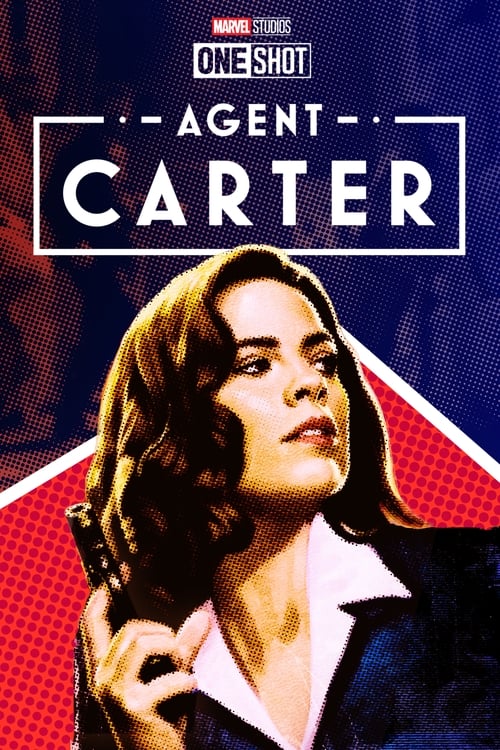
Marvel One-Shot: Agent Carter (2013)
Directed by Louis D'Esposito
Yes — Marvel One-Shot: Agent Carter is woke, scoring 60 out of 100 on our wokeness meter.
Marvel Studios, in 2013, elected to hand a fourteen-minute short film to a woman who spends most of it being told she cannot do her job, and then lets her do the job anyway.
Consciousness Markers
The entire plot is driven by Peggy's frustration with sexist dismissal and her determination to prove her worth in a male-dominated SSR.
Hayley Atwell headlines as Peggy Carter, a rare female lead in a 2013 Marvel short, though the supporting cast is entirely white.
The sexism theme is explicit but delivered through action and character moments rather than preachy monologues.
No LGBTQ+ themes or characters are present.
No racial themes or commentary are present.
No environmental or climate-related themes are present.
No anti-capitalist or eat-the-rich themes are present.
No body positivity themes are present.
No neurodivergence themes are present.
The film is a fictional period piece, not a revisionist account of real historical events.
Why it received this score
Marvel Studios, in 2013, elected to hand a fourteen-minute short film to a woman who spends most of it being told she cannot do her job, and then lets her do the job anyway. Agent Carter arrives on the home media release of Iron Man 3 as the fourth of the Marvel One-Shots, a modest exercise in brand maintenance that stumbled into something closer to a thesis statement. Hayley Atwell returns as Peggy Carter, one year removed from the events of The First Avenger, now filing paperwork at the SSR while men of lesser credentials take the field assignments.
Her boss, played by Bradley Whitford with the pinched satisfaction of a middle manager who has found his ceiling, keeps her compiling data and breaking codes. When the Zodiac surfaces, she goes alone, fights three guards, retrieves a mysterious serum, and returns to be told she was hired out of pity for a dead boyfriend. The plot rests entirely on the grievance of being underestimated, and it plays better than it reads because the film never stops to explain itself. The sexism is ambient, structural, delivered through condescension and closed doors. The compact mirror she uses to spot a gunman does the work of a monologue without the monologue.
The closing joke, in which Dum Dum Dugan admires two women in newly invented bikinis beside a pool, lands with the specific thud of a film that has just spent twelve minutes arguing for its heroine's dignity. The short is competent, brisk, and occasionally sharp. Its cultural footprint, a television series and a proof of concept for female-led Marvel properties, outweighs its runtime. As a document of 2013 progressive sentiment, it is earnest, contained, and largely uninterested in anything beyond its own franchise plumbing. A period piece about a woman in a man's world, made by a studio that would spend the next decade learning the same lesson on a larger budget.
{"thematic_tags": ["book_adaptation"]}
Analysis generated by our Consciousness Algorithm
Part of

Synopsis
Agent Peggy Carter is relegated to a desk job and frustrated at her male boss and comrades' sexist dismissal of her place in the SSR. Ordered to work late one night, Carter gets an alert that the villain Zodiac has been spotted and decides to take care of it herself.
Questions about Marvel One-Shot: Agent Carter
Is Marvel One-Shot: Agent Carter woke?
Yes — Marvel One-Shot: Agent Carter is woke, scoring 60 out of 100 on our wokeness meter. That earns it a verdict of Woke.
What makes Marvel One-Shot: Agent Carter woke?
3 of the 10 markers register at 30 or above, led by Feminist Agenda (85), Representation Casting (40) and Lecture Energy (30). On Feminist Agenda: The entire plot is driven by Peggy's frustration with sexist dismissal and her determination to prove her worth in a male-dominated SSR.
How does Marvel One-Shot: Agent Carter compare to other 2013 movies?
It ranks #5 of the 274 films from 2013 we've scored; their average is 14. The wokest is Belle (76).
How is the Woke Score calculated?
An AI-assisted process researches the film and its reception, scores it 0–100 on ten markers, then combines those into one 0–100 Woke Score. It measures a specific set of 2020s cultural themes, not film quality.