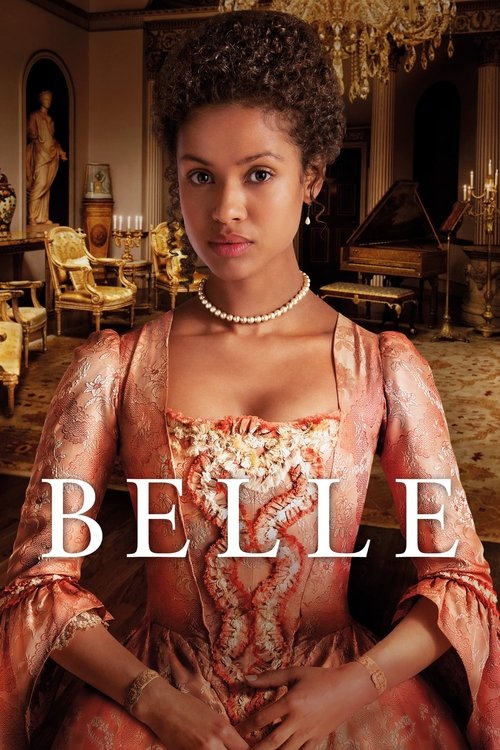
Belle (2013)
Directed by Amma Asante
Yes — Belle is woke, scoring 76 out of 100 on our wokeness meter.
Belle (2013) arrives dressed in the sober plumage of a British period drama, but its social consciousness is doing real work beneath the corsetry.
Consciousness Markers
Race, slavery, the Zong massacre, abolitionism, and interracial social dynamics are the film's central concerns.
The film centers a mixed-race Black woman as its protagonist, is directed by a Black woman, and foregrounds Black British history in a period drama.
The film is loosely inspired by real events and substantially fictionalizes Dido Belle's life, including her involvement in the Zong case, her social standing, inheritance, and romance.
Dido asserts agency against the patriarchal marriage market, challenges her subordinate portrayal in the family portrait, and is shaped by a woman director and writer.
The film includes explicit abolitionist speeches and courtroom moralizing about slavery, humanity, and justice, though it remains a period drama rather than a direct polemic.
The Zong case exposes the slave trade as a profit-driven insurance scheme in which enslaved people are treated as cargo to be murdered for financial gain.
There are no LGBTQ+ themes, characters, or subtext in the film.
The film contains no environmental or climate-related themes.
There is no body-positivity theme or related commentary in the film.
The film does not address neurodivergence or feature neurodivergent-coded characters.
Why it received this score
Belle (2013) arrives dressed in the sober plumage of a British period drama, but its social consciousness is doing real work beneath the corsetry. The camera treats Gugu Mbatha-Raw's Dido as the center of gravity, and Amma Asante's direction gives the drawing-room intrigue a quiet proprietary confidence. This is a film about a mixed-race woman in Georgian England, directed by a Black woman, and it never apologizes for placing Black British history at the center of a genre usually reserved for white lineages and inherited estates. The result is a costume drama with a spine.
The film's concerns are race, class, and the marriage market. Dido's refusal to be painted as a decorative subordinate is a small act of insurgency, and her navigation of the patriarchal marriage market gives the romantic plot a sharper edge than the average heritage picture. The Zong case supplies the moral engine, and the screenplay keeps returning to the ledger logic that turns human beings into insured cargo. The villains are not merely cruel; they are actuarial. There is a cold anti-capitalist pulse in the way the film frames the slave trade as a profit-driven insurance scheme, though the critique remains folded into the courtroom drama.
Historical accuracy is treated as a suggestion. Dido is placed at the center of a trial she likely never touched, her inheritance is inflated, and her romance is arranged for maximum narrative convenience. The film knows exactly which liberties it is taking. The abolitionist speeches land with the thud of a gavel, and the courtroom moralizing is not subtle. Still, the sermonizing is delivered with enough conviction to keep the enterprise afloat. Belle is a well-tailored argument, and it wears its progressive sensibilities like a good coat: deliberately, and in public.
Analysis generated by our Consciousness Algorithm


Synopsis
Dido Elizabeth Bell, the illegitimate, mixed-race daughter of a Royal Navy admiral, plays an important role in the campaign to abolish slavery in England.
Questions about Belle
Is Belle woke?
Yes — Belle is woke, scoring 76 out of 100 on our wokeness meter. That earns it a verdict of Woke.
What makes Belle woke?
6 of the 10 markers register at 30 or above, led by Racial Consciousness (92), Representation Casting (85) and Revisionist History (75). On Racial Consciousness: Race, slavery, the Zong massacre, abolitionism, and interracial social dynamics are the film's central concerns.
How does Belle compare to other 2013 movies?
It is the wokest of the 274 films from 2013 we've scored; their average is 14.
How is the Woke Score calculated?
An AI-assisted process researches the film and its reception, scores it 0–100 on ten markers, then combines those into one 0–100 Woke Score. It measures a specific set of 2020s cultural themes, not film quality.