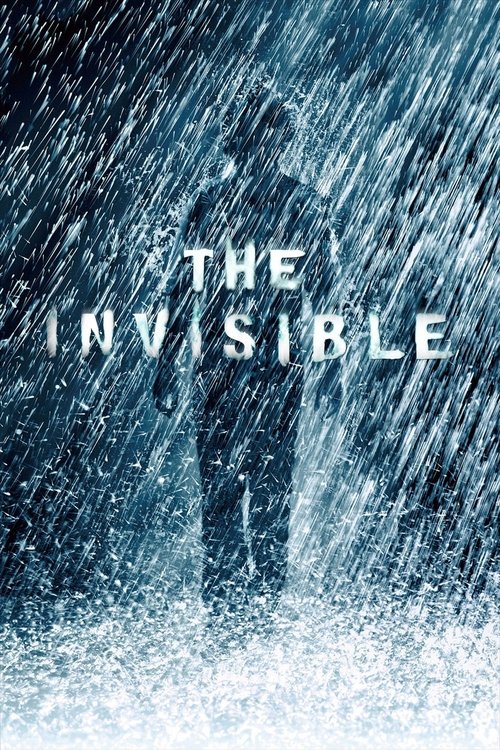
The Invisible (2007)
Directed by David S. Goyer
No — The Invisible is not woke, scoring 5 out of 100 on our wokeness meter.
This 2007 attempt at a supernatural high school mystery, The Invisible, functions primarily as a kinetic exercise in genre conventions.
Consciousness Markers
The cast is overwhelmingly white, with only a handful of minor non-white performers (Maggie Ma, Bilal Sayed) in incidental roles. No deliberate representation casting agenda is evident.
Annie is a complex female antagonist with a redemption arc, but this is standard character writing rather than a feminist statement. The controlling mother figure is a stock trope.
The film is a genre thriller that does not lecture the audience on social issues; its moralizing is limited to generic 'bullying is bad' sentiment.
No LGBTQ+ characters, themes, or subtext appear anywhere in the film.
The film has no engagement with racial themes or consciousness; characters are racially unmarked.
No environmental or climate themes are present.
The film contains no critique of capitalism or wealth; the criminal subplot is personal, not systemic.
No body positivity themes; the film is a conventional teen thriller with no commentary on body image.
No neurodivergent characters or themes are depicted.
The film is a straightforward adaptation with no revisionist historical framing.
Why it received this score
This 2007 attempt at a supernatural high school mystery, The Invisible, functions primarily as a kinetic exercise in genre conventions. We are presented with a narrative framework involving a liminal state of being, which quickly dissolves into a standard domestic conflict rooted in adolescent cruelty and culpability. The film’s commitment to its own premise is more robust than its engagement with the cultural moment. It operates with the self-assured predictability of a mid-tier vanity project.
The thematic core of the picture relies on the redemption of a flawed antagonist, Annie Newton. This character trajectory provides the film's most substantial dramatic weight. Her eventual pivot away from aggressive entitlement is perhaps the strongest evidence of the picture's subtle progressive sensibilities. However, this is a contained instance of character development, not a sweeping ideological statement. The rest of the cast and supporting characters exist within a familiar, racially unmarked milieu that offers zero cultural commentary. The script avoids the burden of contemporary social consciousness.
It is a film that does not lecture its audience, but it also offers nothing beyond the rudimentary moral framework of 'bad things happen to bad people.' The visual effects serve the plot, never the social critique. The overall experience is one of polished, yet ultimately shallow, melodrama. It is a competent piece of cinematic machinery, but one that fails to raise the bar for sophisticated social awareness. We are left with a forgettable thriller, defined more by its attempt at visual gimmickry than by any revolutionary cultural insight.
Analysis generated by our Consciousness Algorithm


Synopsis
After an attack leaves him in limbo -- invisible to the living and also near death -- a teenager discovers the only person who might be able help him is his attacker.
Questions about The Invisible
Is The Invisible woke?
No — The Invisible is not woke, scoring 5 out of 100 on our wokeness meter. That earns it a verdict of Ultra Based.
Does The Invisible have any woke elements?
Very few. None of the 10 markers reaches 30, the level where a marker counts as present; the highest is Representation Casting at 12.
How does The Invisible compare to other 2007 movies?
It ranks #131 of the 201 films from 2007 we've scored; their average is 12. The wokest is Like Stars on Earth (92).
How is the Woke Score calculated?
An AI-assisted process researches the film and its reception, scores it 0–100 on ten markers, then combines those into one 0–100 Woke Score. It measures a specific set of 2020s cultural themes, not film quality.