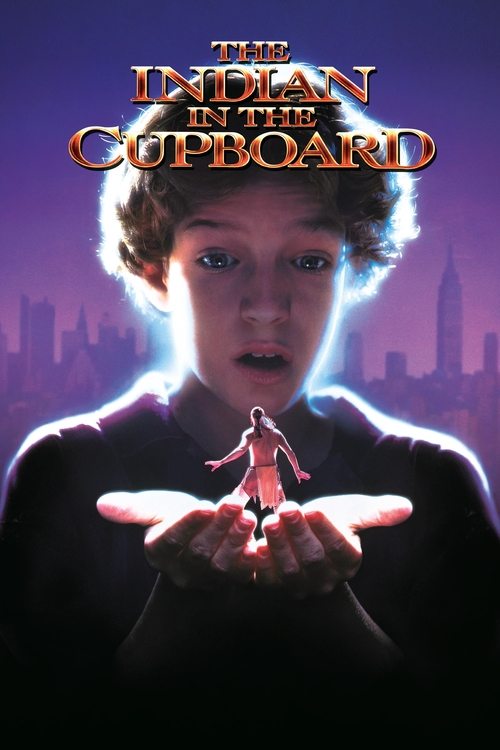
The Indian in the Cupboard (1995)
Directed by Frank Oz
No — The Indian in the Cupboard is not especially woke, scoring 31 out of 100 on our wokeness meter.
Frank Oz's 1995 adaptation of Lynne Reid Banks's children's novel arrives with the quiet confidence of a film that knows exactly which lessons it intends to impart.
Consciousness Markers
Litefoot, an actual Native American performer, was cast as Little Bear, and he successfully lobbied the production to hire an Onondaga cultural adviser to ensure authentic dress, tattooing, and customs. This is genuine, deliberate authentic casting of an Indigenous lead, though it predates the modern diversity-casting discourse.
The film does foreground a Native American perspective, contrasting Little Bear's horror at a televised massacre of the Yana people with Boone's gleeful cheering. It engages racial-historical consciousness, though in a gentle, humanist 1990s register rather than an activist one.
The film offers a corrective to the 'cowboys and Indians' trope by humanizing Little Bear and depicting the slaughter of Native peoples, gently revising the genre's traditional framing. It is mild and story-driven rather than an ideological rewrite.
The film is 'intent on teaching lessons' about trust, cooperation, and respect for other cultures, and ends with Omri delivering a school report on his moral takeaways. The didacticism is warm and child-directed rather than preachy.
No LGBTQ+ characters, themes, or subtext appear anywhere in the story.
The mother is a marginal figure who, as one critic noted, says little more than 'Boys, time for bed.' There is no feminist framing or gender critique.
No environmental or climate themes are present.
No economic critique or anti-capitalist themes appear.
No body-positivity themes or messaging.
No neurodivergence themes or characters.
Why it received this score
Frank Oz's 1995 adaptation of Lynne Reid Banks's children's novel arrives with the quiet confidence of a film that knows exactly which lessons it intends to impart. A nine-year-old boy named Omri receives a cupboard and a plastic figure, locks them together, and wakes to find a tiny eighteenth-century Onondaga man named Little Bear living on his shelf. The premise is sturdy, the effects are serviceable, and the whole enterprise radiates the earnest warmth of a Sunday school assembly that has been outfitted with a decent budget.
Credit where it is due: the production cast Litefoot, an actual Native performer, as Little Bear, and he in turn pushed the filmmakers to replace their Mohawk consultant with an Onondaga adviser. The tattoos, the dropped earlobes, the leggings, the moccasins, all of it was reportedly correct for 1761. The film also stages a genuine moment of moral discomfort when the two tiny men watch a televised massacre of the Yana people. The cowboy cheers. Little Bear watches in horror. That scene gently corrects the genre's older framing, though it does so with the soft touch of a bedtime story.
Elsewhere the film is content to teach. Trust, cooperation, respect for other cultures: these are announced plainly, and the closing school report exists to make sure nobody missed them. Omri's mother is given almost nothing to do beyond summoning boys to bed, and the story has no interest in economics, ecology, or the body. What remains is a well-meaning artifact, pleasant, instructive, and slightly exhausting in its determination to be good for you.
Analysis generated by our Consciousness Algorithm
Part of


Synopsis
A nine-year-old boy gets a plastic Indian and a cupboard for his birthday and finds himself involved in adventure when the Indian comes to life and befriends him.
Questions about The Indian in the Cupboard
Is The Indian in the Cupboard woke?
No — The Indian in the Cupboard is not especially woke, scoring 31 out of 100 on our wokeness meter. That earns it a verdict of Based.
Does The Indian in the Cupboard have any woke elements?
4 of the 10 markers register at 30 or above, led by Representation Casting (50), Racial Consciousness (45) and Lecture Energy (30). On Representation Casting: Litefoot, an actual Native American performer, was cast as Little Bear, and he successfully lobbied the production to hire an Onondaga cultural adviser to ensure authentic dress, tattooing, and customs.
How does The Indian in the Cupboard compare to other 1995 movies?
It ranks #10 of the 108 films from 1995 we've scored; their average is 12. The wokest is Total Eclipse (60).
How is the Woke Score calculated?
An AI-assisted process researches the film and its reception, scores it 0–100 on ten markers, then combines those into one 0–100 Woke Score. It measures a specific set of 2020s cultural themes, not film quality.