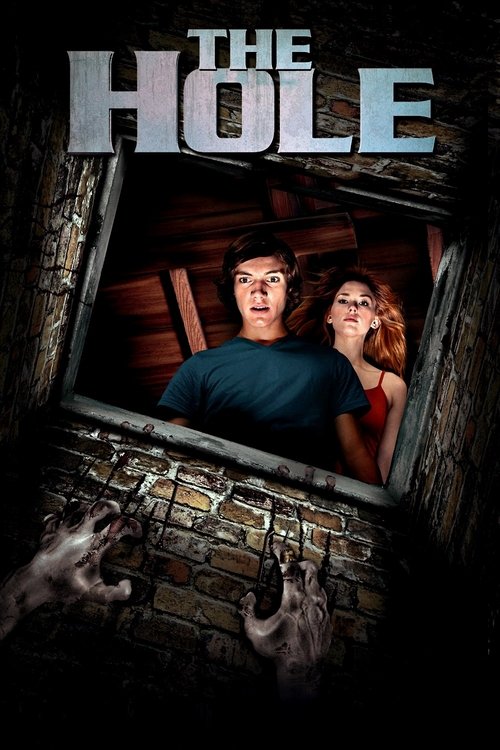
The Hole (2009)
Directed by Joe Dante
No — The Hole is not woke, scoring 2 out of 100 on our wokeness meter.
The Hole is an entry in a specific brand of suburban nightmare that seems to operate in a vacuum of modern cultural awareness.
Consciousness Markers
The cast is predominantly white and appears conventionally assembled for a 2009 suburban horror film, with no evident diversity-driven casting agenda.
There are no LGBTQ+ characters, themes, or subtext in the film.
Julie is an active co-lead and the mother is a single parent, but the film does not frame these elements through a feminist agenda or commentary.
The film does not engage with race, racial identity, or racial justice themes.
There is no environmental or climate-related messaging in the story.
The film contains no critique of capitalism, wealth, or class structures.
There is no body-positivity theme or commentary on body image.
The film does not depict or discuss neurodivergence or mental-health identity in a modern advocacy sense.
The story is a supernatural fiction with no historical revisionism or reimagining of real events.
The film is a genre thriller about childhood fears and does not pause for preachy or didactic messaging.
Why it received this score
The Hole is an entry in a specific brand of suburban nightmare that seems to operate in a vacuum of modern cultural awareness. This 2009 venture into dark fantasy concerns children who discover a literal bottomless pit in their basement, a plot that relies heavily on the established conventions of the horror genre. We find no attempt at a sophisticated engagement with contemporary social issues. The film remains wholly preoccupied with childhood anxieties, ghosts, and a supernatural manifestation of personal fear. It offers a serviceable, if slightly overlong, descent into a very familiar kind of psychological dread.
The cultural mechanics of this film are as shallow as its protagonist's fears. It provides no meaningful commentary on systemic inequality or the pressures of modern society. The cast remains predominantly white, and the narrative offers no exploration of racial consciousness or diverse lived experiences. Gender roles, while not entirely stagnant, are never elevated to a critical feminist debate. The story sidesteps issues of climate, class, and identity with an almost aggressive simplicity. It is not an argument, it is a fright.
We observe a film that is more concerned with the mechanics of a jump scare than the complexity of progressive sensibilities. The narrative energy is entirely internal, focused on the children's trauma rather than external societal forces. It is a throwback to a particular flavor of American genre picture, one that provides a diversion without offering any meaningful progressive insights. It functions as a self-contained story of fear rather than a statement on the world around us. Its merits are strictly within the realm of genre pacing.
Analysis generated by our Consciousness Algorithm


Synopsis
After moving into a new neighbourhood, brothers Dane & Lucas and their neighbour Julie discover a bottomless hole in the basement of their home. They find that once the hole is exposed, evil is unleashed. With strange shadows lurking around every corner and nightmares coming to life, they are forced to come face to face with their darkest fears to put an end to the mystery of THE HOLE.
Questions about The Hole
Is The Hole woke?
No — The Hole is not woke, scoring 2 out of 100 on our wokeness meter. That earns it a verdict of Ultra Based.
Does The Hole have any woke elements?
No. All 10 markers score zero.
How does The Hole compare to other 2009 movies?
It ranks #198 of the 230 films from 2009 we've scored; their average is 14. The wokest is Home (79).
How is the Woke Score calculated?
An AI-assisted process researches the film and its reception, scores it 0–100 on ten markers, then combines those into one 0–100 Woke Score. It measures a specific set of 2020s cultural themes, not film quality.