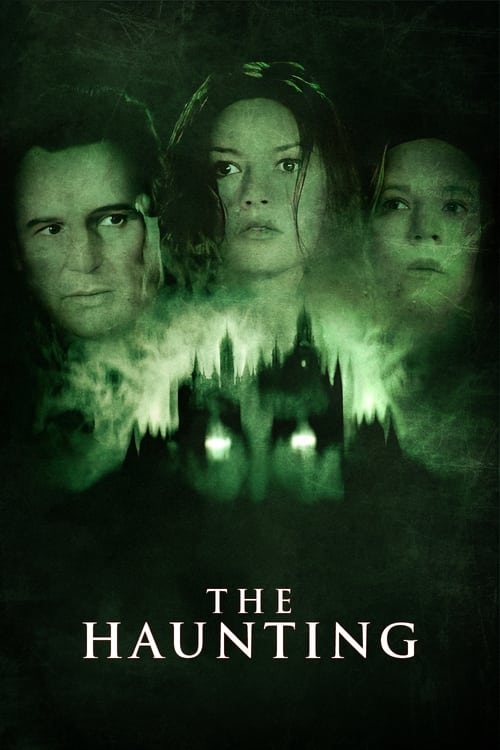
The Haunting (1999)
Directed by Jan de Bont
No — The Haunting is not woke, scoring 11 out of 100 on our wokeness meter.
Jan de Bont's The Haunting arrives with a grand staircase, a sumptuous set, and almost no interest in the cultural conversations that would later be tallied by people such as this critic.
Consciousness Markers
Theodora is described as openly bisexual, and a romantic scene between her and Nell was cut, but the film does not explore LGBTQ+ themes beyond this character trait.
The villain Hugh Crain is a 19th-century textile tycoon who exploited child labor and murdered orphans, offering a mild critique of industrial capitalism, but it is historical backstory rather than a modern 'eat the rich' message.
The protagonist is a woman, and she ultimately confronts a male ghost, but the film lacks an explicit feminist agenda or critique of patriarchy.
The film has some explanatory dialogue about the house's history and the fear study, but it does not preach or lecture the audience.
The cast is entirely white and able-bodied, with no notable racial or ethnic diversity; the film does not engage in inclusive casting as a statement.
No racial themes or commentary; the story is confined to white characters and a haunted house.
No environmental or climate themes.
No body positivity themes.
Insomnia is a plot device for the study, but it is not framed as neurodivergence or treated with modern sensitivity.
The film is a fictional ghost story, not a revisionist take on real historical events.
Why it received this score
Jan de Bont's The Haunting arrives with a grand staircase, a sumptuous set, and almost no interest in the cultural conversations that would later be tallied by people such as this critic. The cast is white and able-bodied by default. No inclusive casting statement is attempted. Theodora is described as bisexual, and a romantic scene with Nell was cut, but the film treats this as a decorative character note. A woman does face down a male ghost in the finale. That is a plot event, not a critique of patriarchy.
The villain Hugh Crain is a textile tycoon who exploited child labor and murdered orphans. This gives the film a faint historical distaste for industrial greed. It is backstory, not a modern sermon about wealth. The orphan ghosts are victims, which is sad, but sadness is not a social program. The insomnia study is a mechanism for assembling guests in a haunted house. Nobody frames sleeplessness as neurodivergence. Nobody discusses body image, climate, or racial history. The house has many rooms. None of them contain a lecture.
The final impression is a lavish, overbuilt ghost story with a C+ audience grade and a set design budget larger than its sense of purpose. The set is the star. The screenplay is the understudy. The film explains its supernatural rules when convenient. It does not preach. It does not revise history. It simply arranges furniture, ghosts, and one unfortunate chimney flue. As a document of progressive sensibilities, it is nearly a blank page. As a document of late-1990s studio excess, it is a hardcover edition.
Analysis generated by our Consciousness Algorithm


Synopsis
Dr. David Marrow invites three distinct individuals to the eerie and isolated Hill House to be subjects for a sleep disorder study. The unfortunate guests discover that Marrow is far more interested in the sinister mansion itself — and they soon see the true nature of its horror.
Questions about The Haunting
Is The Haunting woke?
No — The Haunting is not woke, scoring 11 out of 100 on our wokeness meter. That earns it a verdict of Ultra Based.
Does The Haunting have any woke elements?
Very few. None of the 10 markers reaches 30, the level where a marker counts as present; the highest is LGBTQ+ Themes at 25.
How does The Haunting compare to other 1999 movies?
It ranks #45 of the 103 films from 1999 we've scored; their average is 14. The wokest is Boys Don't Cry (60).
How is the Woke Score calculated?
An AI-assisted process researches the film and its reception, scores it 0–100 on ten markers, then combines those into one 0–100 Woke Score. It measures a specific set of 2020s cultural themes, not film quality.