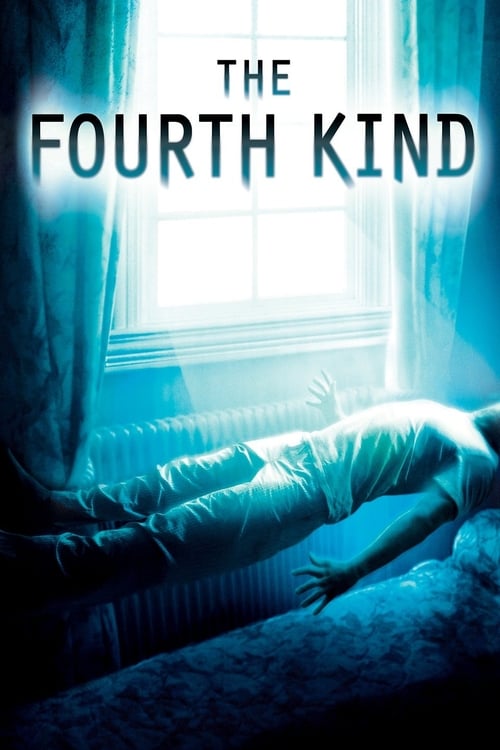
The Fourth Kind (2009)
Directed by Olatunde Osunsanmi
No — The Fourth Kind is not woke, scoring 10 out of 100 on our wokeness meter.
The Fourth Kind presents itself as a serious inquiry into Alaskan disappearances, then reveals itself as an elaborate piece of cinematic misdirection.
Consciousness Markers
The cast includes Black actor Hakeem Kae-Kazim as Dr. Odusami and a Nigerian-American director, but the diversity is incidental and never commented upon.
Jovovich's direct-to-camera framing insists the audience accept the events as real, but the address is a marketing gimmick rather than a preachy ideological sermon.
The film fabricates a 'true story' with faked archival footage and invented events, but this is hoax-mongering rather than the ideological rewriting of history the marker denotes.
The protagonist is a woman (Milla Jovovich as Dr. Abigail Tyler) fighting institutional disbelief, but the film advances no feminist argument and frames her primarily as a grieving mother.
The story gestures at real disappearances in Alaska Native communities but never engages race or indigeneity as a subject; the Sumerian-language and Alaska settings are exotic backdrop, not social commentary.
Hypnosis, delusion, and psychotherapy are central mechanics, but mental illness is treated as a horror/mystery device rather than as neurodivergent identity.
There are no LGBTQ+ characters, relationships, or themes anywhere in the film.
The Alaskan cold is atmospheric set dressing; the film makes no environmental argument despite the real cases being partly attributed to exposure.
There is no economic critique; the film's controversy over exploitative marketing is external to its content.
A wheelchair-bound and paralyzed patient appear as horror plot devices, not as body-positivity representation.
Why it received this score
The Fourth Kind presents itself as a serious inquiry into Alaskan disappearances, then reveals itself as an elaborate piece of cinematic misdirection. Olatunde Osunsanmi directs with a straight face, cutting between reenactment and alleged archival footage. Milla Jovovich addresses the camera to vouch for the veracity. The film's social consciousness is thin, incidental, and mostly absent. A Black actor appears as a language specialist, and the director is Nigerian-American, but the narrative never pauses to consider what any of that means. The protagonist is a woman, yes, but her gender is not the subject. She is a grieving mother in a haunted-house plot with snow. The film has no interest in feminist argument, and its gestures toward Alaska Native communities amount to atmosphere.
There is no environmental argument here, despite the real cases being tied to exposure and cold. Alaska is a set, not a cause. No economic critique surfaces either. The marketing controversy belongs to Universal's publicity department, not to the text. Physical disability appears as a horror device: a wheelchair, a paralyzed patient, a body used to signal dread. Mental illness fares no better. Hypnosis, delusion, and psychotherapy are puzzle mechanics, not windows into neurodivergent experience. The film treats psychological suffering as a plot twist. That is not representation. That is a haunted house with a couch.
The most notable marker is the film's relationship to truth. It invents a 'true story,' fabricates archival footage, and invents a psychologist whose suffering is presented as evidence. This is hoax-mongering, not historical revision in the ideological sense. The direct-to-camera framing insists we believe, though the insistence is a marketing gimmick dressed as testimony. The result is a curious artifact: a horror film that wants credit for honesty while lying to your face. We score it accordingly. It is not socially conscious. It is a snowbound magic trick, and the trick is that anyone thought to look for a message.
Analysis generated by our Consciousness Algorithm
Part of


Synopsis
Since the 1960s, a disproportionate number of the population in and around Nome, Alaska, have gone missing. Despite FBI investigations, the disappearances remain a mystery. Dr. Abigail Tyler, a psychologist, may be on the verge of blowing the unsolved cases wide open when, during the course of treating her patients, she finds evidence of alien abductions.
Questions about The Fourth Kind
Is The Fourth Kind woke?
No — The Fourth Kind is not woke, scoring 10 out of 100 on our wokeness meter. That earns it a verdict of Ultra Based.
Does The Fourth Kind have any woke elements?
Very few. None of the 10 markers reaches 30, the level where a marker counts as present; the highest is Representation Casting at 28.
How does The Fourth Kind compare to other 2009 movies?
It ranks #101 of the 230 films from 2009 we've scored; their average is 14. The wokest is Home (79).
How is the Woke Score calculated?
An AI-assisted process researches the film and its reception, scores it 0–100 on ten markers, then combines those into one 0–100 Woke Score. It measures a specific set of 2020s cultural themes, not film quality.