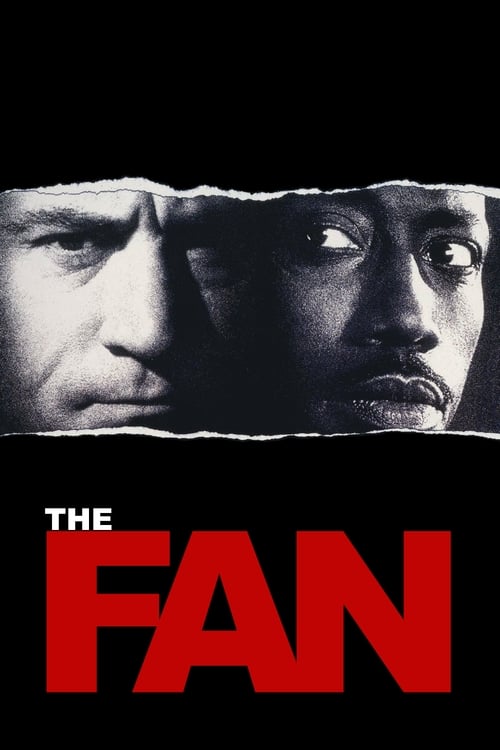
The Fan (1996)
Directed by Tony Scott
No — The Fan is not woke, scoring 9 out of 100 on our wokeness meter.
Tony Scott's The Fan arrives with the grim determination of a man who has read the room and decided the room deserves it.
Consciousness Markers
Wesley Snipes headlines as the star athlete and Benicio del Toro and John Leguizamo appear in supporting roles, but the multiracial cast is unremarked-upon and natural to the setting rather than a statement.
The $40 million contract and the commodification of the athlete are background texture for the obsession plot, with a mild cynical streak about money in sports but no systemic critique.
The film gestures at the toxic nature of celebrity worship and fickle fans, but delivers this as dramatic subtext rather than preachy moralizing.
Ellen Barkin's radio host and the ex-wife character exist as plot functionaries; the film has no interest in gender politics or female agency as a theme.
A Black superstar and a white obsessive fan share the screen, but the film never engages race as a subject, treating the dynamic purely as celebrity pathology.
No LGBTQ+ characters, themes, or subtext of any kind appear in this stalker thriller.
No environmental themes or climate content whatsoever.
No body-positive themes or messaging present.
Gil Renard's psychosis is depicted as violent obsession and villainy, not as neurodivergence to be understood or accommodated.
No historical revisionism; the film is a contemporary psychological thriller with no historical subject matter.
Why it received this score
Tony Scott's The Fan arrives with the grim determination of a man who has read the room and decided the room deserves it. Robert De Niro plays Gil Renard, a knife salesman whose fandom curdles into murder, and the film treats his unraveling as pathology, not condition, which is to say it has no interest in diagnosing him kindly. The psychosis here is villainy, plain and simple, and no accommodation is offered. Wesley Snipes anchors the picture as Bobby Rayburn, the $40 million center fielder, and the surrounding cast (Benicio del Toro, John Leguizamo, Ellen Barkin) is diverse in a manner the screenplay never bothers to mention. Race sits in the frame and is never discussed. This is a 1996 studio thriller, and it behaves like one.
The money is the closest thing to a thesis. Forty million dollars buys a man, and the film regards the transaction with a shrug and a smirk. There is a cynical streak about the commodification of athletes, but it never hardens into an argument about labor, ownership, or the machinery that turns bodies into brands. Ellen Barkin's radio host dispenses advice about perfection and is otherwise furniture. The women in this film are plot functionaries, and the film is untroubled by that fact.
Where the picture does reach for a moral, it reaches with a gloved hand. The fickleness of fans, the emptiness of hero worship, the violence lurking beneath devotion: these ideas surface as subtext, delivered through De Niro's escalating theatrics and Hans Zimmer's genuinely hostile score. Nobody lectures. Nobody explains. The film simply lets a man stab a stranger in a sauna and trusts us to draw conclusions. It is ugly, it was a flop, and it remains a curious artifact of a decade that had not yet learned to sermonize about its own appetites. The baseball is incidental. The obsession is the point, and the point is made with a knife and a fastball and very little else worth remembering.
{"thematic_tags": ["book_adaptation"]}
Analysis generated by our Consciousness Algorithm


Synopsis
When the San Francisco Giants pay center-fielder, Bobby Rayburn $40 million to lead their team to the World Series, no one is happier or more supportive than #1 fan, Gil Renard. When Rayburn becomes mired in the worst slump of his career, the obsessed Renard decides to stop at nothing to help his idol regain his former glory—not even murder.
Questions about The Fan
Is The Fan woke?
No — The Fan is not woke, scoring 9 out of 100 on our wokeness meter. That earns it a verdict of Ultra Based.
Does The Fan have any woke elements?
Very few. None of the 10 markers reaches 30, the level where a marker counts as present; the highest is Representation Casting at 22.
How does The Fan compare to other 1996 movies?
It ranks #35 of the 93 films from 1996 we've scored; their average is 11. The wokest is Bound (60).
How is the Woke Score calculated?
An AI-assisted process researches the film and its reception, scores it 0–100 on ten markers, then combines those into one 0–100 Woke Score. It measures a specific set of 2020s cultural themes, not film quality.