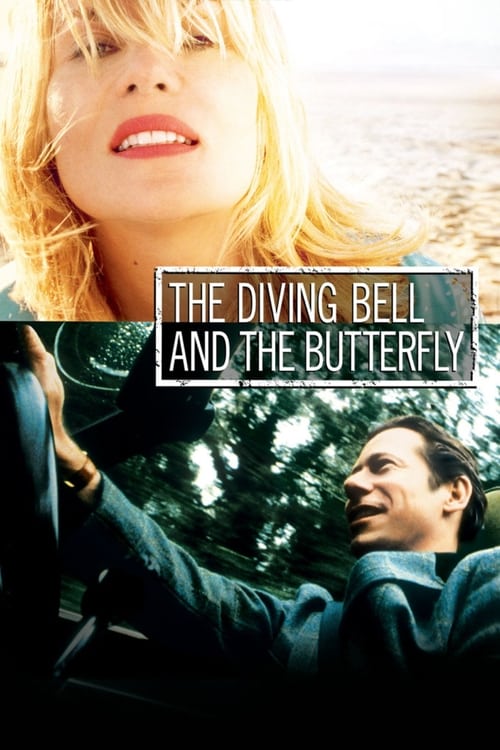
The Diving Bell and the Butterfly (2007)
Directed by Julian Schnabel
No — The Diving Bell and the Butterfly is not woke, scoring 0 out of 100 on our wokeness meter.
The Diving Bell and the Butterfly arrives with the kind of pedigree that makes a classifier's work feel almost rude.
Consciousness Markers
The cast is entirely white and able-bodied, with no deliberate diverse or inclusive casting choices; the disabled protagonist is played by a non-disabled actor.
No LGBTQ+ characters, themes, or subtext.
Women appear as caregivers, lovers, and mothers, but the film advances no feminist critique or agenda.
No engagement with race, racism, or racial identity.
No environmental or climate themes.
The fashion-magazine world is depicted without any anti-capitalist critique.
The film explores paralysis and physical limitation, but not body-positivity ideology or body-image activism.
Locked-in syndrome is a neurological injury, not neurodivergence as understood in contemporary social-justice discourse.
It is a faithful adaptation of a memoir, not a revisionist historical narrative.
The film is poetic and experiential rather than didactic or preachy.
Why it received this score
The Diving Bell and the Butterfly arrives with the kind of pedigree that makes a classifier's work feel almost rude. Julian Schnabel's 2007 adaptation of Jean-Dominique Bauby's memoir won at Cannes, the Golden Globes, the BAFTAs and the Césars, and collected four Oscar nominations. It concerns a man who lost nearly everything except his mind and one blinking eye, and who used that eye to dictate a book, letter by letter, to a patient transcriptionist. The result is moving in a way that resists quotation. It is also, by the standards of the contemporary cultural ledger, a document of near-total abstinence.
The absences accumulate quietly. Bauby is played by Mathieu Amalric, an able-bodied actor, a casting decision that would today summon a small industry of commentary. The women around him are speech therapists, transcriptionists, mothers and mistresses, drawn with warmth and never as the occasion for an argument. Locked-in syndrome is a catastrophic neurological injury, not a category of cognitive difference awaiting celebration. The Elle magazine world is rendered as glamorous and faintly ridiculous, yet nobody proposes burning it down. There is no weather to speak of. No racial reckoning. No sermon.
What the film offers instead is texture: the blur of a single working eye, the letter-by-letter spelling, the pilgrimage to Lourdes, the imagined erotic feast. Schnabel trusts us to sit inside the restriction. He does not explain the moral. That restraint is why the picture reads as a work of older humanism, the kind that assumes empathy is its own argument and requires no footnote. A masterpiece that asks nothing of the culture and gives it a great deal. The ledger stays empty. The film remains.
Analysis generated by our Consciousness Algorithm


Synopsis
Jean-Dominique Bauby, editor-in-chief of French fashion bible Elle magazine, has a devastating stroke at age 43. The damage to his brain stem results in locked-in syndrome, with which he is almost completely paralyzed and only able to communicate by blinking an eye. Bauby painstakingly dictates his memoir via the only means of expression left to him.
Questions about The Diving Bell and the Butterfly
Is The Diving Bell and the Butterfly woke?
No — The Diving Bell and the Butterfly is not woke, scoring 0 out of 100 on our wokeness meter. That earns it a verdict of Ultra Based.
Does The Diving Bell and the Butterfly have any woke elements?
No. All 10 markers score zero.
How does The Diving Bell and the Butterfly compare to other 2007 movies?
It ranks #174 of the 201 films from 2007 we've scored; their average is 12. The wokest is Like Stars on Earth (92).
How is the Woke Score calculated?
An AI-assisted process researches the film and its reception, scores it 0–100 on ten markers, then combines those into one 0–100 Woke Score. It measures a specific set of 2020s cultural themes, not film quality.