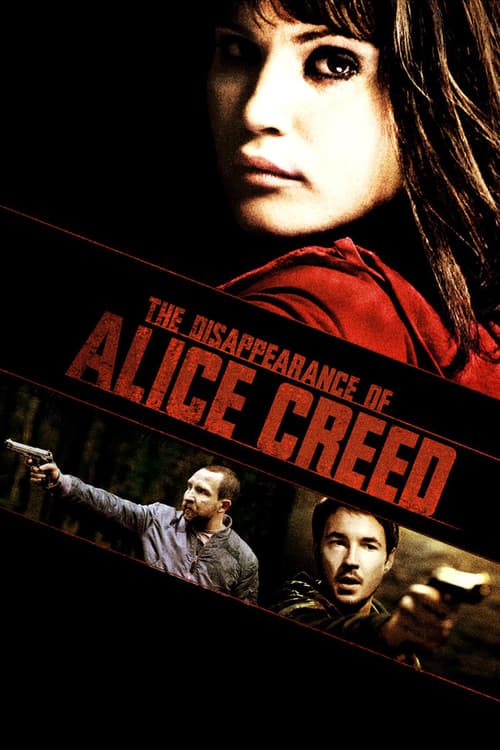
The Disappearance of Alice Creed (2009)
Directed by J Blakeson
No — The Disappearance of Alice Creed is not especially woke, scoring 24 out of 100 on our wokeness meter.
There is a certain strain of British thriller that operates like a locked-room experiment, and J Blakeson's 2009 debut is a clean specimen of the form.
Consciousness Markers
The film includes a gay/bisexual relationship between the two male kidnappers, revealed as a plot twist with a kiss, but it is not framed as a progressive social message.
All principal cast members are white; the film features no notable racial or ethnic diversity in its casting.
The female protagonist is a kidnapping victim who turns the tables, but the film contains no feminist agenda or explicit commentary on gender politics.
The film has no racial themes, commentary, or significant non-white characters.
There is no environmental or climate-related content in the film.
The ransom plot involves wealthy criminals and a rich victim, but it does not critique capitalism or wealth inequality.
The film depicts forced stripping and humiliation of a captive woman, with no body-positive messaging.
No characters are portrayed with neurodivergence or related themes.
The film is a fictional crime thriller with no historical revisionism.
The film is a tense thriller that shows rather than tells, with no preachy or lecture-like monologues.
Why it received this score
There is a certain strain of British thriller that operates like a locked-room experiment, and J Blakeson's 2009 debut is a clean specimen of the form. Three actors, one abandoned flat, a bed, some handcuffs, and a ransom demand. Gemma Arterton spends much of the running time bound and gagged while Eddie Marsan and Martin Compston wear ski masks and bicker about procedure. It is lean, mean, and entirely uninterested in instructing anybody about anything, which in the present cultural climate feels almost quaint. The film was shot on the Isle of Man in four weeks and looks it, in the best sense: stripped, functional, no fat.
The film's one concession to contemporary sensibilities arrives as a plot twist. The two kidnappers, we learn, were lovers in prison, a fact disclosed with a kiss and later a standoff. This is a genuine narrative device, not a messaging exercise. The relationship exists to complicate the double-cross, not to edify the audience. There is no speech about acceptance, no arc of self-discovery, no scene in which a character explains the moral stakes to a less enlightened companion. The men simply are what they are, and one of them shoots the other at close range.
Elsewhere the ledger is bare, and this is meant as praise. The victim is a rich man's daughter, and the film declines to make her a symbol of anything. She turns the tables through cunning and a loaded pistol, not through a screenwriter's thesis. The violence is grubby and transactional. Nobody lectures about wealth, or the climate, or the body, or the mind. The camera observes humiliation without endorsing or condemning it, which is the correct posture for a crime picture and an increasingly rare one. What remains is a taut eighty-odd minutes of cross and double-cross, well acted and free of sermonizing. A modest achievement, perhaps. In an era of cinema as civic instruction, restraint has become its own quiet virtue.
Analysis generated by our Consciousness Algorithm


Synopsis
A rich man's daughter is held captive in an abandoned apartment by two former convicts who abducted her and hold her ransom in exchange for her father's money.
Questions about The Disappearance of Alice Creed
Is The Disappearance of Alice Creed woke?
No — The Disappearance of Alice Creed is not especially woke, scoring 24 out of 100 on our wokeness meter. That earns it a verdict of Based.
Does The Disappearance of Alice Creed have any woke elements?
1 of the 10 markers register at 30 or above, led by LGBTQ+ Themes (40). On LGBTQ+ Themes: The film includes a gay/bisexual relationship between the two male kidnappers, revealed as a plot twist with a kiss, but it is not framed as a progressive social message.
How does The Disappearance of Alice Creed compare to other 2009 movies?
It ranks #37 of the 230 films from 2009 we've scored; their average is 14. The wokest is Home (79).
How is the Woke Score calculated?
An AI-assisted process researches the film and its reception, scores it 0–100 on ten markers, then combines those into one 0–100 Woke Score. It measures a specific set of 2020s cultural themes, not film quality.