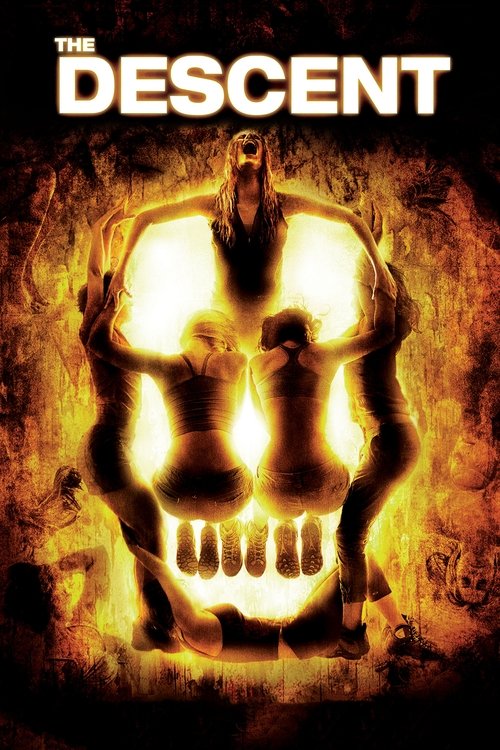
The Descent (2005)
Directed by Neil Marshall
No — The Descent is not especially woke, scoring 20 out of 100 on our wokeness meter.
Neil Marshall's The Descent sends six women into an uncharted cave system beneath the Appalachian Mountains, where a rockfall, a broken leg, and a colony of eyeless predators conspire to ruin the outing.
Consciousness Markers
The film features an all-female ensemble cast, a deliberate inversion of horror convention, though the cast is not notably diverse in terms of race or ethnicity.
The all-female cast and female-centric survival narrative offer a feminist-adjacent reversal of genre norms, but the film avoids explicit feminist messaging or ideology.
No LGBTQ+ characters, themes, or subtext are present in the film.
The film does not engage with racial themes, and its characters are not defined by racial identity or politics.
There is no environmental or climate-related content in the film.
The film contains no critique of capitalism, wealth inequality, or economic systems.
The film does not address body image, size diversity, or body positivity themes.
No neurodivergent characters or themes are present or explored.
The film is a fictional horror story and does not revise or reinterpret historical events.
The film is a visceral survival horror with no didactic or preachy messaging.
Why it received this score
Neil Marshall's The Descent sends six women into an uncharted cave system beneath the Appalachian Mountains, where a rockfall, a broken leg, and a colony of eyeless predators conspire to ruin the outing. The ensemble is entirely female, a decision the filmmakers made with evident deliberation, and it works. The characters bicker, grieve, and improvise with the ordinary competence of people who did not sign up to be symbols. Marshall sought counsel from female friends to avoid cliché, and the result carries a faint feminist charge without ever stopping to explain itself. That restraint is the film's most attractive quality.
Elsewhere, the ledger is quiet. The women are British and white and largely interchangeable in the dark, and the film has no interest in race, sexuality, or the politics of the body. There is no economic subtext, no environmental lament, no neurological self-diagnosis, and no revision of the historical record. The Crawlers are not metaphors for anything except the thing in the dark that wants to eat us. A lesser production might have turned the affair between Juno and Sarah's late husband into a treatise on female betrayal and solidarity. This one turns it into a pickaxe.
What remains is a lean survival machine, admired for its claustrophobia and its willingness to kill its own cast. The all-female ensemble predates the era in which such casting would be announced as a statement, and the film benefits from that timing. It offers representation of a narrow sort, six women with accents and flashlights, and asks for no credit. We can respect the craft and note the modesty. A viewer seeking sermons will have to bring their own.
Analysis generated by our Consciousness Algorithm


Synopsis
After a personal tragedy, Sarah joins her friends on a caving expedition in the Appalachian Mountains. But when a rockfall traps them deep underground, their adventure turns into a nightmare. As they search for a way out, the group discovers they are not alone—lurking in the darkness are savage, cave-dwelling creatures. With rising tension and dwindling trust, the women must fight to survive against both the predators and each other.
Questions about The Descent
Is The Descent woke?
No — The Descent is not especially woke, scoring 20 out of 100 on our wokeness meter. That earns it a verdict of Based.
Does The Descent have any woke elements?
2 of the 10 markers register at 30 or above, led by Representation Casting (45) and Feminist Agenda (35). On Representation Casting: The film features an all-female ensemble cast, a deliberate inversion of horror convention, though the cast is not notably diverse in terms of race or ethnicity.
How does The Descent compare to other 2005 movies?
It ranks #35 of the 181 films from 2005 we've scored; their average is 13. The wokest is The Constant Gardener (72).
How is the Woke Score calculated?
An AI-assisted process researches the film and its reception, scores it 0–100 on ten markers, then combines those into one 0–100 Woke Score. It measures a specific set of 2020s cultural themes, not film quality.