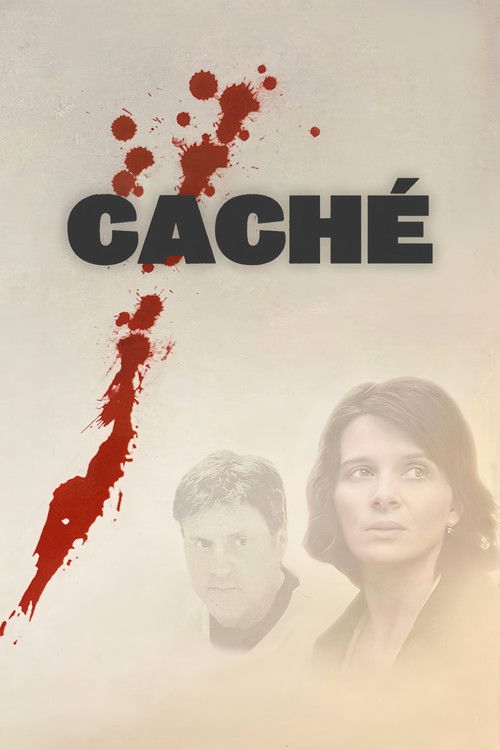
Caché (2005)
Directed by Michael Haneke
Yes — Caché is woke, scoring 60 out of 100 on our wokeness meter.
Caché arrives from 2005, which places it before the present vocabulary of social consciousness had fully calcified, yet it hums with an anxiety that later films would learn to name out loud.
Consciousness Markers
The entire film is an allegory about French colonial guilt, the suppressed 1961 Paris massacre of Algerians, and white bourgeois paranoia toward the racial other. Racial and colonial consciousness is the film's central preoccupation.
The film explicitly excavates the French state's decades-long suppression of the 1961 Seine massacre, dramatizing the recovery of buried colonial history and the revision of an official narrative of denial.
The film centers on Majid, an Algerian orphan, and his son, played by Walid Afkir, making North African characters structurally essential rather than decorative. However, this is thematically driven art-house casting rather than modern diversity-conscious casting.
The film critiques the complacent Parisian upper-middle class and its buried exploitation of Algerian laborers, but this is a class-and-guilt meditation rather than a modern 'eat the rich' polemic.
Haneke is a confrontational moralist, and the film carries a heavy conscience-and-guilt thesis, but he deliberately refuses to resolve or preach, leaving the mystery open rather than delivering a lecture.
Anne Laurent is a substantial role for Juliette Binoche, but the film offers no feminist critique or gendered agenda; her character functions largely as a witness to Georges' guilt.
No LGBTQ+ characters, themes, or subtext appear anywhere in the film.
No environmental or climate themes are present.
No body positivity themes or body-image discourse appear in the film.
No neurodivergence themes or neurodivergent characters are present.
Why it received this score
Caché arrives from 2005, which places it before the present vocabulary of social consciousness had fully calcified, yet it hums with an anxiety that later films would learn to name out loud. The premise is a thriller: anonymous tapes, a Parisian couple under surveillance, a literary talk show host named Georges whose composure erodes tape by tape. The engine beneath it is colonial. Georges' childhood refusal to accept an Algerian orphan named Majid into his family, and the 1961 Seine massacre that swallowed Majid's parents, form the buried machinery of the plot. The film's racial consciousness is not decorative. It is the point, and it is handled with a severity that much contemporary work would find uncomfortable to sit with.
On representation, the North African characters are structural. Majid and his son carry the moral weight the narrative cannot lift, which is a different achievement from casting as a gesture. Juliette Binoche's Anne is a substantial role, though she functions mostly as a witness to her husband's guilt, which caps any gendered reading low. The class critique targets the complacent Parisian bourgeoisie and its buried exploitation of Algerian labor. This is a guilt meditation, not a manifesto. Haneke, a confrontational moralist by temperament, declines to resolve his thesis. He leaves the mystery open, and that refusal spares us the sermon.
Several markers register nothing at all. No queer currents, no environmental crusade, no body-image discourse, no neurodivergent characters. The excavation of the suppressed massacre does constitute a revision of official French memory, and it is conducted with the patience of an archivist rather than a pamphleteer. What remains is a cold, precise film about a conscience that will not sit still. It does not lecture. It simply refuses to let anyone leave the room clean.
Analysis generated by our Consciousness Algorithm


Synopsis
As the host of a literary TV show, Georges begins receiving anonymously filmed videos of his family alongside cryptic, disturbing drawings, but as the tapes become increasingly intimate, they reveal a stalker who has known him for a very long time.
Questions about Caché
Is Caché woke?
Yes — Caché is woke, scoring 60 out of 100 on our wokeness meter. That earns it a verdict of Woke.
What makes Caché woke?
5 of the 10 markers register at 30 or above, led by Racial Consciousness (85), Revisionist History (65) and Representation Casting (50). On Racial Consciousness: The entire film is an allegory about French colonial guilt, the suppressed 1961 Paris massacre of Algerians, and white bourgeois paranoia toward the racial other.
How does Caché compare to other 2005 movies?
It ranks #5 of the 181 films from 2005 we've scored; their average is 13. The wokest is The Constant Gardener (72).
How is the Woke Score calculated?
An AI-assisted process researches the film and its reception, scores it 0–100 on ten markers, then combines those into one 0–100 Woke Score. It measures a specific set of 2020s cultural themes, not film quality.