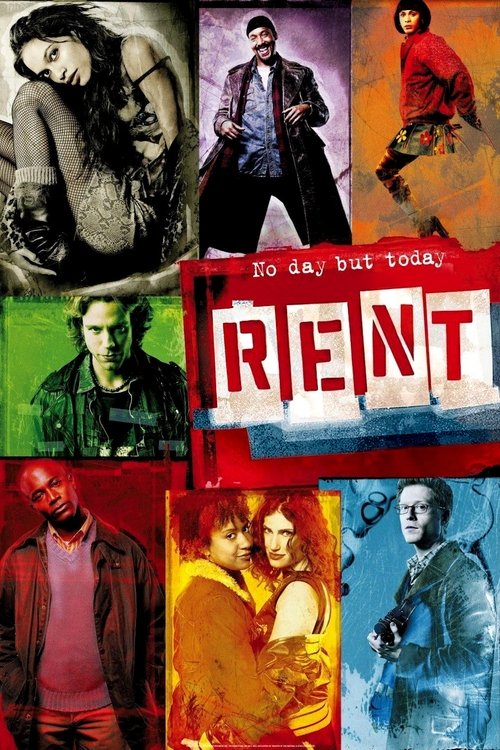
Rent (2005)
Directed by Chris Columbus
Yes — Rent is woke, scoring 70 out of 100 on our wokeness meter.
Chris Columbus, a filmmaker previously occupied with a small boy left home alone and a school of witchcraft, here turns his attention to the East Village of 1989.
Consciousness Markers
The film is centrally concerned with LGBTQ+ lives, including gay, lesbian, bisexual, and drag characters, and the AIDS crisis.
Ensemble features significant Black, Latino, and LGBTQ+ performers in leading roles, including Rosario Dawson, Jesse L. Martin, Wilson Jermaine Heredia, Tracie Thoms, and Taye Diggs.
Strong anti-gentrification and anti-capitalist themes: bohemians resist a landlord's eviction and corporate redevelopment, and a character sells out to a news program.
Features strong female characters and a lesbian relationship, but feminist themes are not the primary focus.
Songs and dialogue convey social messages about AIDS, homelessness, and living in the moment, giving it a moderate didactic streak.
Diverse casting is present, but race is not a central theme or subject of commentary.
No environmental or climate-related themes.
No body positivity themes.
No neurodivergence themes.
No revisionist history elements.
Why it received this score
Chris Columbus, a filmmaker previously occupied with a small boy left home alone and a school of witchcraft, here turns his attention to the East Village of 1989. Rent arrives as an adaptation of Jonathan Larson's Broadway musical, itself descended from Puccini's La boheme, and it carries the weight of a stage phenomenon into a film that mostly stands still and sings. Six members of the original Broadway cast reprise their roles, which lends the enterprise a measure of fidelity and a matching measure of staginess.
The material is saturated with queer life. Gay, bisexual, and lesbian characters anchor the narrative, a drag queen named Angel serves as the emotional center, and the AIDS epidemic runs through nearly every scene like a second soundtrack. None of this is decoration. The film's emotional architecture rests on the virus and the community it devastated, and it regards that community with a matter-of-fact tenderness that predates the era when such things became a marketing bullet point.
The politics are blunter. A landlord named Benny schemes to evict the homeless and erect a cyber studio, and our bohemians resist with a protest that becomes a riot. The film has little patience for the man who sells out, and Mark's brief employment at a television news program is framed as a moral compromise. Race sits largely unremarked amid a genuinely diverse ensemble, present but never interrogated. The songs deliver their messages with the subtlety of a handbill: live for today, measure your life in love, resist the machine. It is sincere, occasionally stirring, and about as preachy as a musical can be without a pulpit. The result is a period piece about a period that already knew it was one.
This is a film of earnest intention and uneven execution, and its cultural markers are mostly inherited from a stage work that got there first. We classify it accordingly, with the weary respect owed to any artifact that sang about AIDS before the culture was ready to listen.
{"thematic_tags": []}
Analysis generated by our Consciousness Algorithm


Synopsis
In New York City's gritty East Village, a group of bohemians strive for success and acceptance while enduring the obstacles of poverty, illness and the AIDS epidemic.
Questions about Rent
Is Rent woke?
Yes — Rent is woke, scoring 70 out of 100 on our wokeness meter. That earns it a verdict of Woke.
What makes Rent woke?
5 of the 10 markers register at 30 or above, led by LGBTQ+ Themes (95), Eat the Rich (70) and Representation Casting (70). On LGBTQ+ Themes: The film is centrally concerned with LGBTQ+ lives, including gay, lesbian, bisexual, and drag characters, and the AIDS crisis.
How does Rent compare to other 2005 movies?
It ranks #2 of the 181 films from 2005 we've scored; their average is 13. The wokest is The Constant Gardener (72).
How is the Woke Score calculated?
An AI-assisted process researches the film and its reception, scores it 0–100 on ten markers, then combines those into one 0–100 Woke Score. It measures a specific set of 2020s cultural themes, not film quality.