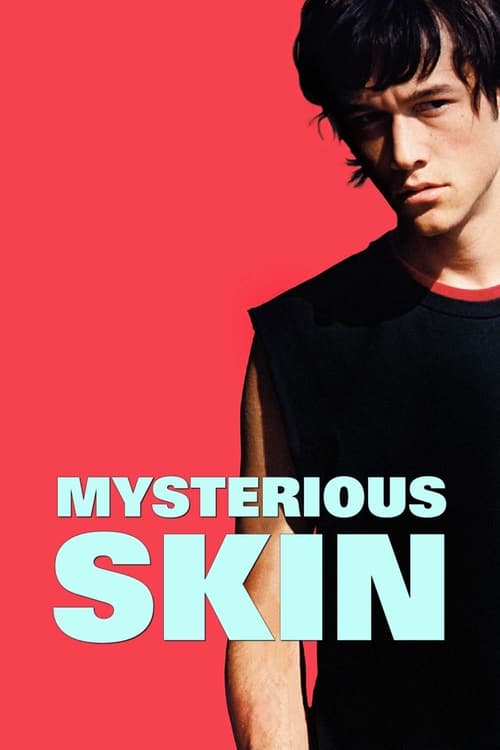
Mysterious Skin (2005)
Directed by Gregg Araki
Yes — Mysterious Skin is woke, scoring 60 out of 100 on our wokeness meter.
Mysterious Skin arrived in 2004 with a subject that would still send a studio executive reaching for the antacids: two Kansas boys molested by their Little League coach, and the divergent wreckage of that summer.
Consciousness Markers
Male homosexuality is the film's central subject: a gay coming-of-age, a teenage hustler, gay bars, and an AIDS-era encounter. This is deep, sustained LGBTQ+ content rather than a token gesture.
The cast is almost entirely white, and the film's marginalized representation is sexual rather than racial or ethnic; the gay leads are played by straight-identified actors. Some credit for centering a gay protagonist, but no meaningful diverse casting effort.
Araki dramatizes abuse and its aftermath with restraint and ambiguity rather than moralizing; the film shows damage rather than delivering a sermon, though its subject matter carries inherent gravity.
Wendy functions as a loyal, supportive friend and Neil's mother is a flawed but humanized figure, but the film offers no feminist thesis or gendered critique of power.
Brian's PTSD, blackouts, nosebleeds, and dissociative repression are depicted with clinical accuracy, but this is trauma pathology rather than a neurodivergence-as-identity framework.
Race is entirely absent from the narrative; the story is set in white Kansas and New York and engages no racial themes whatsoever.
No environmental or climate content of any kind appears in the film.
The film depicts sex work and exploitation but frames them through trauma and psychology, not as an economic indictment of capitalism.
Bodies are depicted as sites of abuse and damage rather than celebrated; there is no body-positivity messaging.
The film is a faithful adaptation of a 1995 novel set in the 1980s and 1990s; it makes no revisionist claims about historical events.
Why it received this score
Mysterious Skin arrived in 2004 with a subject that would still send a studio executive reaching for the antacids: two Kansas boys molested by their Little League coach, and the divergent wreckage of that summer. Gregg Araki, working from Scott Heim's novel, follows Neil into teenage prostitution and Brian into a dissociative haze of nosebleeds and imagined alien abductions. The film is patient, chilly, and uncommonly precise about damage. Psychologists have endorsed its accuracy. That endorsement tells us something about what the film is and what it is not.
Its cultural commitments sit almost entirely in one register. Male homosexuality is not a subplot here. It is the whole weather system, from Neil's early self-knowledge to the New York bars and the client dying of AIDS who asks only to be held. The cast, however, is white to the last extra, and the gay leads are performed by actors who do not share that identity. Race does not exist in this screenplay. Neither does climate, nor any economic reading of Neil's hustling, which the film treats as a psychological symptom and never as an indictment of late capitalism. Bodies here are sites of harm, not celebration. Brian's dissociation is rendered as pathology, not as an identity to be affirmed.
Where the film could have lectured, it declines. Araki shows the coach's predation in fragments and implication, spares the child actors the worst of it, and lets the audience assemble the horror. No sermon follows. The film carries genuine moral weight and keeps its distance from the vocabulary of the present decade. It is difficult, and it is honest, and it is not trying to teach anyone anything.
Analysis generated by our Consciousness Algorithm


Synopsis
A teenage hustler and a young man obsessed with alien abductions cross paths, together discovering a horrible, liberating truth.
Questions about Mysterious Skin
Is Mysterious Skin woke?
Yes — Mysterious Skin is woke, scoring 60 out of 100 on our wokeness meter. That earns it a verdict of Woke.
What makes Mysterious Skin woke?
1 of the 10 markers register at 30 or above, led by LGBTQ+ Themes (85). On LGBTQ+ Themes: Male homosexuality is the film's central subject: a gay coming-of-age, a teenage hustler, gay bars, and an AIDS-era encounter.
How does Mysterious Skin compare to other 2005 movies?
It ranks #5 of the 181 films from 2005 we've scored; their average is 13. The wokest is The Constant Gardener (72).
How is the Woke Score calculated?
An AI-assisted process researches the film and its reception, scores it 0–100 on ten markers, then combines those into one 0–100 Woke Score. It measures a specific set of 2020s cultural themes, not film quality.