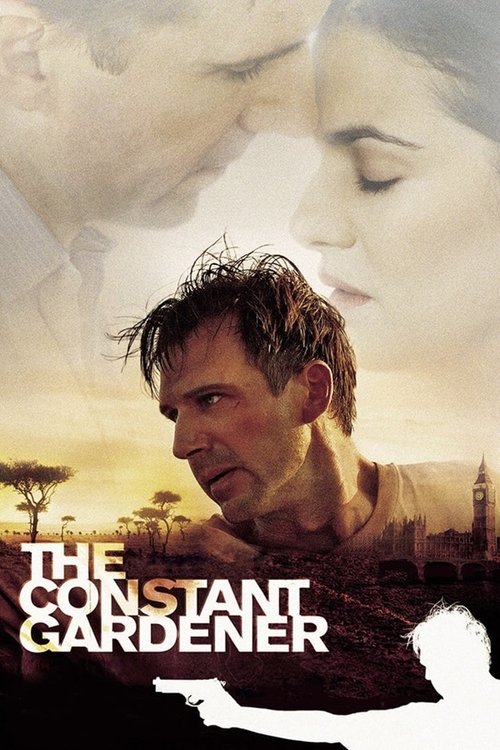
The Constant Gardener (2005)
Directed by Fernando Meirelles
Yes — The Constant Gardener is woke, scoring 72 out of 100 on our wokeness meter.
This 2005 adaptation of John le Carré's novel carries itself with the grim composure of a film that knows whose throats it intends to seize.
Consciousness Markers
The film is a damning indictment of Big Pharma and corporate profit over human life, with a Swiss-Canadian conglomerate covering up deadly drug trials.
The plot centers on the exploitation of Kenyan test subjects by Western pharmaceutical companies, with mass graves and colonial power dynamics highlighting racial inequality.
The film builds to a direct moral indictment of the British government, KDH, and public complacency, delivered via a letter read at a memorial service.
Arnold Bluhm is a gay character whose secret is a plot point; his homosexuality is noted as illegal in Kenya, but the theme remains secondary.
The film features a diverse international supporting cast, including Black African and South Asian actors, but the leads are white and there is no deliberate modern representation agenda.
Tessa is a strong-willed activist who drives the investigation, yet her death primarily motivates her husband's quest, reflecting a pre-2015 approach rather than a modern feminist agenda.
No climate change or environmental themes are present.
No body positivity themes are present.
No neurodivergence themes are present.
The story is a fictional thriller, not a revisionist take on historical events.
Why it received this score
This 2005 adaptation of John le Carré's novel carries itself with the grim composure of a film that knows whose throats it intends to seize. Ralph Fiennes plays Justin Quayle, a British diplomat in Kenya whose horticultural serenity collapses when his activist wife Tessa is murdered. The investigation that follows is methodical, sun-scorched, and entirely without mercy. The antagonist is not a man but a balance sheet. KDH, a Swiss-Canadian conglomerate, tests a tuberculosis drug on unsuspecting Kenyans, buries the evidence, and watches the share price climb. The loathing for corporate arithmetic here is total and unapologetic.
The film's racial conscience is its spine, not its ornament. Kenyan bodies fill a mass grave while Western executives negotiate in air-conditioned rooms, and the colonial geometry of that arrangement is drawn plainly. A gay doctor, Arnold Bluhm, is present and his secret matters to the plot, though the film treats his orientation as a legal hazard in Kenya and little more. Tessa is the engine of the story, sharp and fearless, yet she is killed so her husband may find his purpose. That is an old arrangement wearing new clothes, and the film does not stop to examine it.
Then comes the sermon. The final act builds toward a memorial service where a lawyer reads a dead man's letter aloud, naming the British government, the corporation, and the comfortable public that swallows its medicine without asking what it cost. It is a closing argument, delivered with a straight face and no apology. Nothing here concerns climate, bodily self-acceptance, or the atypical mind, and the film never pretends otherwise. It has one target and hits it repeatedly. We are left with a thriller that functions as an indictment, which is a respectable thing to be, if not a subtle one.
Analysis generated by our Consciousness Algorithm


Synopsis
Justin Quayle is a low-level British diplomat who has always gone about his work very quietly, not causing any problems. But after his radical wife Tessa is killed he becomes determined to find out why, thrusting himself into the middle of a very dangerous conspiracy.
Questions about The Constant Gardener
Is The Constant Gardener woke?
Yes — The Constant Gardener is woke, scoring 72 out of 100 on our wokeness meter. That earns it a verdict of Woke.
What makes The Constant Gardener woke?
5 of the 10 markers register at 30 or above, led by Eat the Rich (80), Lecture Energy (70) and Racial Consciousness (70). On Eat the Rich: The film is a damning indictment of Big Pharma and corporate profit over human life, with a Swiss-Canadian conglomerate covering up deadly drug trials.
How does The Constant Gardener compare to other 2005 movies?
It is the wokest of the 181 films from 2005 we've scored; their average is 13.
How is the Woke Score calculated?
An AI-assisted process researches the film and its reception, scores it 0–100 on ten markers, then combines those into one 0–100 Woke Score. It measures a specific set of 2020s cultural themes, not film quality.