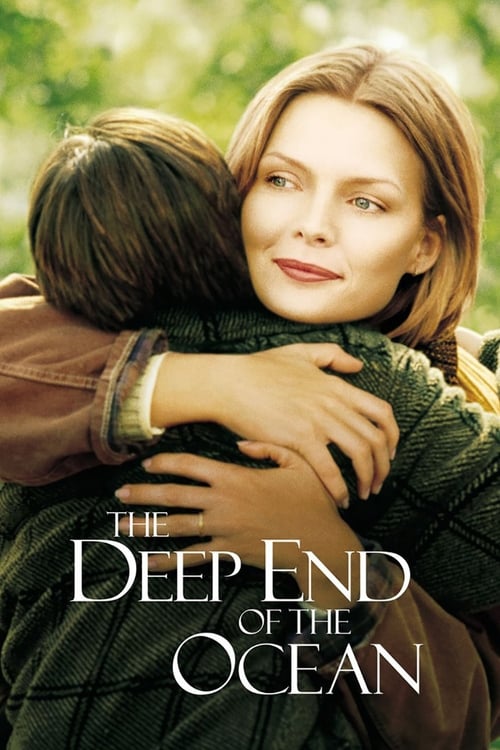
The Deep End of the Ocean (1999)
Directed by Ulu Grosbard
No — The Deep End of the Ocean is not woke, scoring 0 out of 100 on our wokeness meter.
The Deep End of the Ocean arrives from 1999, a year when a studio could still build a drama around a mother losing a child and trust the audience to bring its own tissues.
Consciousness Markers
The cast is led by white actors; Whoopi Goldberg appears as a detective, but her presence is not framed as representation or commented upon.
There are no LGBTQ+ themes, characters, or subtext in the film.
The story centers on a mother's grief and family reconciliation, but it does not advance a feminist agenda or critique patriarchy.
The film does not engage with race, racial identity, or systemic racial issues.
There is no environmental or climate-related content.
The film contains no critique of capitalism, wealth, or class structures.
There is no body positivity messaging or focus on body image.
A kidnapper is described as mentally unstable, but this is a plot device rather than neurodivergence representation.
The film is a contemporary fictional drama and does not revise or reinterpret historical events.
The film aims for emotional family drama rather than delivering social or political lectures.
Why it received this score
The Deep End of the Ocean arrives from 1999, a year when a studio could still build a drama around a mother losing a child and trust the audience to bring its own tissues. Michelle Pfeiffer plays Beth Cappadora, whose three-year-old son vanishes during a high school reunion, and the film follows the family through nine years of quiet wreckage until the boy resurfaces under a different name in the same town. It was adapted from Jacquelyn Mitchard's novel, the first selection of Oprah's Book Club, and it carries that pedigree with a certain somber dignity. The camera is tasteful. The score by Elmer Bernstein swells on cue. Everyone suffers beautifully.
What the film does not do is lecture. There is no thesis tucked into the grief, no argument about how the Cappadoras ought to have structured their lives. Whoopi Goldberg appears as Detective Candy Bliss, a Black woman in a position of authority, and the film never once stops to congratulate itself for this. She is simply the detective. The kidnapper, Cecilia Lockhart, is described as mentally unstable, which is a device to explain an abduction, not an invitation to discuss neurological difference. The family is white, comfortable, and consumed by private sorrow. Race, class, climate, and capital never enter the frame, and the frame is better for it, or at least quieter.
The result is a film that belongs to an older tradition of middlebrow domestic melodrama, one that asked audiences to feel rather than to agree. It is not a landmark of anything. It is a competent, occasionally wrenching, ultimately conventional piece of studio craftsmanship, and it makes no claims on our politics whatsoever. We classify it accordingly, with the mild respect owed to any artifact that knows what it is and does not pretend to be a sermon.
Analysis generated by our Consciousness Algorithm


Synopsis
A three-year-old boy disappears during his mother's high school reunion. Nine years later, by chance, he turns up in the town in which the family has just relocated.
Questions about The Deep End of the Ocean
Is The Deep End of the Ocean woke?
No — The Deep End of the Ocean is not woke, scoring 0 out of 100 on our wokeness meter. That earns it a verdict of Ultra Based.
Does The Deep End of the Ocean have any woke elements?
No. All 10 markers score zero.
How does The Deep End of the Ocean compare to other 1999 movies?
It ranks #94 of the 103 films from 1999 we've scored; their average is 14. The wokest is Boys Don't Cry (60).
How is the Woke Score calculated?
An AI-assisted process researches the film and its reception, scores it 0–100 on ten markers, then combines those into one 0–100 Woke Score. It measures a specific set of 2020s cultural themes, not film quality.