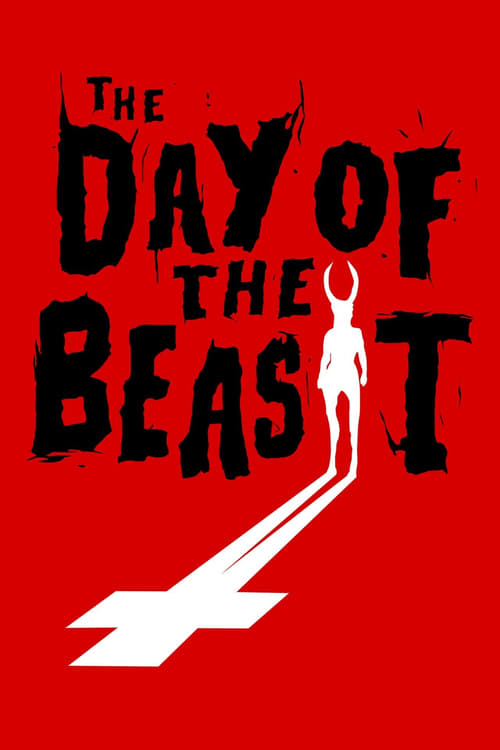
The Day of the Beast (1995)
Directed by Álex de la Iglesia
No — The Day of the Beast is not woke, scoring 5 out of 100 on our wokeness meter.
Álex de la Iglesia's The Day of the Beast arrives from 1995 as a Spanish-Italian co-production, which is to say its cast is uniformly European and nobody involved appears to have given the matter a second thought.
Consciousness Markers
The extreme-right gang murdering the homeless and spray-painting 'Limpia Madrid' carries an anti-fascist, ethnic-cleansing subtext, but it is framed as satanic/urban horror rather than a modern racial-justice statement.
The film is a gleefully profane black comedy that satirizes religion and fascism without ever pausing to preach to the audience.
A Spanish-Italian co-production with an entirely European cast; minority and female roles exist naturally in the story without any modern representational framing.
The film gestures at urban decay and the disposability of the homeless, but offers no coherent anti-capitalist critique.
No LGBTQ+ characters, themes, or subtext of any kind appear in the film.
Female characters (Mina, Susana) function as plot devices — notably the 'blood of a virgin' ritual requirement — with no feminist critique or agency-driven arc.
No environmental or climate themes are present.
No body-positivity themes; the film trades in gore and grotesquerie instead.
No neurodivergence themes or characters are present.
The film is a fictional satanic comedy with no historical revisionism.
Why it received this score
Álex de la Iglesia's The Day of the Beast arrives from 1995 as a Spanish-Italian co-production, which is to say its cast is uniformly European and nobody involved appears to have given the matter a second thought. A Basque priest, convinced the Antichrist will be born in Madrid on Christmas Eve, sets out to commit every sin within reach and drags a heavy metal clerk and a fraudulent television occultist along for the ride. The result is gore, sacrilege, and a goat that appears and then vanishes. It is a satanic comedy, and it knows exactly what it is.
The film does carry a faint political pulse. An extreme-right gang stalks the margins of the story, murdering the homeless and spraying Limpia Madrid across the walls, and their leader turns out to be the devil himself, which is efficient stagecraft. This registers as anti-fascist texture folded into urban horror, not as a statement of racial justice. The women in the cast exist to supply a virgin's blood or to be knocked unconscious by mistake. Nobody in 1995 Madrid was assembling a thesis about any of this, and the film offers no corrective.
The enterprise is saved from the era's occasional sermonizing by its total absence of it. The Day of the Beast lampoons the church and the far right with a grin, never stopping to explain the joke or instruct the viewer on how to feel about it. There is no environmental lament, no economic argument worth the name, no interest in the body beyond what can be made to bleed. It is a lean, gleefully profane object, and it asks nothing of us but our attention.
Analysis generated by our Consciousness Algorithm


Synopsis
When a rogue priest discovers the exact date the Antichrist will be born, he enlists a Death Metal record store clerk and a cheesy TV psychic for an urban spree of gore, sacrilege and twisted humor to prevent the Apocalypse.
Questions about The Day of the Beast
Is The Day of the Beast woke?
No — The Day of the Beast is not woke, scoring 5 out of 100 on our wokeness meter. That earns it a verdict of Ultra Based.
Does The Day of the Beast have any woke elements?
Very few. None of the 10 markers reaches 30, the level where a marker counts as present; the highest is Racial Consciousness at 12.
How does The Day of the Beast compare to other 1995 movies?
It ranks #69 of the 108 films from 1995 we've scored; their average is 12. The wokest is Total Eclipse (60).
How is the Woke Score calculated?
An AI-assisted process researches the film and its reception, scores it 0–100 on ten markers, then combines those into one 0–100 Woke Score. It measures a specific set of 2020s cultural themes, not film quality.