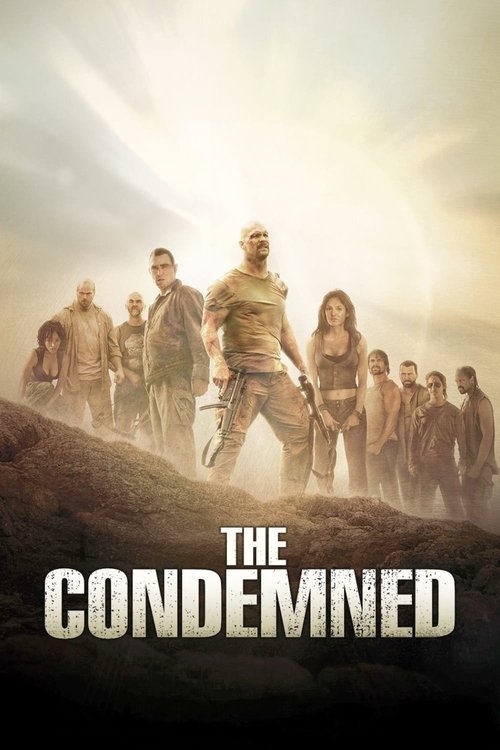
The Condemned (2007)
Directed by Scott Wiper
No — The Condemned is not especially woke, scoring 29 out of 100 on our wokeness meter.
The Condemned opens with a premise that would be almost elegant if it were not so grubby: a corrupt television producer purchases ten death row inmates from various prisons and drops them on a South Pacific island to kill each other for an internet broadcast.
Consciousness Markers
The central villain is a rogue Hollywood producer who commodifies human lives for online ratings, and the film explicitly frames the death game as a media-corporate exploitation scheme — a clear 'eat the rich' / anti-media-capitalism critique.
Critics specifically faulted the film for an 'overly preachy tone' and 'hypocritical morals,' as it lectures about the evils of violent media spectacle while wallowing in the very violence it condemns.
The death-match roster is a deliberately international ensemble — a Ghanaian woman, a Mexican couple, a Japanese fighter, an Estonian, a German, an Italian and an Arab — giving the cast a functional multicultural spread, though the diversity serves the premise rather than any representational intent.
Yasantwa is a scheming femme fatale and Julie voices mild dissent, but the film's treatment of Rosa (raped and murdered on screen) and its general macho framing leave essentially no feminist content.
The multiracial cast exists purely as international death-match fodder; the film makes no comment on race, racism, or racial identity.
No LGBTQ+ characters, themes, or subtext of any kind appear in the film.
No environmental or climate themes whatsoever.
No body-positivity themes; the film is built around hyper-masculine physical combat.
No neurodivergent characters or themes are present.
No historical revisionism; the film is a contemporary fictional action premise.
Why it received this score
The Condemned opens with a premise that would be almost elegant if it were not so grubby: a corrupt television producer purchases ten death row inmates from various prisons and drops them on a South Pacific island to kill each other for an internet broadcast. The roster is international by design, a Ghanaian woman, a Mexican couple, a Japanese fighter, an Estonian, a German, an Italian, and an Arab contestant, which gives the cast a functional multicultural spread. The film treats this spread as inventory. No character's nationality generates comment, tension, or insight. We are watching a spreadsheet of condemned people, and the spreadsheet is the point.
Where the film does locate a thesis is in its villain. Ian Breck Breckel is a rogue Hollywood producer who speaks of ratings the way a bond trader speaks of quarterly returns, and the death game is explicitly a media-corporate exploitation scheme. This is the film's clearest social consciousness: an eat-the-rich critique of entertainment capitalism that arrives with a bomb strapped to its ankle. It also arrives with a straight face while the camera lingers on rape, murder, and brutality. Critics at the time noted the preachy tone and the hypocritical morals, and they were correct. The film condemns violent spectacle while serving violent spectacle, a lecture delivered from inside the slaughterhouse.
The remaining markers sit near the floor. Rosa is raped and murdered on screen, Yasantwa is a scheming femme fatale, and Julie's mild dissent amounts to a shrug. There is no LGBTQ content, no climate concern, no body positivity, no neurodivergence, and no historical revisionism. This is a 2007 WWE Studios action vehicle that lost money and earned a 16 percent approval rating. It wants to say something about what we watch. Mostly it says something about what we will rent.
Analysis generated by our Consciousness Algorithm
Part of


Synopsis
Jack Conrad is awaiting the death penalty in a corrupt Central American prison. He is "purchased" by a wealthy television producer and taken to a desolate island where he must fight to the death against nine other condemned killers from all corners of the world, with freedom going to the sole survivor.
Questions about The Condemned
Is The Condemned woke?
No — The Condemned is not especially woke, scoring 29 out of 100 on our wokeness meter. That earns it a verdict of Based.
Does The Condemned have any woke elements?
3 of the 10 markers register at 30 or above, led by Eat the Rich (60), Lecture Energy (45) and Representation Casting (32). On Eat the Rich: The central villain is a rogue Hollywood producer who commodifies human lives for online ratings, and the film explicitly frames the death game as a media-corporate exploitation scheme — a clear 'eat the rich' / anti-media-capitalism critique.
How does The Condemned compare to other 2007 movies?
It ranks #15 of the 201 films from 2007 we've scored; their average is 12. The wokest is Like Stars on Earth (92).
How is the Woke Score calculated?
An AI-assisted process researches the film and its reception, scores it 0–100 on ten markers, then combines those into one 0–100 Woke Score. It measures a specific set of 2020s cultural themes, not film quality.