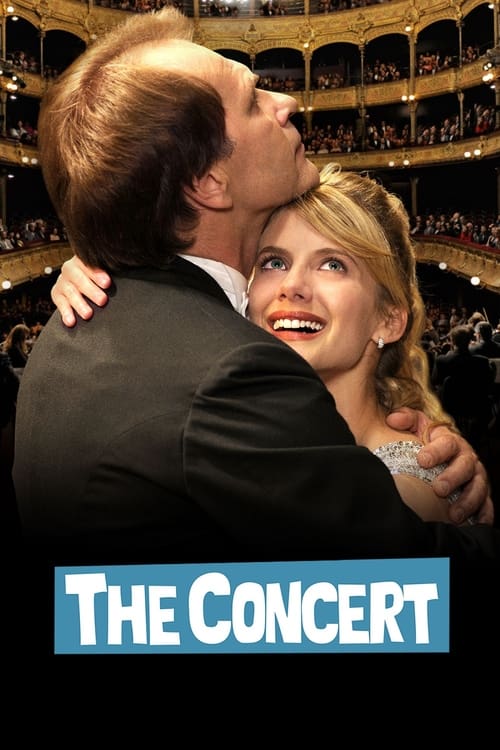
The Concert (2009)
Directed by Radu Mihăileanu
No — The Concert is not especially woke, scoring 28 out of 100 on our wokeness meter.
Radu Mihăileanu's "The Concert" arrives from 2009, which places it just before the cultural weather shifted, and it wears its era with the comfortable fit of an old coat.
Consciousness Markers
The plot turns squarely on Soviet antisemitic persecution — Jewish musicians broken, deported to Siberia, and a child smuggled out in a cello case — with Roma musicians sharing the same fate, making ethnic injustice the film's moral core.
The ensemble is a genuinely international mix of Russian, French, Roma (Taraf de Haïdouks) and Black (Sara Martins) performers, but the diversity is organic to a story about a multinational orchestra rather than a deliberate representational statement.
Anne-Marie is a formidable soloist with her own agency, and Guylène and the late Lea are strong women, but the film's engine is the Maestro's redemption arc rather than any feminist critique.
Themes of artistic freedom and political persecution are present and heartfelt, but they are delivered through farce, music, and melodrama rather than direct sermonizing.
A mafia boss buys his way into the orchestra and the Châtelet is swayed by cost, offering faint jabs at money corrupting art, but this is incidental rather than a thesis.
No LGBTQ+ characters, themes, or subtext appear anywhere in the film.
No environmental or climate themes are present.
No body-positivity themes or messaging.
Lea's mental breakdown is depicted as tragic consequence of persecution, not as neurodivergent identity or advocacy.
The film dramatizes Soviet-era persecution of Jewish musicians in a broadly accurate historical register rather than revising or reframing established history.
Why it received this score
Radu Mihăileanu's "The Concert" arrives from 2009, which places it just before the cultural weather shifted, and it wears its era with the comfortable fit of an old coat. The premise concerns Andrei Filipov, a once-celebrated Bolshoi conductor reduced to mopping the very hall he used to command, who intercepts a Parisian invitation and reassembles his old players, now scattered into taxi driving and furniture hauling. The ensemble is a genuinely multinational lot, Russian, French, Roma, and a Black violinist's agent among them, but the mixing feels like casting a story about a multinational orchestra instead of a statement about representation. Nobody pauses to explain the demographics. They simply need enough bodies to fill the stage.
The moral weight rests on Soviet antisemitism. Jewish musicians are broken, deported to Siberia, a child smuggled out in a cello case, and Roma players share the same ruin, which gives the film a spine of ethnic injustice. The women are formidable in their own right: Anne-Marie is a soloist of real will, Guylène manages her with steel, and the lost Lea haunts the score. Yet the engine is the Maestro's redemption, so the film never pivots into a critique of the men who run things. A mafia boss buys his way into the cello section, and the theater is swayed by cheaper fees, which offers a few soft jabs at money debasing art. It is an aside, not a thesis.
What keeps the whole thing from turning preachy is that Mihăileanu delivers his ideas through farce, slapstick, and Tchaikovsky. The political horror arrives as melodrama, not sermon. There is no climate anxiety, no body politics, no neurodivergent advocacy, no rewrite of the historical record. Just a sturdy, old-fashioned crowd-pleaser about ruined men and one last concert, and it is content to remain exactly that.
Analysis generated by our Consciousness Algorithm

Synopsis
A former world-famous conductor of the Bolshoï orchestra, known as "The Maëstro", Andreï Filipov had seen his career publicly broken by Leonid Brezhnev for hiring Jewish musicians and now works cleaning the concert hall where he once directed. One day, he intercepts an official invitation from the prestigious Théâtre du Châtelet. Through a series of mad antics, he reunites his old orchestra, now composed of old alcoholic musicians, and flies to perform in Paris and complete the Tchaikovsky concerto interrupted 30 years earlier. For the concerto, he engages a young violin soloist with whom he has an unexpected connection.
Questions about The Concert
Is The Concert woke?
No — The Concert is not especially woke, scoring 28 out of 100 on our wokeness meter. That earns it a verdict of Based.
Does The Concert have any woke elements?
2 of the 10 markers register at 30 or above, led by Racial Consciousness (50) and Representation Casting (35). On Racial Consciousness: The plot turns squarely on Soviet antisemitic persecution — Jewish musicians broken, deported to Siberia, and a child smuggled out in a cello case — with Roma musicians sharing the same fate, making ethnic injustice the film's moral core.
How does The Concert compare to other 2009 movies?
It ranks #21 of the 230 films from 2009 we've scored; their average is 14. The wokest is Home (79).
How is the Woke Score calculated?
An AI-assisted process researches the film and its reception, scores it 0–100 on ten markers, then combines those into one 0–100 Woke Score. It measures a specific set of 2020s cultural themes, not film quality.