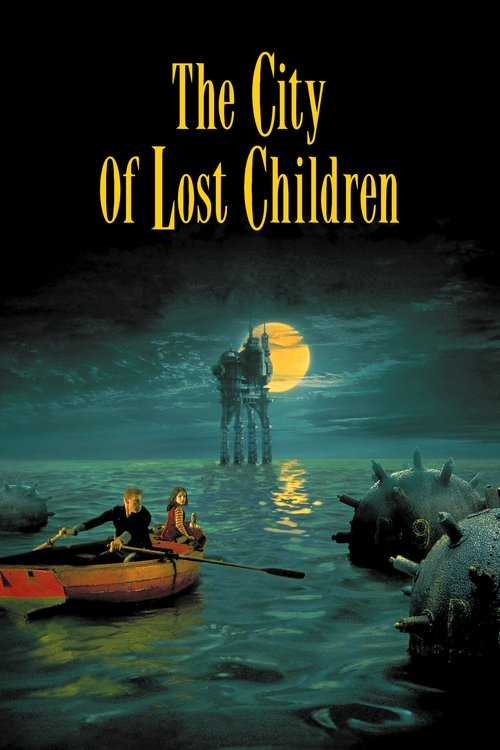
The City of Lost Children (1995)
Directed by Marc Caro
No — The City of Lost Children is not woke, scoring 4 out of 100 on our wokeness meter.
The City of Lost Children drifts up from 1995, a French, German and Spanish co-production, and it remains one of the more beautiful dead ends in European fantasy.
Consciousness Markers
Academic readings note the film's depiction of capitalism exploiting childhood and innocence, but this is a scholarly interpretation of a surrealist fable rather than an overt anti-capitalist message.
Miette is a resourceful, brave young girl who drives much of the plot, but the film offers no feminist thesis or gender-politics messaging; her heroism is narrative, not ideological.
The cast is a predominantly white European ensemble (Ron Perlman, Dominique Pinon, Judith Vittet, Daniel Emilfork) with no diversity-conscious casting choices or commentary.
No LGBTQ+ characters, relationships, or themes appear anywhere in the film.
No engagement with race, racial identity, or racial justice themes.
No environmental or climate themes; the oil rig is a gothic setting, not an ecological statement.
No body-positivity themes or messaging present.
Krank's inability to dream is a fantastical affliction, not a depiction of neurodivergence or neurodiversity advocacy.
The film is a wholly invented steampunk fantasy with no historical revisionism.
The film is a dreamlike, ambiguous fable that resists moralizing or direct address; it never lectures its audience.
Why it received this score
The City of Lost Children drifts up from 1995, a French, German and Spanish co-production, and it remains one of the more beautiful dead ends in European fantasy. Krank, a prematurely aging man assembled by a vanished scientist, abducts children to steal their dreams. Around him: a foggy port, a cyborg cult with mechanical eyes, conjoined twins who run a gang of orphans, and a brain in a vat. Angelo Badalamenti supplies the score, Jean Paul Gaultier the costumes, and the whole thing sighs like a rusted music box. It has no intention of instructing anyone.
On the ledger of modern social consciousness, the film is nearly blank, and its silence is honest. The cast is European and uniformly pale, with no comment offered and none required. There is no LGBTQ content, no engagement with race, no environmental sermon, no body-positivity, no neurodiversity advocacy. Krank's inability to dream is a fairy-tale curse, not a diagnosis. Miette, the orphan girl who drives the back half of the story, is brave and resourceful. That is characterization, not a thesis. She outwits a monster because the plot requires it, not because the screenplay has something to say about girls.
A faint economic tremor remains. Scholars have read the film as an indictment of capitalism devouring childhood and innocence: kidnapped dreamers, orphans rented out for burglary, a cult trading eyes and ears for small bodies. That reading must be excavated. Jeunet and Caro show, then step back. Nobody delivers a speech, nobody names the problem, and the ending offers two boats rowing into fog, one crewed by a manufactured family of clones, one by a found family of survivors, with no verdict attached. In an age that prefers its fables to arrive carrying placards, this one hands over only mist, rust, and a seabird landing on a detonator.
Analysis generated by our Consciousness Algorithm


Synopsis
A scientist in a surrealist society kidnaps children to steal their dreams, hoping that they slow his aging process.
Questions about The City of Lost Children
Is The City of Lost Children woke?
No — The City of Lost Children is not woke, scoring 4 out of 100 on our wokeness meter. That earns it a verdict of Ultra Based.
Does The City of Lost Children have any woke elements?
Very few. None of the 10 markers reaches 30, the level where a marker counts as present; the highest is Eat the Rich at 15.
How does The City of Lost Children compare to other 1995 movies?
It ranks #72 of the 108 films from 1995 we've scored; their average is 12. The wokest is Total Eclipse (60).
How is the Woke Score calculated?
An AI-assisted process researches the film and its reception, scores it 0–100 on ten markers, then combines those into one 0–100 Woke Score. It measures a specific set of 2020s cultural themes, not film quality.