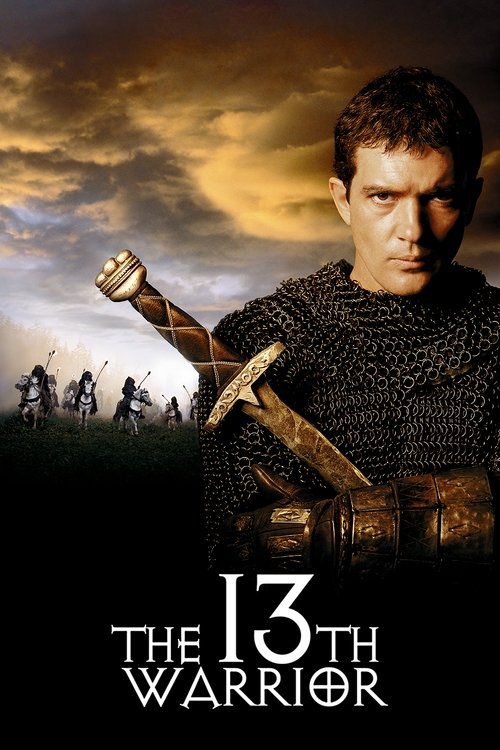
The 13th Warrior (1999)
Directed by John McTiernan
No — The 13th Warrior is not especially woke, scoring 22 out of 100 on our wokeness meter.
The 13th Warrior arrives from 1999 carrying a distinction its box office never confirmed: it placed a Muslim Arab protagonist at the center of a Hollywood adventure picture.
Consciousness Markers
The film centers a Muslim Arab protagonist, Ahmad ibn Fadlan, in a Hollywood blockbuster — a rarity for 1999 and credited as pioneering a Muslim hero. However, the role is played by Spanish actor Antonio Banderas, undercutting the representational intent.
The film's spine is cross-cultural friction and eventual mutual respect between an Arab scholar and Norse warriors, with Ahmed earning his place through wit and skill. The theme is present but framed as adventure rather than racial commentary.
The cultural-respect theme is conveyed through action and character rather than preaching; the film largely avoids moralizing.
Women appear only as a self-sacrificing funeral slave, a prophetic völva, and the monstrous 'Mother of the Wendol'; none of this constitutes a feminist agenda.
No LGBTQ+ characters, themes, or subtext appear anywhere in the film.
No environmental or climate themes whatsoever.
No economic critique or class-consciousness present; the conflict is purely martial and mythic.
No body-positivity themes; the film valorizes conventional warrior physicality.
No neurodivergence themes or characters.
The film is a fictional reimagining of Beowulf via Crichton's novel, not an ideological rewriting of the historical record.
Why it received this score
The 13th Warrior arrives from 1999 carrying a distinction its box office never confirmed: it placed a Muslim Arab protagonist at the center of a Hollywood adventure picture. Ahmad ibn Fadlan, court poet of Baghdad, is exiled north, falls in with Norsemen, and becomes the thirteenth warrior of prophecy. That a major studio built a tentpole around an Arab scholar was unusual then and remains unusual now. The gesture is diluted somewhat by the casting of Antonio Banderas, a Spaniard, in a role that calls for a Baghdad courtier. The film earns credit for the intent and forfeits a portion of it in the execution.
Most of the running time concerns Ahmad earning his place among men who mock his small horse and his soft hands. He wins them over with horsemanship, literacy, and a talent for languages. The friction between cultures is the spine of the thing, and the resolution is mutual respect. What keeps this from becoming a sermon is that the film shows the respect instead of announcing it. Nobody halts the battle to explain tolerance. The lessons arrive through swordplay and shared labor. This is restraint, and in a genre that rarely practices it, restraint deserves acknowledgment. The film even lets Ahmad keep his faith without turning it into a debate.
The women of the film are a funeral slave who volunteers to burn, a prophetic wisewoman, and a cannibal queen called the Mother of the Wendol. This is a narrow portfolio. The warriors themselves are conventionally built, and the story has no interest in the economics of anything beyond plunder and survival. No character pauses to interrogate the class structure of the mead hall. What remains is a modest cultural curiosity, a Beowulf reimagining by way of Michael Crichton, and a cautionary tale about studio recuts. It is a film with a little social awareness and no appetite for argument.
Analysis generated by our Consciousness Algorithm


Synopsis
A Muslim ambassador exiled from his homeland joins a group of Vikings, initially offended by their behavior but growing to respect them. As they travel together, they learn of a legendary evil closing in and must unite to confront this formidable force.
Questions about The 13th Warrior
Is The 13th Warrior woke?
No — The 13th Warrior is not especially woke, scoring 22 out of 100 on our wokeness meter. That earns it a verdict of Based.
Does The 13th Warrior have any woke elements?
2 of the 10 markers register at 30 or above, led by Representation Casting (42) and Racial Consciousness (38). On Representation Casting: The film centers a Muslim Arab protagonist, Ahmad ibn Fadlan, in a Hollywood blockbuster — a rarity for 1999 and credited as pioneering a Muslim hero.
How does The 13th Warrior compare to other 1999 movies?
It ranks #18 of the 103 films from 1999 we've scored; their average is 14. The wokest is Boys Don't Cry (60).
How is the Woke Score calculated?
An AI-assisted process researches the film and its reception, scores it 0–100 on ten markers, then combines those into one 0–100 Woke Score. It measures a specific set of 2020s cultural themes, not film quality.