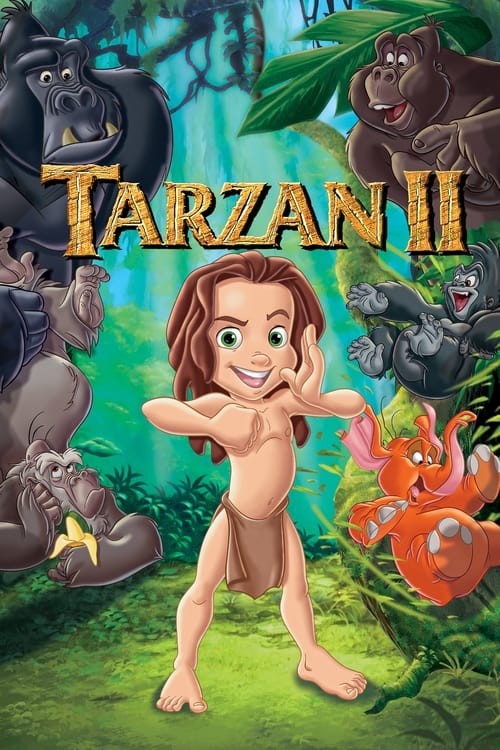
Tarzan II (2005)
Directed by Brian Smith
No — Tarzan II is not woke, scoring 0 out of 100 on our wokeness meter.
Tarzan II arrives from 2005, a direct-to-video midquel from DisneyToon Studios with the animation outsourced to Toon City and a running time that respects nobody.
Consciousness Markers
Voice cast is overwhelmingly white and the characters are jungle animals and a human orphan; no conscious diverse or representative casting effort is present.
No LGBTQ+ characters, themes, or subtext anywhere in the story.
Kala is a caring mother and Mama Gunda a comedic matriarch, but the film advances no feminist argument or gendered critique.
Tarzan's difference is framed as species/belonging, not race; there is no racial consciousness or commentary.
No environmental or climate themes appear in the jungle adventure.
No economic critique or anti-capitalist messaging of any kind.
The self-acceptance theme concerns being a different species, not body image or size acceptance; no body-positivity content.
Tantor's germophobia and neuroticism are played as comic quirks, not as neurodivergence representation.
No historical revisionism; the film is a fictional jungle prequel with no real-world history to reframe.
A gentle 'be yourself' moral is delivered through slapstick and song rather than preachy sermonizing.
Why it received this score
Tarzan II arrives from 2005, a direct-to-video midquel from DisneyToon Studios with the animation outsourced to Toon City and a running time that respects nobody. It sits chronologically inside the first film, during the childhood years, which means we already know how everything turns out and are simply here to watch a small boy learn that he belongs. George Carlin voices a hermit gorilla named Zugor who impersonates a monster through hollow trees to protect his food stash. That is the plot. A boy runs away, meets a grumpy old ape, and comes home.
The film's moral is a soft one: be yourself, find your own tricks, accept the family that accepts you. It is delivered through pratfalls, a leopard chase, and Phil Collins on the soundtrack. Nothing in the enterprise is engineered to instruct the audience in contemporary social virtue. The self-acceptance on offer concerns species and belonging, not body image, and the film shows no interest in size or shape beyond the comic bulk of two bullying gorilla brothers. Kala is a patient adoptive mother, but the screenplay advances no argument about gender. There is no romantic content of any orientation, no racial commentary (Tarzan's difference is read as species, not skin), no environmental sermonizing about the jungle, and no economic critique, unless we count Mama Gunda ordering her sons to rebuild a treehouse as a parable about restitution. We do not.
The voice cast is white and the characters are apes, elephants, and one orphan. Tantor's germophobia is a gag, not a diagnosis. We are left with a modest, forgettable children's film that wants nothing from us but ninety minutes and a tolerance for hiccup jokes. On the ledger of cultural instruction, it registers as a blank page, and there is something almost restful in that.
Analysis generated by our Consciousness Algorithm


Synopsis
When one of his missteps puts his family in jeopardy, Tarzan decides they would be better off without him.
Questions about Tarzan II
Is Tarzan II woke?
No — Tarzan II is not woke, scoring 0 out of 100 on our wokeness meter. That earns it a verdict of Ultra Based.
Does Tarzan II have any woke elements?
No. All 10 markers score zero.
How does Tarzan II compare to other 2005 movies?
It ranks #160 of the 181 films from 2005 we've scored; their average is 13. The wokest is The Constant Gardener (72).
Is Tarzan II the most woke Tarzan (Animation) movie?
No. It ranks #3 of the 3 Tarzan (Animation) films we've scored; the wokest is Tarzan (8).