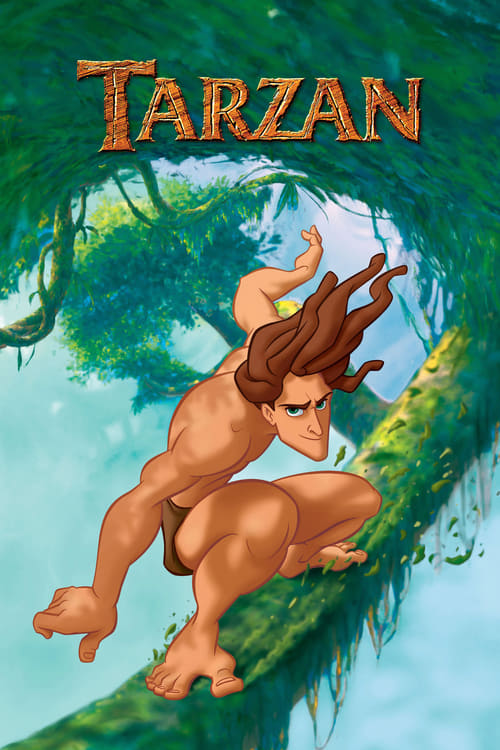
Tarzan (1999)
Directed by Chris Buck
No · Ultra Based
How we score movies →Consciousness Markers
Jane Porter demonstrates agency and intelligence, but remains ultimately a supporting character in Tarzan's narrative. She is spirited but not the focus of her own story.
The human hunters and explorers serve as antagonists, but this reflects basic adventure film morality rather than systemic critique of capitalism or exploitation.
The voice cast is predominantly white with no deliberate effort to diversify or address the racial dynamics inherent in the source material. Standard Hollywood casting practices of 1999.
The film adapts the source material but does not engage in contemporary revisionist framing. It presents the story as timeless adventure rather than engaging with its historical context.
The film fails to interrogate the colonial and racial undertones of its source material. The African setting and ape family are presented without critical awareness of their problematic history.
While the jungle environment is central to the story, there is no engagement with environmental or climate themes in any contemporary sense. Nature is backdrop, not subject.
The film is primarily an adventure romance without preachy or preachy messaging. Such social commentary as exists is implicit rather than explicit.
No LGBTQ+ representation or themes present. The film presents a straightforward heterosexual romance as its emotional core.
Not applicable to this standard Disney animated feature. No particular engagement with body diversity or body positivity themes.
No representation of neurodivergence or disability. Not a consideration in the film's narrative or character development.


Synopsis
Tarzan was a small orphan who was raised by an ape named Kala since he was a child. He believed that this was his family, but on an expedition Jane Porter is rescued by Tarzan. He then finds out that he's human. Now Tarzan must make the decision as to which family he should belong to...
Why it received this score
Disney's 1999 Tarzan arrives at the tail end of a century that should have known better, yet the film remains largely unconcerned with interrogating its source material's colonial baggage. The jungle is rendered as a lush, timeless space inhabited by apes and exotic danger, with the human explorers serving as convenient villains. This is not progressive critique but rather the default adventure narrative structure of the era, where moral clarity comes from personal heroism rather than systemic awareness.
Jane Porter, voiced by Minnie Driver, possesses spunk and intelligence, which counts for something in the context of 1999 Disney animation. She is not a passive prize but a character with agency and curiosity. Yet the narrative arc privileges Tarzan's identity crisis and his romantic choice over her own journey or development. She remains fundamentally an inciting incident in his story of belonging.
The film's greatest limitation is its refusal to engage with what it inherits from Burroughs. The African setting, the ape family, the white man raised in nature discovering his humanity through connection to civilization: these are all steeped in the racial and colonial anxieties of early twentieth-century pulp fiction. Disney's 1999 adaptation doesn't wrestle with this legacy so much as ignore it, treating the story as a timeless adventure fable rather than a text with a specific historical context and problematic assumptions. For a film made at the precipice of a new century, this feels like a missed opportunity for actual reckoning, though one should acknowledge that such reckoning was not yet the cultural priority it would later become.
Analysis generated by our Consciousness Algorithm
Critic Reviews
“The stylized physiques and movements of the characters in this exciting animated musical-romance-adventure are at once realist and fantastic.”
“I saw Tarzan once, and went to see it again. This kind of bright, colorful, hyperkinetic animation is a visual exhilaration.”
“An inspired mix of spirited family entertainment and harrowing drama.”
“Some first-rate animation and some second-rate storytelling.”