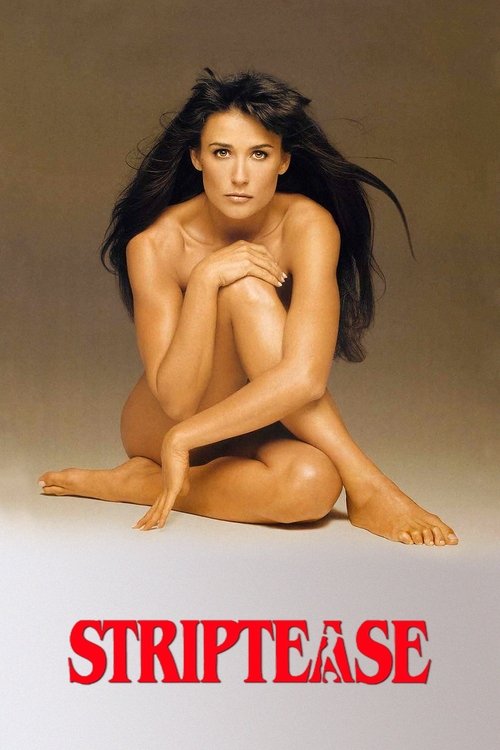
Striptease (1996)
Directed by Andrew Bergman
No — Striptease is not woke, scoring 16 out of 100 on our wokeness meter.
Striptease arrives in 1996 with a $12.5 million paycheck for its star, a sum that made Demi Moore the highest-paid actress of her era and, apparently, the whole of its marketing campaign.
Consciousness Markers
The plot satirizes corrupt politics and the sugar industry's price supports worth hundreds of millions, with lobbyists and barons willing to murder to protect their interests, giving it a mild eat-the-rich flavor.
The film centers on a single mother's agency in fighting a corrupt system to regain custody, and Demi Moore's record-setting salary was a milestone, but the narrative is built around male-gaze exploitation and was widely criticized as exploitative rather than empowering.
Moore publicly framed the nudity as refusing to shame the body, and the film treats stripping matter-of-factly, but its heavy emphasis on titillation and the male gaze undercuts any genuine body-positivity message.
The cast includes Ving Rhames and several Latino actors in supporting roles, but these are natural, uncommented casting choices typical of a 1996 ensemble crime comedy rather than deliberate representation casting.
The film is a broad black comedy that aims to amuse rather than preach, with only faint satirical jabs at political corruption that never rise to lecturing.
No LGBTQ+ characters, themes, or subtext appear anywhere in the film.
The film engages no racial themes or commentary; its satire targets political and corporate corruption, not race.
No environmental or climate themes are present.
No neurodivergent characters or themes are depicted.
The film is a fictional crime satire with no historical revisionism.
Why it received this score
Striptease arrives in 1996 with a $12.5 million paycheck for its star, a sum that made Demi Moore the highest-paid actress of her era and, apparently, the whole of its marketing campaign. The film concerns Erin Grant, an FBI secretary turned strip-club performer who needs fifteen thousand dollars to appeal a custody ruling against a drug-dealing ex-husband. This is the raw material of empowerment, and Moore has spoken about refusing to shame the body. The camera, however, has other plans. It lingers where a serious drama would not, and the result is a film that argues for a woman's agency while selling her anatomy as the main attraction.
The screenplay, adapted from Carl Hiaasen's novel, spends its energy on broad corruption: a congressman in thrall to sugar barons, lobbyists who kill to protect price supports worth hundreds of millions, a blackmail plot involving photographs and a drowned man in Lake Okeechobee. There is a faint eat-the-rich tang here, though the film is far too busy being zany to press the point. Its jabs at political graft register as texture, not sermon. Ving Rhames and a handful of Latino performers fill supporting roles with no comment attached, which is how a 1996 ensemble crime comedy operated.
What the film does not contain is instructive. No LGBTQ characters. No racial commentary, despite a Miami setting that would invite it. No environmental conscience. No neurodivergent figures. No revisionist history, the story being invented outright. The body-positive gesture, such as it is, drowns under choreography designed for the back row of a bachelor party. What remains is a curiosity: a star vehicle that won six Golden Raspberry Awards, made its leading lady briefly the most powerful woman in Hollywood, and settled into history as a cautionary tale about the difference between taking your clothes off and taking control. The sommelier notes a thin, acidic vintage with an unexpectedly bitter finish.
Analysis generated by our Consciousness Algorithm


Synopsis
Bounced from her job, Erin Grant needs money if she's to have any chance of winning back custody of her child. But, eventually, she must confront the naked truth: to take on the system, she'll have to take it all off. Erin strips to conquer, but she faces unintended circumstances when a hound dog of a Congressman zeroes in on her and sharpens the shady tools at his fingertips, including blackmail and murder.
Questions about Striptease
Is Striptease woke?
No — Striptease is not woke, scoring 16 out of 100 on our wokeness meter. That earns it a verdict of Ultra Based.
Does Striptease have any woke elements?
Very few. None of the 10 markers reaches 30, the level where a marker counts as present; the highest is Eat the Rich at 25.
How does Striptease compare to other 1996 movies?
It ranks #18 of the 93 films from 1996 we've scored; their average is 11. The wokest is Bound (60).
How is the Woke Score calculated?
An AI-assisted process researches the film and its reception, scores it 0–100 on ten markers, then combines those into one 0–100 Woke Score. It measures a specific set of 2020s cultural themes, not film quality.