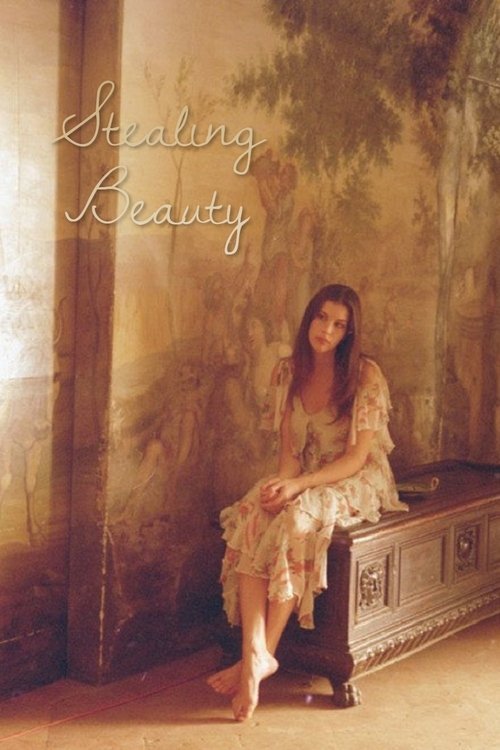
Stealing Beauty (1996)
Directed by Bernardo Bertolucci
No — Stealing Beauty is not woke, scoring 3 out of 100 on our wokeness meter.
Bernardo Bertolucci's Stealing Beauty arrives in 1996 with Tuscany, Mozart, and a nineteen-year-old Liv Tyler, and it proceeds to do very little with any of them.
Consciousness Markers
While centered on a young woman's sexual awakening, the film is famously shot through Bertolucci's male gaze, and star Liv Tyler publicly fought the topless scenes. This is the opposite of a feminist agenda.
The cast is almost entirely white European and American performers; no meaningful diverse or color-conscious casting is present.
There are no LGBTQ+ characters, relationships, or themes anywhere in the film.
No engagement with race, racism, or racial identity; the Tuscan villa world is uniformly white and oblivious to such questions.
No environmental or climate themes whatsoever.
The presence of an art gallery owner and wealthy villa guests carries no critique of capitalism or class; the film luxuriates in privilege rather than interrogating it.
Nudity and sexual awakening are present, but framed as erotic spectacle rather than any modern body-positivity message.
No neurodivergent characters or themes are present.
No historical revisionism; the film is a contemporary (1990s) character study with no historical subject matter to revise.
The film is a languid mood piece with no didactic or preachy messaging; it never lectures its audience.
Why it received this score
Bernardo Bertolucci's Stealing Beauty arrives in 1996 with Tuscany, Mozart, and a nineteen-year-old Liv Tyler, and it proceeds to do very little with any of them. Lucy Harmon comes to a villa near Siena to be sculpted by a family friend, though the sculpting is pretext. What she actually wants is her first kiss again and the identity of her real father, hidden in a poem her dead mother left behind. The film drifts through dinners, marijuana, and longing glances, an atmosphere study that Roger Ebert dismissed as the sort of line a rich older man lays on a teenage model. He was not wrong.
The villa's population is entirely white, European and American, and the film has no interest in noticing. There is no racial question here, no queer current, no environmental pang. On the matter of gender, the record is complicated in a way that resists generous reading: the camera lingers on Tyler's body with the enthusiasm of its director, and Tyler herself said she fought the topless scenes to the very end. A young woman's sexual awakening is the subject, but it is rendered as spectacle for the viewer, which is not the same as a feminist document. It is the opposite, dressed in linen.
The wealthy gallery owner and the villa guests go unexamined. Class is furniture here, not argument. Nudity appears without any body-positivity framework, merely as erotic scenery. No character carries a neurodivergent identity. There is no history to revise and no sermon to deliver; the film ends with two young people under a tree, having been each other's first. It lectures no one, which is arguably its only mercy.
Analysis generated by our Consciousness Algorithm
Part of


Synopsis
Lucy Harmon, an American teenager is arriving in the lush Tuscan countryside to be sculpted by a family friend who lives in a beautiful villa. Lucy visited there four years earlier and exchanged a kiss with an Italian boy with whom she hopes to become reacquainted.
Questions about Stealing Beauty
Is Stealing Beauty woke?
No — Stealing Beauty is not woke, scoring 3 out of 100 on our wokeness meter. That earns it a verdict of Ultra Based.
Does Stealing Beauty have any woke elements?
Very few. None of the 10 markers reaches 30, the level where a marker counts as present; the highest is Feminist Agenda at 5.
How does Stealing Beauty compare to other 1996 movies?
It ranks #78 of the 93 films from 1996 we've scored; their average is 11. The wokest is Bound (60).
How is the Woke Score calculated?
An AI-assisted process researches the film and its reception, scores it 0–100 on ten markers, then combines those into one 0–100 Woke Score. It measures a specific set of 2020s cultural themes, not film quality.