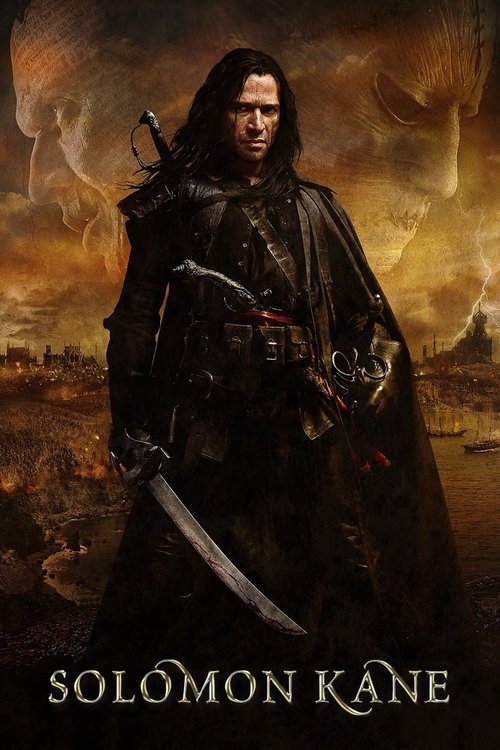
Solomon Kane (2009)
Directed by MJ Bassett
No — Solomon Kane is not woke, scoring 0 out of 100 on our wokeness meter.
Solomon Kane arrives from 2009, a sword and sorcery picture built on a 1928 pulp creation by Robert E. Howard, the same imagination that gave the world Conan.
Consciousness Markers
The cast is almost entirely white British and European actors; there is no conscious inclusive casting and no non-white principal characters in any framing.
There are no LGBTQ+ characters, relationships, or themes anywhere in this sword-and-sorcery redemption tale.
Meredith is a classic damsel-in-distress whose kidnapping drives the male hero's quest; the narrative is built on traditional heroic masculinity, not a feminist critique.
The opening North African skirmish against Ottoman defenders is period adventure backdrop, not a racial justice statement; no racial consciousness is engaged.
Climate and environmental themes are entirely absent from this dark fantasy.
No economic critique or anti-wealth messaging; the villain's slave-taking is supernatural evil, not a commentary on capitalism.
No body-positivity themes or body-diverse representation of any kind.
No neurodivergent characters or themes are present.
The film is an invented origin story for a 1928 pulp character; it does not revise or reinterpret real history for ideological ends.
This is a straightforward genre piece with no moralizing or social messaging aimed at the audience.
Why it received this score
Solomon Kane arrives from 2009, a sword and sorcery picture built on a 1928 pulp creation by Robert E. Howard, the same imagination that gave the world Conan. James Purefoy plays the title privateer, a man who has spent his life looting and killing and now wishes to stop, only to find that the world will not permit it. He renounces violence, takes shelter in a monastery, and is expelled. From there the film becomes a grim procession through a frozen English countryside: witches, ghouls, a sorcerer named Malachi, a Puritan family cut down on the road, and a young woman carried off in a cage.
What the film declines to do is instruct. No message is smuggled into the fog. The cast is white and European from top to bottom, and nobody involved appears to have given the matter a thought. The kidnapped Meredith exists to be rescued, a function she performs with patience and minimal dialogue. The hero's redemption is the point, and it is achieved through swordplay, sacrifice, and a great deal of mud. The villain keeps slaves, but his evil is supernatural, not economic. There is no weather to worry about beyond the literal kind. The body is a thing to be wounded, not affirmed. The mind is a thing to be damned, not diagnosed.
The film won an audience prize at Fantasporto and a Saturn nomination, and it earned neither by speaking to the moment. It is a genre exercise, executed with conviction and a modest budget, and it wants nothing from us but our attention. Some viewers will find that a limitation. Others will find it restful. The cultural ledger records a zero across the board, and the film seems entirely at peace with that verdict. A trilogy was promised. A trilogy did not arrive. The market, unlike the critics, kept its own counsel and moved on to other things. We are left with a single bleak adventure and a hero who, having redeemed his soul, walks off to fight darkness somewhere we will not be shown. There are worse fates for a film. There are also better ones, but the film does not appear to have been chasing them, and there is a certain dignity in that refusal. It simply is what it is, and asks for nothing more than to be taken on those terms. That, in the end, is its only argument, and it makes it without a single raised voice.
Wait, that closing line runs long. The point stands regardless: the film offers no thesis beyond its own atmosphere, and the atmosphere is thick enough to carry it. A viewer seeking contemporary resonance will find none here, and the film makes no apology for the omission. It is a relic of an older mode of storytelling, and it knows it. Whether that is a virtue or a defect is left, as ever, to the audience, which has been doing this work for a very long time and shows no sign of tiring of it yet. The sword is bloodied, the soul is saved, the credits roll, and the lights come up on a world unchanged. That is the whole of the transaction, and it is conducted honestly. Nothing more is promised. Nothing more is owed. The classification, for the record, is a flat and unremarkable zero, and there is a strange comfort in a thing that simply declines to argue with its own era. It stands outside the current conversation entirely, unbothered and unmoved, a small, cold, forgotten room in a very large and very loud house, and it seems content to remain there, undisturbed, until someone happens to open the door again. The end, more or less, is exactly where it began.
Analysis generated by our Consciousness Algorithm


Synopsis
A nomadic 16th century warrior, condemned to hell for his brutal past, seeks redemption by renouncing violence, but finds some things are worth burning for as he fights to free a young Puritan woman from the grip of evil.
Questions about Solomon Kane
Is Solomon Kane woke?
No — Solomon Kane is not woke, scoring 0 out of 100 on our wokeness meter. That earns it a verdict of Ultra Based.
Does Solomon Kane have any woke elements?
No. All 10 markers score zero.
How does Solomon Kane compare to other 2009 movies?
It ranks #208 of the 230 films from 2009 we've scored; their average is 14. The wokest is Home (79).
How is the Woke Score calculated?
An AI-assisted process researches the film and its reception, scores it 0–100 on ten markers, then combines those into one 0–100 Woke Score. It measures a specific set of 2020s cultural themes, not film quality.