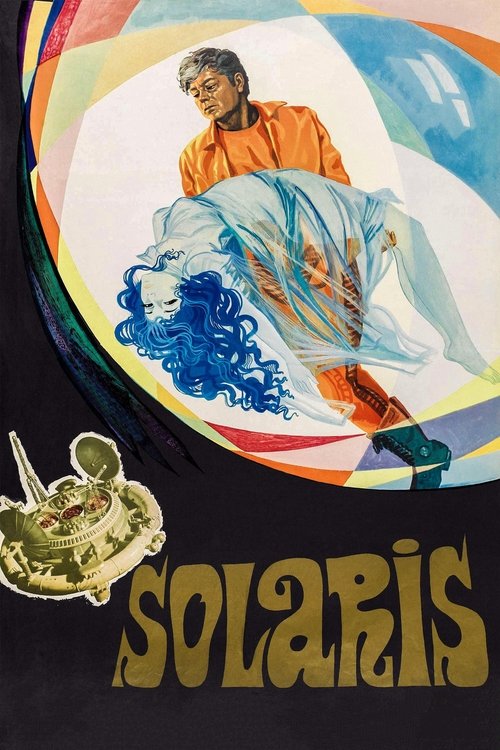
Solaris (1972)
Directed by Andrei Tarkovsky
No — Solaris is not woke, scoring 0 out of 100 on our wokeness meter.
Tarkovsky's Solaris is a solemn, humid, slow-moving meditation on grief, memory, and the limits of knowledge.
Consciousness Markers
The cast is composed of Soviet actors from various republics, but there is no deliberate modern inclusive casting or commentary on representation.
No LGBTQ+ themes or characters are present.
Hari is a complex female character, but the film does not advance a feminist agenda or critique patriarchy.
Race is not a theme; the film focuses on philosophical and psychological questions.
No environmental or climate themes.
Despite being a Soviet production, the film does not critique capitalism or wealth inequality.
No body positivity themes.
Mental distress and hallucinations appear, but not as neurodivergence identity or advocacy.
No historical revisionism.
Philosophical dialogue exists, but it is not modern social-justice lecture energy.
Why it received this score
Tarkovsky's Solaris is a solemn, humid, slow-moving meditation on grief, memory, and the limits of knowledge. It has no interest in contemporary social reform. The station is crewed by exhausted men and one impossible woman. The casting reflects Soviet ensemble practice, not a modern inclusion initiative. No one comments on ethnicity, gender, or desire as a political matter. Hari is a haunting creation, but her tragedy is personal and metaphysical. The film does not argue about patriarchy, it mourns a marriage.
The planet itself is the antagonist and the mirror. There is no climate sermon, though the ocean churns. No anti-capitalist parable, despite Soviet production. No body positivity, no neurodivergence advocacy. Mental distress is presented as cosmic horror and memory, not identity. History is not revised; it is dissolved into dream. The philosophical talk in the library is dense, but it is not modern lecture energy. It is Russian metaphysical despair, which is a different genre of long-windedness.
To score this film on present-day markers is to measure a cathedral with a bathroom scale. It comes up empty, and that emptiness is honest. The film is not hostile to progressive values; it simply predates their current vocabulary and has other business. Its concerns are God, guilt, the prodigal son, and the impossibility of knowing another being. There is no sermon, no checklist, no audience affirmation. Just water, memory, and a man kneeling before his father on an island that should not exist. The result is a masterpiece of an older cultural order. It earns nothing on these present-day measures not because it is bad, but because it is otherwise occupied. The sommelier would note an austere vintage, no additives, no modern tannins.
Analysis generated by our Consciousness Algorithm


Synopsis
A psychologist is sent to a space station orbiting a planet called Solaris to investigate the death of a doctor and the mental problems of cosmonauts on the station. He soon discovers that the water on the planet is a type of brain which brings out repressed memories and obsessions.
Questions about Solaris
Is Solaris woke?
No — Solaris is not woke, scoring 0 out of 100 on our wokeness meter. That earns it a verdict of Ultra Based.
Does Solaris have any woke elements?
No. All 10 markers score zero.
How does Solaris compare to other 1972 movies?
It ranks #19 of the 24 films from 1972 we've scored; their average is 14. The wokest is Silent Running (69).
How is the Woke Score calculated?
An AI-assisted process researches the film and its reception, scores it 0–100 on ten markers, then combines those into one 0–100 Woke Score. It measures a specific set of 2020s cultural themes, not film quality.