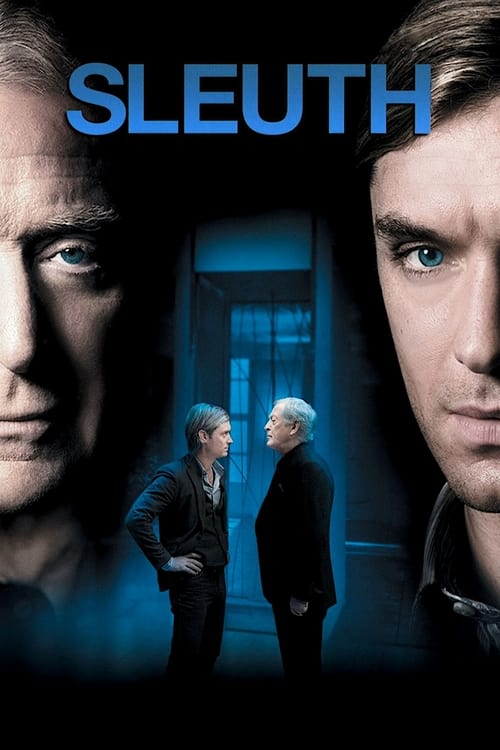
Sleuth (2007)
Directed by Kenneth Branagh
No — Sleuth is not woke, scoring 9 out of 100 on our wokeness meter.
Kenneth Branagh's Sleuth arrives as a 2007 restaging of Anthony Shaffer's play, filtered through a Harold Pinter screenplay that strips the drawing room down to a minimalist manor of wire sculptures and glass.
Consciousness Markers
Critics noted an 'obscure homosexual flirtation' in the final act, a faint homoerotic undercurrent carried over from the play's subtext, but it is ambiguous and undeveloped.
The cast is essentially two white Englishmen (Caine and Law) in a locked-room duel; the only other visible figure is an uncredited actress. No meaningful representation casting.
The unseen wife is purely a prize and a pretext for two men's gamesmanship; the film has no feminist perspective whatsoever.
No engagement with race or racial themes; the film is a two-hander among white British gentlemen.
No environmental themes or climate content of any kind.
Wealth and class are present as texture (the millionaire's high-tech manor), but the film offers no critique of capital or the rich.
No body-positive themes or messaging.
No depiction or discussion of neurodivergence.
A contemporary restaging of a 1970 play, but it makes no revisionist historical claims.
Pinter's script is all verbal gamesmanship and menace rather than moral instruction; the film lectures no one.
Why it received this score
Kenneth Branagh's Sleuth arrives as a 2007 restaging of Anthony Shaffer's play, filtered through a Harold Pinter screenplay that strips the drawing room down to a minimalist manor of wire sculptures and glass. Two men circle each other over a woman we never meet. Michael Caine and Jude Law trade barbs, deceptions, and the occasional gun. The camera stays inside the house, and the house is a coffin with an elevator. This is a film about gamesmanship, class texture, and the pleasure of watching skilled actors dismantle one another in a confined space.
From a contemporary cultural standpoint, the pickings are lean. The cast is two white Englishmen, with a single uncredited actress drifting through the margins, so representation is not on the agenda. The unseen wife functions as a trophy and a pretext, which leaves feminist concerns entirely unaddressed. Race, climate, body image, neurodivergence, and the moral claims of the working class all go untouched. The millionaire's high-tech manor sits there as set dressing, never as indictment. The one faint signal of modern sensibility is a homoerotic undercurrent in the final act, an ambiguous flirtation that critics flagged and that Pinter's dialogue leaves deliberately unresolved.
Pinter's script trades in menace and verbal cruelty, not sermons. Nobody lectures the audience about virtue, and nobody is asked to examine their privilege. The film's ambitions are older and narrower: wit, cruelty, and the slow tightening of a trap. It is a museum piece from a time when two men in a room could carry a picture without anyone demanding that the picture justify itself. We score it accordingly, low, with a small allowance for that final-act ambiguity, which is the closest this manor comes to a contemporary thought.
Analysis generated by our Consciousness Algorithm


Synopsis
Locked in a high-tech English manor, bound in a deadly duel of wits, Andrew Wyke and Milo Tindle come together as English gentlemen to discuss the matter of Wyke's wife: the woman both are sleeping with.
Questions about Sleuth
Is Sleuth woke?
No — Sleuth is not woke, scoring 9 out of 100 on our wokeness meter. That earns it a verdict of Ultra Based.
Does Sleuth have any woke elements?
Very few. None of the 10 markers reaches 30, the level where a marker counts as present; the highest is LGBTQ+ Themes at 15.
How does Sleuth compare to other 2007 movies?
It ranks #86 of the 201 films from 2007 we've scored; their average is 12. The wokest is Like Stars on Earth (92).
How is the Woke Score calculated?
An AI-assisted process researches the film and its reception, scores it 0–100 on ten markers, then combines those into one 0–100 Woke Score. It measures a specific set of 2020s cultural themes, not film quality.