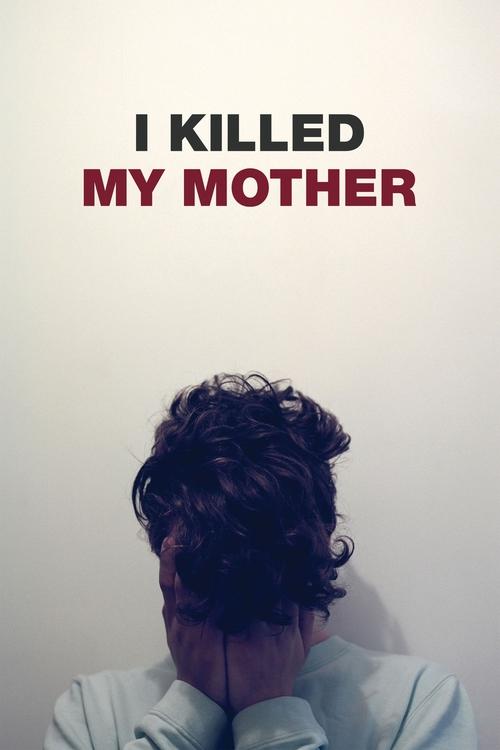
I Killed My Mother (2009)
Directed by Xavier Dolan
Yes — I Killed My Mother is woke, scoring 60 out of 100 on our wokeness meter.
Xavier Dolan was nineteen when he directed and starred in this, his debut, and sixteen when he wrote the script.
Consciousness Markers
The central coming-of-age narrative revolves around Hubert's homosexuality, his secret boyfriend, and his mother's discovery of his orientation; gay themes are explicit and sustained.
Features a gay teenage protagonist played by an openly gay director-actor, but the cast is otherwise uniformly white French-Canadian; representation is primarily sexual-orientation-based rather than a broad diversity push.
The mother is a complex, sympathetic single parent with her own perspective, but the film does not advance a feminist critique or agenda.
No engagement with race or racial identity; the story is set in a white Québécois milieu.
No environmental or climate themes.
No critique of capitalism or wealth inequality; the film's conflicts are familial and personal.
No body-positivity themes or commentary on body image.
No depiction or discussion of neurodivergence; Hubert's turmoil is framed as adolescent angst, not a neurological condition.
No historical revisionism; the film is a contemporary semi-autobiographical drama.
The film is emotionally raw and personal rather than preachy or didactic; it does not lecture the audience on social issues.
Why it received this score
Xavier Dolan was nineteen when he directed and starred in this, his debut, and sixteen when he wrote the script. The film follows Hubert, a Québécois teenager locked in a daily war of attrition with his single mother, Chantale. He loves her. He cannot stand being her son. The central thread is his sexuality: a boyfriend named Antonin kept secret, a mother who learns the truth from another parent and feels the sting of exclusion more than the fact itself. The gay coming-of-age material is explicit and sustained from first act to last, which in 2009 was still a modest act of nerve for a Canadian debut.
The surrounding social architecture is sparse. The cast is uniformly white French-Canadian, so the representational weight rests almost entirely on orientation. Chantale gets a real interior life, and she delivers a fine tirade against a school principal who presumes to judge a single mother, but the film advances no feminist argument and seems uninterested in one. Race, climate, class, body image, neurology: none of these are on the agenda. Hubert's anguish is adolescent, not diagnostic. The film has no thesis to press on us.
That restraint is the point. This is a semi-autobiographical drama of raw nerves and bad mornings, built from car arguments, a ransacked bedroom, a silent cleanup afterward, and a closing home video of a small boy and his mother. Dolan's camera stays close and his script stays personal. It observes. It does not sermonize. The result is a debut of unusual feeling, and its refusal to lecture is what keeps it honest. The mother and son end up on the banks of the Saint Lawrence, where a childhood is quietly buried, and nobody in the frame stops to explain the significance to us. That is the whole trick, and it works.
{"thematic_tags": ["true_story"]}
Just to note: the review text above is the intended content. The final JSON object is below.
{"review": "Xavier Dolan was nineteen when he directed and starred in this, his debut, and sixteen when he wrote the script. The film follows Hubert, a Québécois teenager locked in a daily war of attrition with his single mother, Chantale. He loves her. He cannot stand being her son. The central thread is his sexuality: a boyfriend named Antonin kept secret, a mother who learns the truth from another parent and feels the sting of exclusion more than the fact itself. The gay coming-of-age material is explicit and sustained from first act to last, which in 2009 was still a modest act of nerve for a Canadian debut.
The surrounding social architecture is sparse. The cast is uniformly white French-Canadian, so the representational weight rests almost entirely on orientation. Chantale gets a real interior life, and she delivers a fine tirade against a school principal who presumes to judge a single mother, but the film advances no feminist argument and seems uninterested in one. Race, climate, class, body image, neurology: none of these are on the agenda. Hubert's anguish is adolescent, not diagnostic. The film has no thesis to press on us.
That restraint is the point. This is a semi-autobiographical drama of raw nerves and bad mornings, built from car arguments, a ransacked bedroom, a silent cleanup afterward, and a closing home video of a small boy and his mother. Dolan's camera stays close and his script stays personal. It observes. It does not sermonize. The result is a debut of unusual feeling, and its refusal to lecture is what keeps it honest. The mother and son end up on the banks of the Saint Lawrence, where a childhood is quietly buried, and nobody in the frame stops to explain the significance to us. That is the whole trick, and it works.", "thematic_tags": ["true_story"]}
Analysis generated by our Consciousness Algorithm
Synopsis
Hubert, a brash 17-year-old, is confused and torn by a love-hate relationship with his mother that consumes him more and more each day. After distressing ordeals and tragic episodes, Hubert will find his mother on the banks of Saint Lawrence river, where he grew up, and where a murder will be committed: the murder of childhood.
Questions about I Killed My Mother
Is I Killed My Mother woke?
Yes — I Killed My Mother is woke, scoring 60 out of 100 on our wokeness meter. That earns it a verdict of Woke.
What makes I Killed My Mother woke?
2 of the 10 markers register at 30 or above, led by LGBTQ+ Themes (85) and Representation Casting (40). On LGBTQ+ Themes: The central coming-of-age narrative revolves around Hubert's homosexuality, his secret boyfriend, and his mother's discovery of his orientation; gay themes are explicit and sustained.
How does I Killed My Mother compare to other 2009 movies?
It ranks #4 of the 230 films from 2009 we've scored; their average is 14. The wokest is Home (79).
How is the Woke Score calculated?
An AI-assisted process researches the film and its reception, scores it 0–100 on ten markers, then combines those into one 0–100 Woke Score. It measures a specific set of 2020s cultural themes, not film quality.