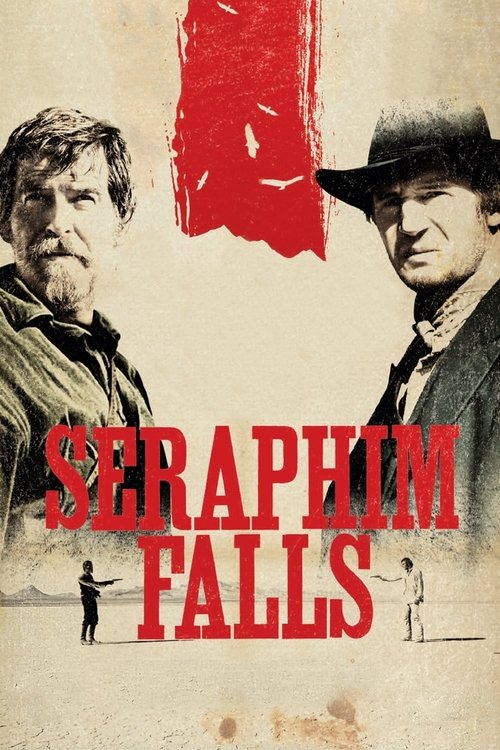
Seraphim Falls (2007)
Directed by David Von Ancken
No — Seraphim Falls is not woke, scoring 5 out of 100 on our wokeness meter.
Seraphim Falls arrives from 2007 carrying the dusty pedigree of a late revisionist Western, in which a Confederate colonel named Carver (Liam Neeson) pursues a Union soldier named Gideon (Pierce Brosnan) across snow, scrub, and finally desert with the patience of a man who has misplaced his own soul.
Consciousness Markers
The film carries a mild anti-war, cycle-of-violence message, but it is delivered through action and imagery rather than preachy dialogue.
Cast includes Wes Studi as a Native American character and several women in supporting roles, but the film is overwhelmingly white and male, with no deliberate inclusive casting agenda.
No LGBTQ+ characters, themes, or subtext.
Women appear as victims, helpers, or mystical figures, but the film advances no feminist critique or agenda.
Despite its post-Civil War setting, the film does not engage with race, slavery, or racial justice.
No environmental or climate themes.
No critique of capitalism or wealth inequality; the railroad and bounty economy are backdrop only.
No body positivity themes.
No neurodivergent characters or themes.
While a revisionist Western in genre, it does not reinterpret historical events through a modern progressive lens.
Why it received this score
Seraphim Falls arrives from 2007 carrying the dusty pedigree of a late revisionist Western, in which a Confederate colonel named Carver (Liam Neeson) pursues a Union soldier named Gideon (Pierce Brosnan) across snow, scrub, and finally desert with the patience of a man who has misplaced his own soul. The pursuit is lean, the cinematography by John Toll is handsome, and the whole affair carries the grim satisfaction of two craggy men refusing to die on schedule. It is a film about violence and survival, and it knows it.
For those of us who catalogue the cultural weather, the picture is a quiet artifact. Its cast is almost entirely white and male, with Wes Studi drifting through as a ferryman figure and a handful of women appearing as helpers, victims, or allegorical apparitions. There is no racial reckoning here, despite a post-Civil War setting that practically begs for one. No feminist critique, no environmental sermon, no economic grievance, no body-positive nor neurodivergent overtures. The film treats its historical moment as a stage for private vengeance, not a platform for instruction. This restraint is almost quaint now.
What social conscience it possesses is ambient. The cycle of violence hums beneath the action, and the final confrontation gestures at mercy without ever stopping to explain itself. A late surreal detour, with Anjelica Huston as a Faustian peddler in the desert, flirts with sermonizing but never commits. The result is a Western that prefers blood and landscape to lecture, which is its own kind of period piece. We grade it accordingly, and we move on.
Analysis generated by our Consciousness Algorithm


Synopsis
The Civil War has ended, but Colonel Morsman Carver is on one final mission – to kill Gideon, no matter what it takes. Launched by a gunshot and propelled by rage, the relentless pursuit takes the two men through frigid snow-capped mountains and arid deserts, far from the comforts and codes of civilisation, into the bloodiest recesses of their own souls.
Questions about Seraphim Falls
Is Seraphim Falls woke?
No — Seraphim Falls is not woke, scoring 5 out of 100 on our wokeness meter. That earns it a verdict of Ultra Based.
Does Seraphim Falls have any woke elements?
Very few. None of the 10 markers reaches 30, the level where a marker counts as present; the highest is Lecture Energy at 15.
How does Seraphim Falls compare to other 2007 movies?
It ranks #131 of the 201 films from 2007 we've scored; their average is 12. The wokest is Like Stars on Earth (92).
How is the Woke Score calculated?
An AI-assisted process researches the film and its reception, scores it 0–100 on ten markers, then combines those into one 0–100 Woke Score. It measures a specific set of 2020s cultural themes, not film quality.