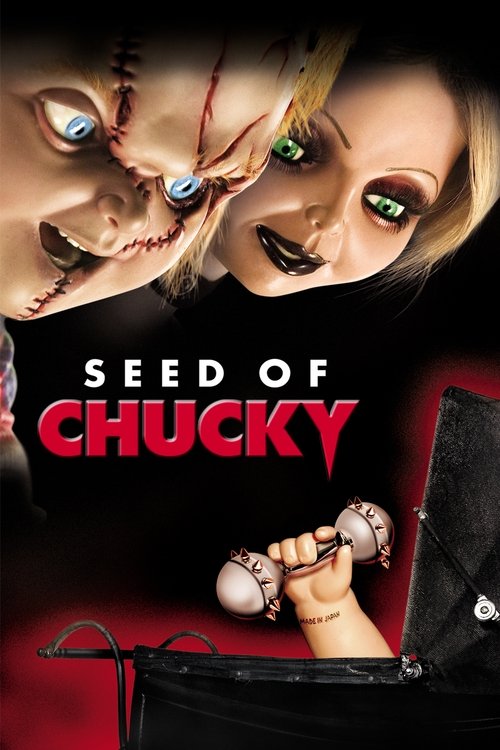
Seed of Chucky (2004)
Directed by Don Mancini
Yes — Seed of Chucky is woke, scoring 60 out of 100 on our wokeness meter.
Don Mancini built the fifth Child's Play installment around a genderfluid doll, and he did it in 2004, well before the wider culture had a working vocabulary for any of it.
Consciousness Markers
The central character Glen/Glenda is explicitly genderfluid, with the plot built around gender dysphoria and self-acceptance, inspired by Glen or Glenda. Writer-director Don Mancini deliberately explored LGBT themes, and Universal rejected the script as 'too gay.'
Tiffany murders Redman explicitly in retaliation for his misogyny, and the film satirizes Hollywood's dismissal of pregnant women as unattractive. Jennifer Tilly's character navigates sexist industry dynamics, though the treatment is comedic rather than polemical.
The cast is predominantly white, with rapper Redman appearing as a heightened version of himself. There is no deliberate diversity-forward casting agenda at play.
Themes of gender identity and self-acceptance are present but delivered through campy horror-comedy rather than preachy sermonizing, keeping the didacticism mild.
The Hollywood satire lightly mocks the film industry's vanity and commercialism, but there is no sustained critique of wealth or capitalism as a system.
The film briefly touches on the devaluation of pregnant bodies when Redman dismisses Jennifer as not attractive enough, but this is a plot beat rather than a body-positivity message.
Redman appears as a Black character but the film makes no commentary on race or racial dynamics; his presence is incidental to the horror-comedy plot.
No environmental or climate themes appear anywhere in the film.
Glen and Glenda are framed as two separate souls sharing one body, a supernatural conceit rather than any depiction of neurodivergence.
The film is a fictional horror-comedy with no historical subject matter to revise.
Why it received this score
Don Mancini built the fifth Child's Play installment around a genderfluid doll, and he did it in 2004, well before the wider culture had a working vocabulary for any of it. Glen/Glenda, offspring of Chucky and Tiffany, arrives with no genitals and two names, one chosen by each parent, and the picture treats the child's search for self-acceptance as genuine emotional business. Mancini wrote the part on purpose, drawing from Glen or Glenda. Universal reportedly returned the script with a note declaring it too gay. Focus Features eventually released it through Rogue. This is a sequel, the last of the original continuity to reach theaters, and it wears its themes like a costume at a midnight screening.
The Hollywood material carries the rest of the message. Jennifer Tilly plays a version of herself, aging out of the roles she still wants, angling for the Virgin Mary in a rapper's directorial debut. Redman plays Redman, and the film never engages his race at all. He fires Tilly for being pregnant, calling pregnant women unattractive enough to spoil his vision, so Tiffany disembowels him. It is a revenge beat, played for gristle and laughter, not a thesis. The industry satire mocks vanity and commercialism without ever working up an argument against money itself.
Lecturing is not the film's method. Its sermons arrive through camp, puns, and a turkey baster, which keeps the moralizing tolerable. There is no climate anxiety, no historical revision, and the two-souls-one-body conceit belongs to voodoo rather than any clinical framework. The cultural awareness is real but narrow. We are left with a curiosity: a franchise slasher that stumbled into a conversation nobody else was having yet, and mostly told jokes about it.
Regarding the categories of cultural significance, the film registers decisively on one axis only: the gender identity of its central doll drives the plot, the marketing, and the director's stated intent. The gender politics around Tilly's pregnant body and Redman's casual misogyny register as texture, potent in the moment and quickly discarded. What remains is a curiosity of timing, a studio horror film that asked questions its distributor found too uncomfortable to answer, then answered them with puppets and blood.
Even so, the satirical target stays modest. The film scorns Hollywood vanity, and it stops there. There is no critique of the economic machinery beneath that vanity, no environmental concern, no reworking of history, and no clinical portrait of a divergent mind. It is a slasher that happens to be about identity, not a tract about anything. For a film that Universal found too gay to release, it manages the remarkable trick of being sincere without being a sermon. It simply lets a doll ask who they are, and answers with a shrug and an axe.
The result sits in a strange middle ground. Glen and Glenda share a body, a soul problem borrowed from voodoo, which the film uses to dramatize self-acceptance while offering nothing resembling a message about neurology or mental health. The jokes land harder than the themes. Yet the themes were genuinely ahead of the room in 2004, and the retrospective reevaluation has been kinder than the original reviews. We classify it accordingly, with the customary gravity, as a curiosity that aged into relevance by accident and design both.
Analysis generated by our Consciousness Algorithm
Part of


Synopsis
This time around, Chucky and his homicidal honey, Tiffany, are brought back to life by their orphan offspring, Glen. Then the horror goes Hollywood as Chucky unleashes his own brand of murderous mayhem!
Questions about Seed of Chucky
Is Seed of Chucky woke?
Yes — Seed of Chucky is woke, scoring 60 out of 100 on our wokeness meter. That earns it a verdict of Woke.
What makes Seed of Chucky woke?
2 of the 10 markers register at 30 or above, led by LGBTQ+ Themes (88) and Feminist Agenda (50). On LGBTQ+ Themes: The central character Glen/Glenda is explicitly genderfluid, with the plot built around gender dysphoria and self-acceptance, inspired by Glen or Glenda.
How does Seed of Chucky compare to other 2004 movies?
It ranks #2 of the 178 films from 2004 we've scored; their average is 12. The wokest is Tropical Malady (62).
Is Seed of Chucky the most woke Child's Play movie?
Yes. It scores highest of the 7 Child's Play films we've scored.