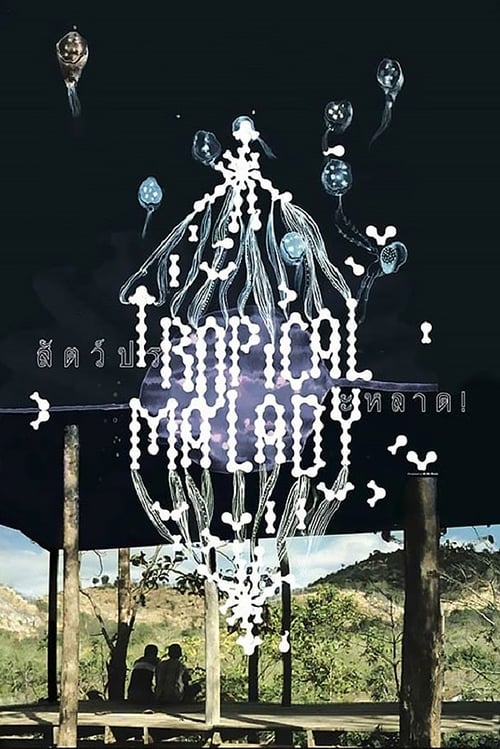
Tropical Malady (2004)
Directed by Apichatpong Weerasethakul
Yes · Woke
How we score movies →Consciousness Markers
Central to the entire narrative. A same-sex relationship forms the emotional core of the first half, depicted with intimacy and without sensationalism or tragedy-oriented framing.
The film centers two male leads in a romantic narrative. The casting reflects authentic Thai representation without exoticization, though the supporting cast composition offers limited diversity beyond gender.
The film contains no explicit feminist messaging or gender-conscious critique. Female characters exist minimally in the narrative, serving primarily as background figures.
The film eschews preachy messaging and refuses to explain or moralize its central relationship. This resistance to lecture is a strength but also means minimal explicit social consciousness articulation.
The jungle setting is aestheticized rather than treated as an environmental concern. No climate advocacy or ecological consciousness is present in the narrative.
No critique of capitalism or economic systems. The rural setting suggests pre-capitalist simplicity but offers no ideological commentary on wealth inequality.
No explicit racial consciousness or critique of systemic inequality. The film depicts Thai rural life without commentary on colonialism, cultural appropriation, or power structures.
The film does not engage with body positivity discourse. While it depicts male bodies with sensuality, this reflects artistic cinematography rather than conscious body acceptance messaging.
No representation or acknowledgment of neurodivergence, mental health conditions, or disability representation in the narrative.
The film does not engage with historical revisionism or counter-narratives about past events. Its mythological elements are ahistorical rather than revisionist.
Synopsis
The passionate relationship between two men with unusual consequences. The film is divided in two parts. The first half charts the modest attraction between two men in the sunny, relaxing countryside and the second half charts the confusion and terror of an unknown menace lurking deep within the jungle shadows.
Why it received this score
Tropical Malady arrives at a peculiar juncture in the history of progressive cinema. Released in 2004, before the modern constellation of social consciousness markers had fully crystallized into their current form, Weerasethakul's film presents a romantic relationship between two men as its central narrative concern. The first half unfolds with deliberate pacing through rural Thailand, depicting courtship and intimacy without apology or explanation. This candor regarding same-sex desire would have been genuinely transgressive at the time, particularly in Thai cinema, yet the film resists the temptation to make such representation a preachy statement. The relationship simply exists, complicated and human and occasionally tender.
The second half's shift into supernatural horror territory complicates any straightforward reading of social consciousness. What begins as romantic drama metamorphoses into ambiguous genre territory, where the narrative dissolves into mythology and primal jungle terror. This structural choice may represent artistic ambition or might suggest a certain anxiety about depicting sustained same-sex intimacy. The interpretation remains deliberately unstable, which is either admirably complex or frustratingly evasive depending on one's tolerance for ambiguity in cinema.
Measured against contemporary markers of social awareness, the film occupies an uncertain position. It centers queer desire without contemporary signaling, avoids tokenism through genuine character development, yet offers no commentary on systemic inequality or progressive ideology. It is a work that exists before the vocabulary of modern social consciousness had fully formed, which paradoxically makes it both ahead of and beside its time. The absence of explicit progressive messaging should not be mistaken for social indifference, nor should its representation of same-sex romance be dismissed simply because it predates current conventions.
Analysis generated by our Consciousness Algorithm
Critic Reviews
“Takes the viewer on a mysterious and sporadically fascinating trip into the darkness of the human heart and Thai legend.”
“Weerasethakul's latest has received mixed responses on the film-festival circuit, yet while it's anything but commercial, it's also anything but unadventurous.”
“An entirely unconventional, hypnotic, meandering film.”
“Certainly for most audiences the viewing experience will prove not only tedious but bewildering.”