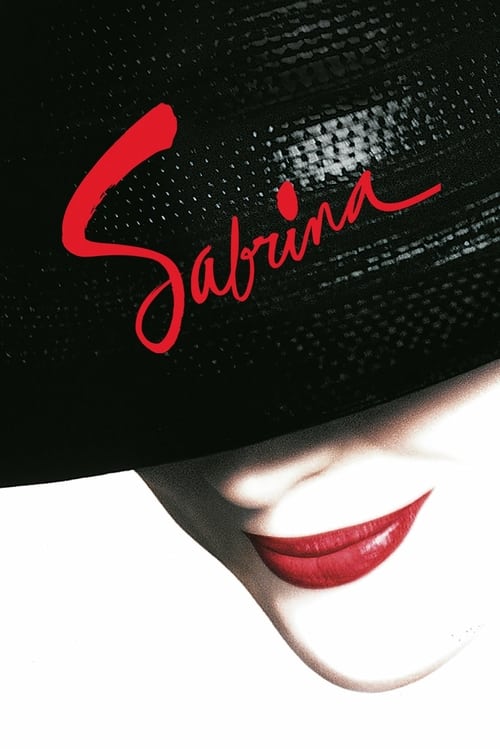
Sabrina (1995)
Directed by Sydney Pollack
No — Sabrina is not woke, scoring 4 out of 100 on our wokeness meter.
Sydney Pollack's 1995 Sabrina arrives at the examination table as a remake of a Billy Wilder picture, which itself came from a stage play, and it wears the manners of an earlier era like a pressed dinner jacket.
Consciousness Markers
Sabrina gains poise and self-possession in Paris, but the film remains a traditional Cinderella romance in which her worth is validated by two wealthy brothers competing for her.
Linus is mildly ribbed as a heartless workaholic corporate type, but the film ultimately celebrates the family fortune, the billion-dollar merger, and the chauffeur's stock-market windfall rather than critiquing capital.
The cast is overwhelmingly white and Anglo, with only a minor appearance by Miriam Colón; there is no deliberate diverse-casting agenda at work in this 1995 studio romance.
The film is a breezy, lighthearted fairy-tale romance that makes no attempt to instruct or preach to its audience.
No LGBTQ+ characters, themes, or subtext appear anywhere in the film.
The film engages no racial themes whatsoever; the world of Long Island high society is presented as uniformly white without comment.
There is no environmental or climate content in the film.
No body-positivity themes are present; the film's transformation arc is a conventional glamour makeover.
No neurodivergent characters or themes appear in the film.
The film is a contemporary romantic comedy with no historical subject matter to revise.
Why it received this score
Sydney Pollack's 1995 Sabrina arrives at the examination table as a remake of a Billy Wilder picture, which itself came from a stage play, and it wears the manners of an earlier era like a pressed dinner jacket. Harrison Ford plays Linus Larrabee, a workaholic who redirects a chauffeur's daughter away from his younger brother and, through the ordinary mechanics of farce, into his own arms. Julia Ormond is Sabrina, transformed in Paris from an unnoticed girl into a poised woman. The Long Island estate is handsomely photographed. The whole enterprise is polished, unhurried, and entirely at ease with its own money.
The cultural inventory here is thin. The cast is Anglo from top to bottom, with Miriam Colón's brief appearance serving as the film's entire gesture toward a wider world. There is no LGBTQ presence, no racial inquiry, no environmental concern, no body-positivity argument, no neurodivergent character. Sabrina's Parisian education grants her self-possession, which counts for something, though the film's actual thesis is that a woman's value is settled when two brothers compete for her. Linus is teased as a heartless corporate machine, and the script permits itself a line about morals and scruples, but the closing act celebrates the billion-dollar merger, the family fortune, and the chauffeur's private stock windfall. Any critique of capital is promptly returned to the vault.
As instruction, the film barely registers. It wants to charm, and it does so with a John Williams score and a great deal of soft light. No sermons are delivered. No lessons are assigned. A gentle, low-yield specimen, best filed under nostalgia.
Analysis generated by our Consciousness Algorithm
Part of


Synopsis
After her return from school in Paris, a playboy finally takes notice of his family's chauffeur's daughter Sabrina, who's long had a crush on him, but he questions his more serious brother's motives when he warns against getting involved with her.
Questions about Sabrina
Is Sabrina woke?
No — Sabrina is not woke, scoring 4 out of 100 on our wokeness meter. That earns it a verdict of Ultra Based.
Does Sabrina have any woke elements?
Very few. None of the 10 markers reaches 30, the level where a marker counts as present; the highest is Eat the Rich at 8.
How does Sabrina compare to other 1995 movies?
It ranks #72 of the 108 films from 1995 we've scored; their average is 12. The wokest is Total Eclipse (60).
How is the Woke Score calculated?
An AI-assisted process researches the film and its reception, scores it 0–100 on ten markers, then combines those into one 0–100 Woke Score. It measures a specific set of 2020s cultural themes, not film quality.