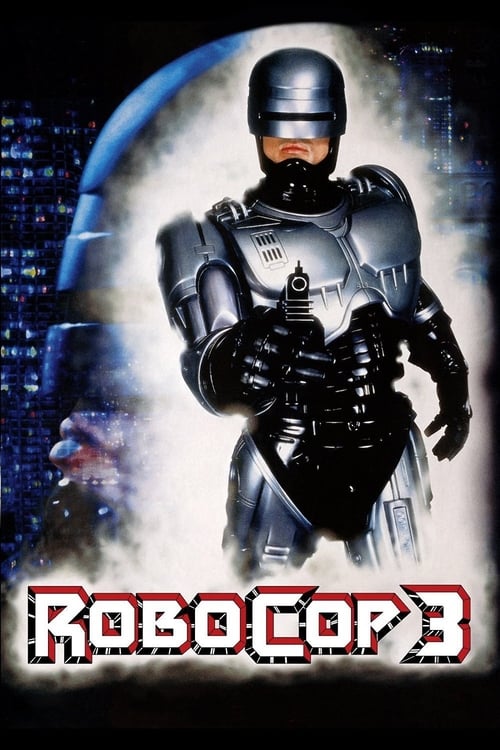
RoboCop 3 (1993)
Directed by Fred Dekker
No — RoboCop 3 is not especially woke, scoring 26 out of 100 on our wokeness meter.
RoboCop 3 arrives as the third installment of a franchise already sagging under its own chrome, and it carries the additional burden of replacing Peter Weller with Robert John Burke, a substitution the film never justifies.
Consciousness Markers
The entire plot is a cyberpunk indictment of corporate power: OCP and Kanemitsu collude to bulldoze Cadillac Heights for profit, deploy a mercenary army against residents, and are ultimately ruined when a broadcast tanks their stock price. Classic 'eat the rich' machinery.
The cast is notably multiracial for 1993 — CCH Pounder as resistance leader Bertha, Robert DoQui, Mako, and a young Latina-coded hacker (Nikko) — but these characters exist naturally in the story without any commentary on their identity.
Several capable female characters populate the film — Nikko the child hacker, Dr. Lazarus the engineer, Bertha the resistance leader, and Officer Lewis — but their presence is incidental to a male-driven action plot rather than a feminist statement.
The corporate-greed critique is delivered through action set pieces and a plot-advancing pirate broadcast rather than direct moralizing; the messaging is present but subordinate to spectacle.
The resistance is multiracial and the villainy is corporate rather than racial; the film engages class and displacement, not racial consciousness.
No LGBTQ+ characters, themes, or subtext of any kind appear in the film.
No environmental or climate themes are present; the dystopia is urban and economic, not ecological.
No body-positivity themes; the film's only body discourse concerns a cyborg's mechanical parts.
No neurodivergent characters or themes are depicted.
The film is a speculative dystopia, not a revisionist account of real historical events.
Why it received this score
RoboCop 3 arrives as the third installment of a franchise already sagging under its own chrome, and it carries the additional burden of replacing Peter Weller with Robert John Burke, a substitution the film never justifies. The plot concerns Omni Consumer Products, now partly owned by the Kanemitsu Corporation, which intends to bulldoze the Cadillac Heights neighborhood to build Delta City. When the residents refuse to leave, OCP dispatches a private mercenary force called the Urban Rehabilitators to remove them. This is corporate villainy of the most legible kind. A boardroom decides a neighborhood is in the way, and hired guns handle the rest. The film's sympathies are unambiguous and its targets are easy. A pirate broadcast that tanks the company's stock price serves as the climactic weapon. The rich are eaten, and the credits roll.
The resistance that forms in response is notably diverse for 1993, led by CCH Pounder's Bertha, with Mako and Robert DoQui among its ranks and a young computer-skilled girl named Nikko as its most resourceful member. These characters are simply present. The film never pauses to congratulate itself on their existence, which is either admirable restraint or evidence that nobody gave it much thought. Women hold positions of competence here, from Nikko to Dr. Marie Lazarus to Officer Lewis, though the story remains a male-driven action vehicle and none of it amounts to a statement. The villainy is corporate, not racial. The film's interest in displacement is economic.
The film offers spectacle in place of moral instruction. Ninja androids, a jetpack, a firefight in a parking structure. The critique of corporate greed is genuine, but it arrives through explosions and a broadcast, subordinate to the machinery of an action picture. The softened violence, the gentler tone, the general air of a franchise being groomed for a younger audience, all suggest a production uncertain of its own purpose. Roger Ebert's one and a half stars remain the correct verdict. RoboCop 3 wants to say something about power and settles for saying it loudly. The sommelier notes a thin vintage, over-oaked, finishing with jetpack.
Analysis generated by our Consciousness Algorithm


Synopsis
The mega corporation Omni Consumer Products is still bent on creating their pet project, Delta City, to replace the rotting city of Detroit. Unfortunately, the inhabitants of the area have no intention of abandoning their homes simply for desires of the company. To this end, OCP have decided to force them to leave by employing a ruthless mercenary army to attack and harass them. An underground resistance begins and in this fight, RoboCop must decide where his loyalties lie.
Questions about RoboCop 3
Is RoboCop 3 woke?
No — RoboCop 3 is not especially woke, scoring 26 out of 100 on our wokeness meter. That earns it a verdict of Based.
Does RoboCop 3 have any woke elements?
1 of the 10 markers register at 30 or above, led by Eat the Rich (65). On Eat the Rich: The entire plot is a cyberpunk indictment of corporate power: OCP and Kanemitsu collude to bulldoze Cadillac Heights for profit, deploy a mercenary army against residents, and are ultimately ruined when a broadcast tanks their stock price.
How does RoboCop 3 compare to other 1993 movies?
It ranks #10 of the 97 films from 1993 we've scored; their average is 11. The wokest is Bound by Honor (60).
Is RoboCop 3 the most woke RoboCop movie?
No. It ranks #2 of the 3 RoboCop films we've scored; the wokest is RoboCop (29).