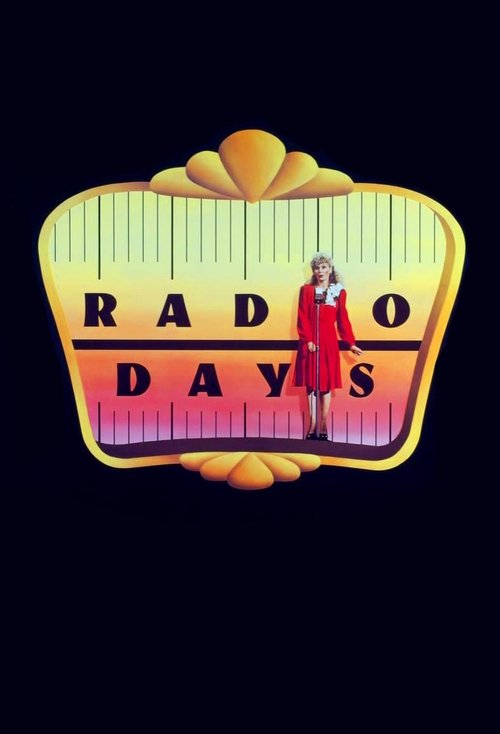
Radio Days (1987)
Directed by Woody Allen
No — Radio Days is not woke, scoring 3 out of 100 on our wokeness meter.
Woody Allen's Radio Days arrives from 1987 with the quiet confidence of a film that has no interest in being graded by the standards of a later decade.
Consciousness Markers
The ensemble is a period-accurate Jewish-American working-class family and radio milieu; minority presence is incidental and unremarked, with no modern diversity-casting intent.
Aunt Bea's husband-hunting and Sally White's rise from cigar girl to gossip reporter are period vignettes, not a feminist thesis.
A wistful, gently satiric memory piece that never lectures the audience on social or political matters.
No LGBTQ+ characters, themes, or subtext of any kind.
Race is not a subject of the film; the narrative is a white ethnic nostalgia piece with no racial commentary.
No environmental or climate themes whatsoever.
The working-class setting is affectionate period texture, not a critique of capital or wealth.
No body-image or body-acceptance themes.
No neurodivergent characters or themes.
The film is nostalgic recollection of the 1930s-40s, not a revisionist reframing of history.
Why it received this score
Woody Allen's Radio Days arrives from 1987 with the quiet confidence of a film that has no interest in being graded by the standards of a later decade. It is a memory piece, a collage of vignettes about a Jewish working-class family in Rockaway Beach and the radio voices that drifted through their walls between the late thirties and the end of 1944. The picture assembles dozens of characters and lets them wander off without moral instruction. We are asked to remember, not to improve.
An auditor scanning for contemporary social content will find the pickings thin. The family is ethnic and modest in means, which is simply what the family was. Aunt Bea's serial courtship of unsuitable men and Sally White's climb from cigar girl to gossip reporter read as period anecdotes, fondly rendered, with no argument attached. Race never enters the frame as a subject. Neither does the environment, the body, the mind's wiring, or the arrangement of capital. The Second World War is treated as weather, a rumble on the radio dial behind a boy hunting for German aircraft on the roof.
The one quality keeping Radio Days from flatlining entirely is a faint pulse of gentle satire. Allen observes his relatives with affection and a raised eyebrow, never a raised finger. Nobody is scolded. Nobody is taught. The film ends on New Year's Eve with the voices glowing dimmer, and it declines to tell us what any of it should mean. That reticence is the picture's whole personality, a relic of a cinema that trusted audiences to assemble their own conclusions. Charming, yes. Instructive, no. The classification is straightforward, and the sommelier may put the bottle back on the shelf.
Analysis generated by our Consciousness Algorithm


Synopsis
The Narrator tells us how the radio influenced his childhood in the days before TV. In the New York City of the late 1930s to the New Year's Eve 1944, this coming-of-age tale mixes the narrator's experiences with contemporary anecdotes and urban legends of the radio stars.
Questions about Radio Days
Is Radio Days woke?
No — Radio Days is not woke, scoring 3 out of 100 on our wokeness meter. That earns it a verdict of Ultra Based.
Does Radio Days have any woke elements?
Very few. None of the 10 markers reaches 30, the level where a marker counts as present; the highest is Feminist Agenda at 5.
How does Radio Days compare to other 1987 movies?
It ranks #45 of the 59 films from 1987 we've scored; their average is 8. The wokest is Maurice (68).
How is the Woke Score calculated?
An AI-assisted process researches the film and its reception, scores it 0–100 on ten markers, then combines those into one 0–100 Woke Score. It measures a specific set of 2020s cultural themes, not film quality.