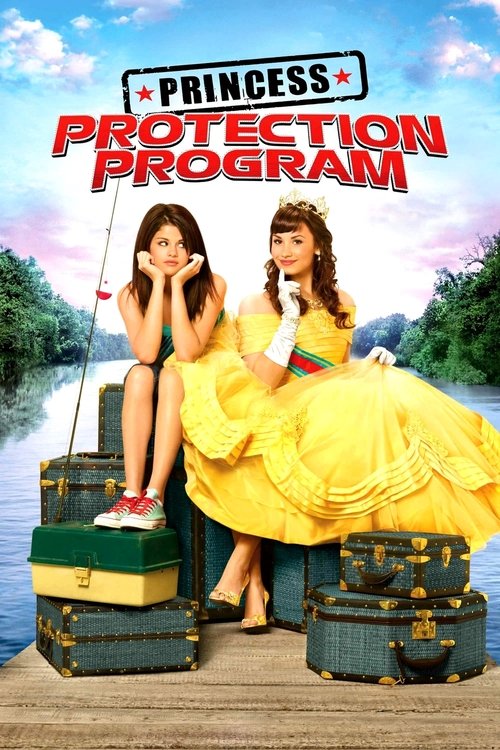
Princess Protection Program (2009)
Directed by Allison Liddi-Brown
No — Princess Protection Program is not especially woke, scoring 28 out of 100 on our wokeness meter.
Princess Protection Program arrives from the summer of 2009, a Disney Channel original in which a fictional Latin American princess (Selena Gomez) is smuggled into Louisiana after a dictator invades her kingdom, there to bunk with a bait shop tomboy (Demi Lovato) and learn the rituals of the American high school.
Consciousness Markers
Features Latina leads (Demi Lovato, Selena Gomez) and a diverse supporting cast including Jamie Chung, but diversity is incidental to the Disney Channel formula rather than a conscious progressive statement.
Centers on female friendship, a female director, and a self-esteem message for young girls, though it operates within conventional princess tropes and does not challenge patriarchal structures.
Delivers gentle moral lessons about self-esteem and being yourself, typical of Disney Channel movies, but avoids explicit social or political lecturing.
Set in a fictional Latin American nation with Latina protagonists, but race and ethnicity are not examined or used as a thematic lens.
No LGBTQ+ characters, themes, or subtext.
No environmental or climate-related themes.
No critique of capitalism, wealth, or class structures.
No body positivity themes or messaging.
No neurodivergent characters or themes.
Fictional story with no historical revisionism.
Why it received this score
Princess Protection Program arrives from the summer of 2009, a Disney Channel original in which a fictional Latin American princess (Selena Gomez) is smuggled into Louisiana after a dictator invades her kingdom, there to bunk with a bait shop tomboy (Demi Lovato) and learn the rituals of the American high school. The direction by Allison Liddi-Brown is competent, the pacing is brisk, and the whole enterprise radiates the specific fluorescence of basic cable programming designed to be watched while doing homework. It is a modest artifact of its era and its network.
The film's cultural footprint is slight and its ideological ambitions are slighter. Two Latina leads anchor the cast, with Jamie Chung in support, yet the diversity registers as casting arithmetic, not as argument. Nobody in Lake Monroe remarks on it, because nobody in the screenplay thought to. The feminist content amounts to a female director, a friendship between girls, and a closing insistence that self-worth precedes popularity. Worthy sentiments, delivered at low volume. There is no critique of the monarchy the film celebrates, no structural complaint, no LGBTQ presence, no environmental conscience, no economic anger, no body positive messaging, no neurodivergent character. The villains are foreign autocrats, which is a sturdy old tradition and not a progressive one.
What remains is a sermon about being yourself, soft enough that it never raises its voice. The moral instruction is aimed at twelve-year-olds and pitched accordingly: be kind, be brave, wear the pink dress. Viewers hunting for evidence of modern social consciousness will find only traces, faint fingerprints on a product built for merchandising. It won a Teen Choice Award and drew 8.5 million viewers, which tells us more about the Disney machine than about any cultural awakening. A harmless confection, and one that leaves almost no residue.
Analysis generated by our Consciousness Algorithm


Synopsis
When her nation is invaded, a young princess is taken into the Princess Protection Program. She is relocated to Louisiana, where she stays with a covert agent and his tomboyish daughter, and must learn how to behave like an ordinary teenager.
Questions about Princess Protection Program
Is Princess Protection Program woke?
No — Princess Protection Program is not especially woke, scoring 28 out of 100 on our wokeness meter. That earns it a verdict of Based.
Does Princess Protection Program have any woke elements?
2 of the 10 markers register at 30 or above, led by Representation Casting (45) and Feminist Agenda (35). On Representation Casting: Features Latina leads (Demi Lovato, Selena Gomez) and a diverse supporting cast including Jamie Chung, but diversity is incidental to the Disney Channel formula rather than a conscious progressive statement.
How does Princess Protection Program compare to other 2009 movies?
It ranks #21 of the 230 films from 2009 we've scored; their average is 14. The wokest is Home (79).
How is the Woke Score calculated?
An AI-assisted process researches the film and its reception, scores it 0–100 on ten markers, then combines those into one 0–100 Woke Score. It measures a specific set of 2020s cultural themes, not film quality.