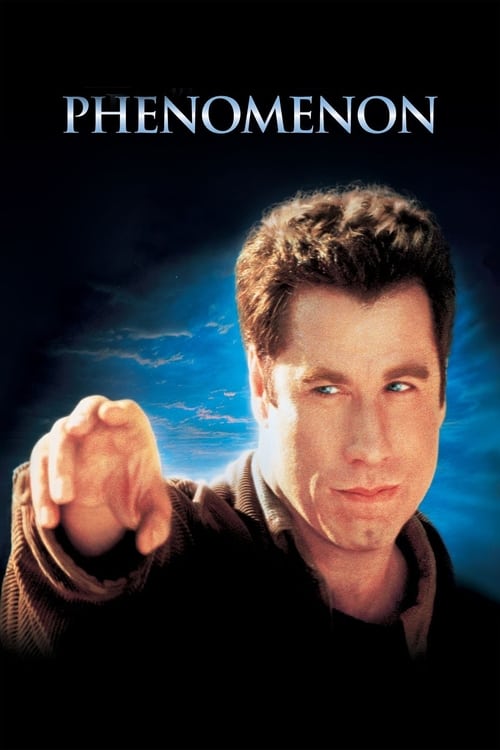
Phenomenon (1996)
Directed by Jon Turteltaub
No — Phenomenon is not woke, scoring 7 out of 100 on our wokeness meter.
Phenomenon arrives from 1996, a year when a man struck by celestial lights could become a genius and the culture would treat it as a parable about the human heart.
Consciousness Markers
Forest Whitaker appears as George's best friend Nate, a naturally integrated supporting role, but the cast is otherwise a conventional 1990s white-led ensemble with no deliberate diversity agenda.
The film overexplains its premise and carries a soft New Age/Scientology-inflected message about unlocking the mind's potential, though it never becomes a full sermon.
Kyra Sedgwick's Lace is a guarded single mother with some agency, but she functions primarily as the romantic reward and emotional catalyst for the male protagonist.
George invents an improved solar panel design and a powerful fertilizer, but these are demonstrations of his genius rather than an environmentalist message.
A Portuguese immigrant family and a Black best friend exist in the story without any commentary on race or systemic injustice.
The villainous brain surgeon who wants to experiment on George for research is a mild institutional critique, but there is no economic or class-based indictment.
George's sudden genius and social ostracism touch on being different, but the film frames this as a supernatural gift and terminal illness, not neurodivergent identity.
No LGBTQ+ characters, themes, or subtext appear anywhere in the film.
No body positivity themes are present.
The film is a fictional contemporary story with no historical revisionism.
Why it received this score
Phenomenon arrives from 1996, a year when a man struck by celestial lights could become a genius and the culture would treat it as a parable about the human heart. John Travolta plays George Malley, an auto mechanic whose sudden intelligence and telekinesis unsettle his small California town. The film carries a soft New Age hum, with screenwriter Gerald Di Pego citing Zen and actor John Travolta's Scientology informing the mind-expansion premise. Its social awareness is muted, a pre-2015 sort of liberalism. Forest Whitaker appears as Nate, George's best friend, a Black man woven into the story without comment. The Portuguese immigrant family likewise exists without any meditation on race or systemic injustice. Such roles are natural, not curated.
Kyra Sedgwick's Lace is a guarded single mother who eventually warms to George, but she functions as the romantic reward and emotional catalyst. Her agency is present yet subordinated to the male protagonist's journey. No LGBTQ+ characters or themes surface. The film's mild institutional critique targets a brain surgeon who wants to experiment on George for research, a villainous doctor rather than a class-based indictment. George invents a better solar panel and a powerful fertilizer, but these are feats of genius, not an environmentalist plea. Body positivity is absent. George's condition, a brain tumor that grants him extraordinary abilities, touches on being different, yet the film frames it as a supernatural gift and terminal illness, not neurodivergent identity.
The film overexplains its premise and carries a gentle sermon about unlocking the mind's potential. It never becomes a full lecture, though the messaging is unmistakable. Critics called the script manipulative and noted the Scientology-inflected doctrine. Roger Ebert found it about change, acceptance, and love. Audiences gave it an A- CinemaScore. It grossed over $150 million. The film wants to be profound, and it settles for earnest sentiment. In the taxonomy of social consciousness, it scores low. It is a product of its era, well-meaning and largely untroubled by the cultural questions that would later dominate the conversation. A relic, then, but a commercially successful one.
{"thematic_tags": []}
Analysis generated by our Consciousness Algorithm


Synopsis
An ordinary man sees a bright light descend from the sky, and discovers he now has super-intelligence and telekinesis.
Questions about Phenomenon
Is Phenomenon woke?
No — Phenomenon is not woke, scoring 7 out of 100 on our wokeness meter. That earns it a verdict of Ultra Based.
Does Phenomenon have any woke elements?
Very few. None of the 10 markers reaches 30, the level where a marker counts as present; the highest is Representation Casting at 18.
How does Phenomenon compare to other 1996 movies?
It ranks #46 of the 93 films from 1996 we've scored; their average is 11. The wokest is Bound (60).
How is the Woke Score calculated?
An AI-assisted process researches the film and its reception, scores it 0–100 on ten markers, then combines those into one 0–100 Woke Score. It measures a specific set of 2020s cultural themes, not film quality.