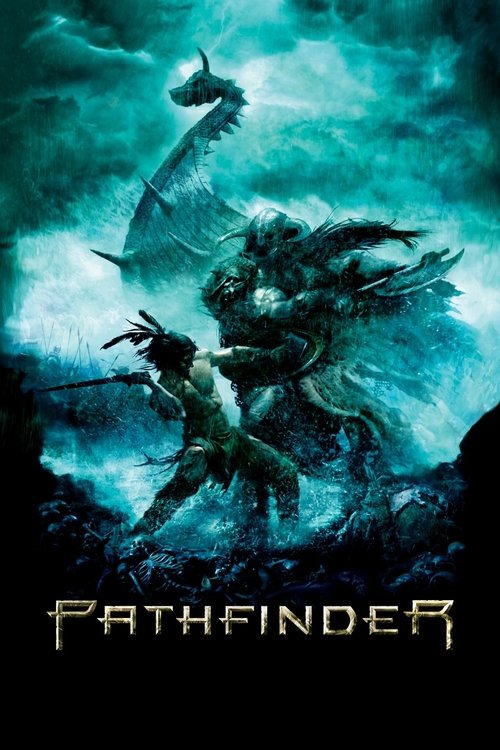
Pathfinder (2007)
Directed by Marcus Nispel
No — Pathfinder is not especially woke, scoring 30 out of 100 on our wokeness meter.
Pathfinder (2007) is a Viking Age action film and a loose remake of the 1987 Norwegian picture of the same name.
Consciousness Markers
The film casts numerous Native American actors (Russell Means, Jay Tavare, Nathaniel Arcand, Michelle Thrush, Duane Howard) in Native roles and centers a Native tribe, a genuine representational choice for 2007, though not framed with modern self-conscious intent.
The film frames the Native 'Skræling' tribe as sympathetic victims of brutal Norse colonizers, giving it a colonial-conflict dimension, but it is an action premise rather than a racial-consciousness statement.
Starfire (Moon Bloodgood) ultimately inherits the role of Pathfinder/chieftain, giving the female lead a position of leadership, but the film offers no feminist argument or critique.
The film is a loose historical fantasy set in the Viking Age, but it reinterprets a prior film rather than rewriting history through a modern ideological lens.
The film is a gory action spectacle with minimal didacticism; a reviewer noted a touch of 'American Indian wisdom,' but there is no sustained lecturing.
No LGBTQ+ characters, themes, or subtext appear anywhere in the film.
No environmental or climate themes are present.
No economic critique or anti-capitalist content exists in the film.
No body-positivity themes or messaging appear.
Jester is a mute character, but his muteness is a plot device rather than a depiction of neurodivergence or a neurodiversity theme.
Why it received this score
Pathfinder (2007) is a Viking Age action film and a loose remake of the 1987 Norwegian picture of the same name. It follows Ghost, a Norseman raised by a Native tribe, who becomes their defender when fresh raiders arrive. The production casts numerous Native actors, including Russell Means, Jay Tavare, Nathaniel Arcand, and Michelle Thrush, in Native roles and places a Native community at the center of the story. That decision carries real representational weight for a 2007 studio release. It is not framed with modern self-conscious intent. The tribe is presented as sympathetic victims of brutal Norse colonizers, which gives the film a colonial-conflict dimension. The conflict remains an action premise, not a racial-consciousness thesis. There are no LGBTQ characters or themes. No environmental concerns appear. No economic critique appears. No body-positivity messaging appears.
Starfire, played by Moon Bloodgood, ultimately inherits the role of Pathfinder and chieftain after her father's death. This grants the female lead a position of leadership. The film does not build a feminist argument around that outcome. Jester is mute, but his muteness functions as a plot device, not as a depiction of neurodivergence. The historical setting is a loose fantasy built on the Viking Age. It reinterprets an earlier film instead of rewriting history through a modern ideological lens. The result is a film that borrows period detail for spectacle, not instruction.
Pathfinder is a gory action spectacle with minimal lecturing. A reviewer mentioned a touch of American Indian wisdom, yet the film never sustains a sermon. It plays like a long music video with dry ice, loud sound effects, and Vikings who resemble professional wrestlers. Critics were unkind, audiences were indifferent, and the box office was modest. The social consciousness on display is mostly incidental: Native casting and colonial victimhood sit inside a revenge narrative that cares about axes and cliffs. The film is more representative than expected and less preachy than feared. Its cultural markers arrive by accident of genre and casting, not by design. That makes it an odd artifact from a transitional moment in studio action cinema.
Analysis generated by our Consciousness Algorithm


Synopsis
A Viking boy is left behind after his clan battles a Native American tribe. Raised within the tribe, he ultimately becomes their savior in a fight against the Norsemen.
Questions about Pathfinder
Is Pathfinder woke?
No — Pathfinder is not especially woke, scoring 30 out of 100 on our wokeness meter. That earns it a verdict of Based.
Does Pathfinder have any woke elements?
2 of the 10 markers register at 30 or above, led by Representation Casting (48) and Racial Consciousness (35). On Representation Casting: The film casts numerous Native American actors (Russell Means, Jay Tavare, Nathaniel Arcand, Michelle Thrush, Duane Howard) in Native roles and centers a Native tribe, a genuine representational choice for 2007, though not framed with modern self-conscious intent.
How does Pathfinder compare to other 2007 movies?
It ranks #14 of the 201 films from 2007 we've scored; their average is 12. The wokest is Like Stars on Earth (92).
How is the Woke Score calculated?
An AI-assisted process researches the film and its reception, scores it 0–100 on ten markers, then combines those into one 0–100 Woke Score. It measures a specific set of 2020s cultural themes, not film quality.